Why the same failures repeat
Someone buying an estate for the first time usually does so with enthusiasm and little information. The seller, the advert and the landscape invite a quick decision. These are ten common mistakes and the concrete way to avoid them.
1. Trusting the area in the advert
The advertised hectares usually come from the seller or from old data. The Registry, the Cadastre and reality can give three different figures, and SIGPAC a fourth. How to avoid it: ask for the nota simple, compare with Cadastre and SIGPAC, and if there is a relevant difference demand a topographic survey or a price adjustment clause. Follow the guide to nota simple, Cadastre and SIGPAC.
2. Taking the water for granted
A well that gives water today is not a transferable right if it is not registered or covered by a concession. And a well with flow in April can dry up in August. How to avoid it: ask for the title, measure the flow in summer and check the registration with the River Basin Authority. See the guide to water on a rural estate.
3. Visiting only in spring
In May everything is green, pasture is abundant and the ponds are full. That picture is not August's. How to avoid it: visit at least twice, once in summer and once after heavy rain, to see access, water, mud and the real state of the land.
4. Not reviewing access and easements
An estate without legal access or with a public track crossing it loses a lot of value. Neighbours may have a right of way, and there are livestock routes throughout the territory. How to avoid it: check the access road in the Cadastre and on the ground, ask the neighbours and read the guide to easements and boundaries.
5. Assuming the house is legal
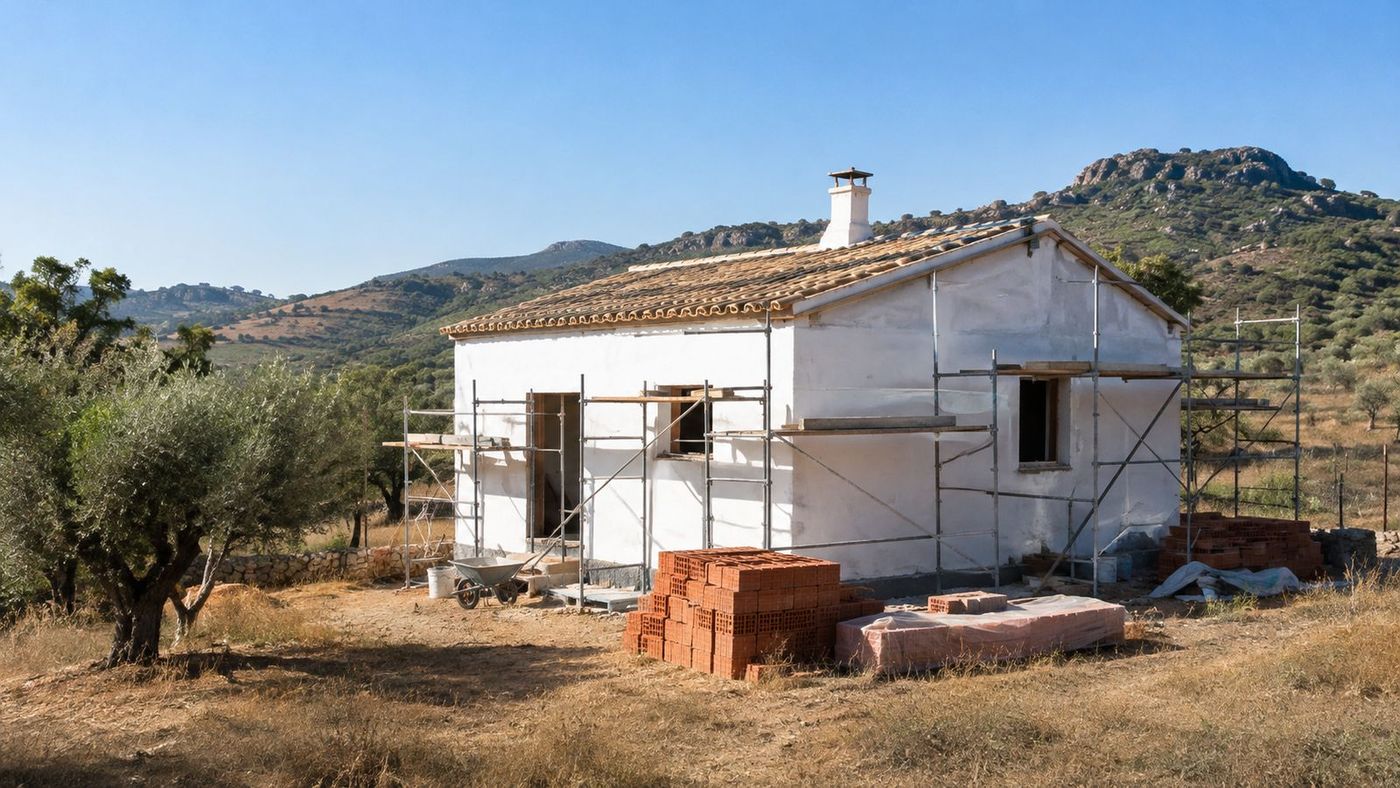
On rural land there are old houses, huts and barns without a licence or unregistered. That affects the mortgage, the insurance, works and resale. How to avoid it: ask for a report from the town council, compare with Cadastre and Registry and read building a house on a rural estate and leisure estate with a house.
6. Forgetting the costs of the purchase
The price is not the only thing you pay. You add transfer tax, notary, registry, administrative agent, valuation and, where applicable, renovation, fencing or legalisations. How to avoid it: calculate the total cost before making an offer with the guide to how to buy a rural estate and set aside a margin for the unexpected.
7. Signing arras without exits
With penitential arras, withdrawing costs what was handed over. If the bank later does not give the mortgage or the nota simple brings surprises, the buyer loses the money. How to avoid it: include conditions precedent and a reasonable deadline. See arras contract on a rural estate.
8. Comparing hectares without comparing estates
A 3-hectare plot with a house and water is not compared with 300 of dehesa. The price per hectare changes with size, use and buildings. How to avoid it: compare estates of the same type and size and value the house separately. See price per hectare and how to value an estate.
9. Assuming aid and entitlements are transferred
PAC entitlements do not always go with the estate: they can stay with the seller or be transferred separately. And aid is not a guaranteed income. How to avoid it: ask in writing which entitlements are transferred and do not count on them in your return calculation until confirmed. Read PAC when buying an estate.
10. Underestimating daily life on the estate
Isolation, dirt tracks, lack of coverage, fire risk, fence maintenance and brush clearing. An estate demands work, presence or a manager. How to avoid it: assess how much time you can devote, what a manager costs and what insurance you need. If you want low maintenance costs, a small estate near a village is usually more manageable.
Other common failures
- Not finding out whether there are tenants or sharecroppers with rights over the estate.
- Not checking whether the estate is in Natura 2000 or a protected area (guide).
- Buying part of an estate in co-ownership without understanding the risk (guide).
- Accepting payments outside the deed or in cash.
- Not reviewing the deed before signing it.
A short checklist
- Nota simple, Cadastre, SIGPAC.
- Water with title and flow in summer.
- Legal access and easements.
- Legality of buildings.
- Total cost calculated.
- Arras with conditions.
- Two visits in different seasons.
- Your own legal and technical advisers.
If you complete this list before handing over money, you avoid the vast majority of problems that appear afterwards. And if something does not add up, you have the buyer's best tool: being able to say no.
What to do if you have already paid a deposit
If you have already handed over money and discover a problem, do not let it pass. Review what type of arras you signed, what deadline you have and whether the contract includes a condition that is now not met. Tell the seller in writing, keep all the documentation and consult a lawyer before deciding whether to negotiate a price adjustment, ask for an extension or withdraw. Acting early usually leaves more room than waiting until the day of the deed.