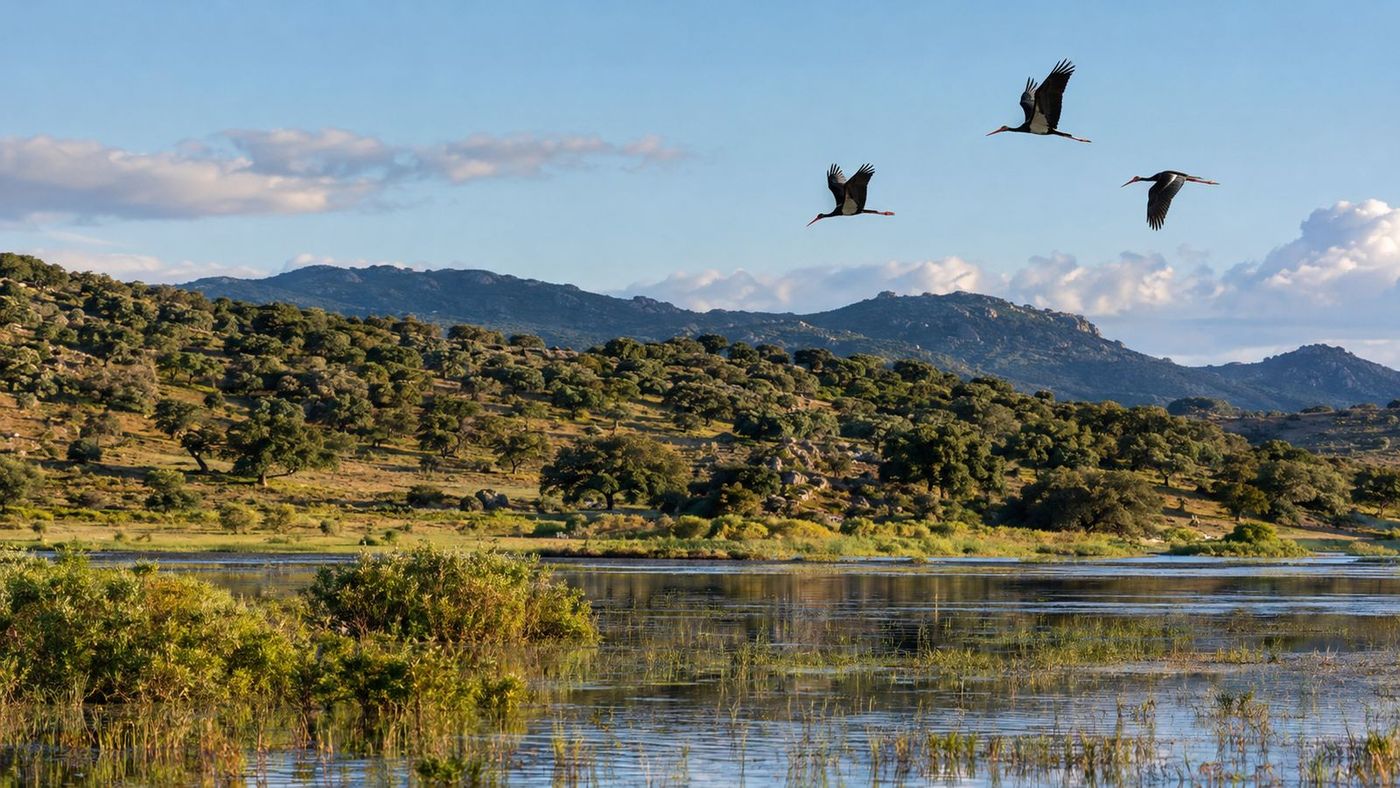
Extremadura has a very high proportion of its territory in Natura 2000, so it is common for an estate to be inside it.
How much of Extremadura is protected
Close to a third of the regional territory forms part of Natura 2000 or some other protection category, one of the highest proportions in Spain. Monfragüe is a national park; Villuercas-Ibores-Jara, Tajo Internacional and Cornalvo are natural parks; and extensive steppe areas and dehesas are ZEPA or ZEC. If you are looking for an estate in Extremadura, the question is not whether protection will affect you, but how it will affect you.
Categories you will see
- ZEPA: special protection areas for birds.
- ZEC: special areas of conservation for habitats.
- Parks such as Monfragüe or Tajo Internacional.
- Biosphere reserves such as La Siberia.
There are also natural monuments (such as Los Barruecos), nature reserves and enclaves with municipal protection. Each category has its management document: a plan or rules that say what can be done and what needs authorisation. Being in the heart of a national park is not the same as being in a broad steppe ZEPA.
What changes
- Building or extending requires an environmental report (see building).
- Changes of use may be limited.
- Extensive livestock and the dehesa are usually compatible.
The key idea: Natura 2000 does not prohibit activity, it assesses it. New projects that may affect the values of the area (ploughing up pastures, planting irrigated crops, opening tracks, installing solar panels, building) go through an environmental assessment that can add conditions or be refused. Traditional uses (extensive grazing, dryland cereal, cork use, regulated hunting) continue as normal in the vast majority of cases.
Steppe ZEPAs and the countryside
A good part of the Extremaduran ZEPAs protect steppe birds (great bustard, little bustard, stone-curlew) that live precisely on farmland and pasture managed extensively. That is why compatibility is the norm: dryland cereal with fallows and grazing maintain the habitat. What tends to clash with these zones is intensive transformation: new irrigation, hedgerow plantations, energy infrastructure or fencing that cuts through the open landscape.
If your plan is to keep the traditional use, the ZEPA is rarely a problem and can be a source of subsidies. If your plan is to transform the estate, the ZEPA is a first-order factor that must be studied before paying.
Monfragüe and the parks: when protection bites harder
Inside a national or natural park the regulation is stricter than in a broad ZEPA: buildings, tracks, fencing and new uses face more controls. In return, proximity to these areas increases the value of leisure and tourism estates: a legal house next to Monfragüe or Tajo Internacional has a tourist demand that others do not. Protection cuts some uses and rewards others.
What you can normally do
Keep extensive livestock and historical uses, repair existing buildings, maintain tracks and fences, manage hunting according to its technical plan and continue with traditional crops. In fact, the administration usually looks favourably on extensive activity, because it is what maintains the dehesa and steppe landscape that the category protects.
How to check
Consult the map viewers of the Junta de Extremadura and the municipal planning, together with the nota simple and the Cadastre.
The practical route: locate the estate by its cadastral reference in the Ministry's Natura 2000 viewer and in the Junta's environmental viewer, download the management document of the affected area and ask the town council in writing and, if in doubt, the competent department. If you are going to make a major investment (irrigation, construction, tourism), ask for a prior report in writing before buying.
Protection and market value
The market already discounts protection in prices: two similar dehesas, one inside and one outside a protected area, do not sell the same. For a buyer for livestock use or quiet leisure, that difference can be an opportunity: buy cheaper an estate whose limits do not affect them. For a buyer with a transformative project, it is a stop sign.
Subsidies linked to protection
Being inside a protected area is not just limitations: there are agri-environmental subsidies and compensation for practices favourable to steppe birds or dehesa habitats, and some PAC lines score better in these zones. Ask about the current calls: they can add a not insignificant annual income in exchange for keeping uses you would probably carry out anyway.
A specific purchase: what to ask the seller
If the estate is inside a protected area, ask the seller for the authorisations and reports they already have (tracks, wells, buildings, management plans). Their existence proves what has in practice been authorisable there, better than any opinion.
Checklist before buying
- Is the estate inside a ZEPA, ZEC, park or reserve? In what percentage?
- What does the management document say about your intended use?
- Are there environmental procedures or files open on the estate?
- Has your project (house, irrigation, panels, tourism) been authorised on similar neighbouring estates?
Hunting and tourism in protected areas
Hunting regulated by a technical plan coexists with protection in a large part of these areas (see hunting estates), and nature tourism is the activity growing most around them: birdwatching, trails, rural accommodation (see rural tourism). If your interest goes that way, being inside or next to a protected area is more a commercial advantage than a problem.
Frequent mistakes
Buying on the assumption that "protected" means "nothing can be done" and paying less than an estate with compatible uses and subsidies is worth; or the opposite mistake, buying inside a protected area counting on irrigation or a building that the environmental assessment may not authorise. Both mistakes are avoided the same way: management document in hand and a prior written enquiry.
With those four answers in writing, buying inside a protected area stops being an unknown and becomes one more characteristic of the estate, with its costs and its advantages.