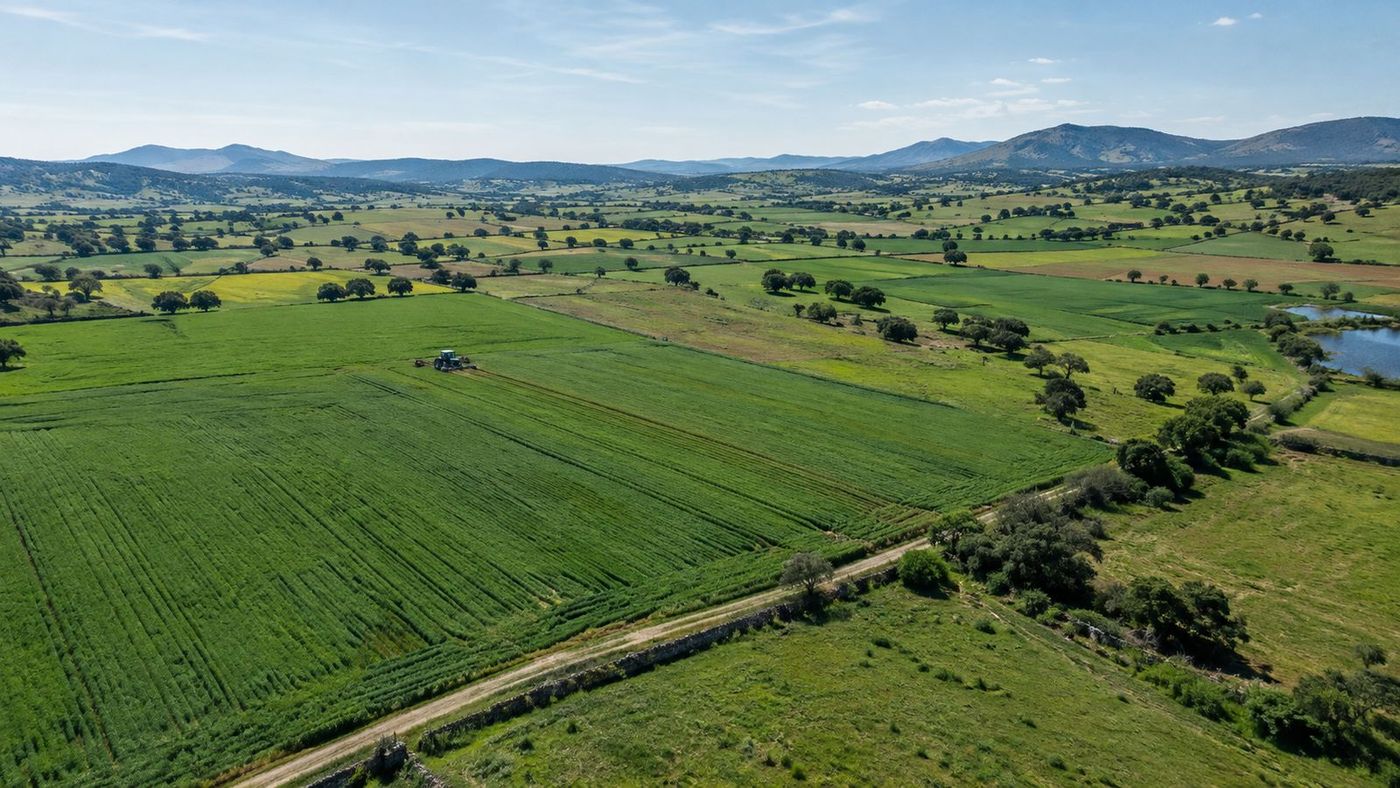
Many listings say "with PAC". That can mean different things, and it is worth clarifying before the arras.
What the PAC is for an estate
The Common Agricultural Policy (PAC) gives subsidies to those who carry out agricultural activity. The main one is the basic income support, which is collected by activating entitlements on eligible hectares. There are also eco-schemes and subsidies associated with certain livestock or crops.
The subsidies you may come across
- Basic income support for sustainability: the per-hectare subsidy tied to entitlements.
- Redistributive payment for the first hectares of small and medium farms.
- Payment for young farmers and start-up aid, if you meet the age and establishment requirements.
- Eco-schemes: practices such as extensive grazing or rotations, voluntary and paid per committed hectare.
- Coupled support for specific productions (for example, certain extensively raised livestock).
Do the entitlements go with the estate?
Not necessarily. The entitlements belong to the holder of the farm. They can be transferred with land (sale or lease) or without it, and the transfer is notified to the administration. If it is not agreed, the seller may keep them.
What to ask
- Number of entitlements and their unit value.
- Amount collected in recent seasons (ask for the payment decision).
- Whether they are transferred with the sale and whether they are included in the price.
- Current agri-environmental commitments you may inherit.
How entitlements are transferred
The transfer is notified to the competent body of the autonomous community - in Extremadura, the agriculture department and its paying agency - within the windows opened each season, with the official forms and the documentation of the sale or lease. There are deadlines: outside them, the transfer is delayed to the following season. The cleanest approach is to sign the purchase before the season and submit the transfer in the first available window, recording in the arras the exact number of entitlements and their value.
If you buy without entitlements: the reserve
Someone who buys land without entitlements can apply for allocations from the national reserve if they meet the conditions (new farmers, young people, specific situations). It is neither automatic nor unlimited, so do not buy counting on it. The usual alternative is to lease the estate to a farmer with entitlements or to buy entitlements from another holder, a market that exists but has its prices.
Buyer requirements to collect
To collect the PAC it is not enough to be the owner: you must be an active farmer (carry out agricultural activity and, at the relevant thresholds, prove it) and meet conditionality - a package of good agricultural and environmental practices that includes keeping the land in agricultural condition. If you buy an estate for leisure with no intention of farming it, the PAC is not for you; if you lease it, the tenant will collect it, and that is reflected in the rent they will pay you.
PAC and the value of the estate
Entitlements of good value improve the return on a dehesa or an olive grove, but they should not be confused with the value of the land. Separate the two in the negotiation.
Mistakes that cost money
- Taking for granted that "the estate has PAC" without seeing the number of entitlements or their value.
- Signing the purchase after the transfer window and losing a whole season.
- Not checking for penalties or deductions pending from previous seasons.
- Inheriting an eco-scheme or agri-environmental commitment without knowing its obligations.
For a complete view of the return, try the "Total cost" tab of the AI analysis of each estate and read how much a hectare costs.
How much is collected: order of magnitude
The amount per hectare depends on the value of the entitlements (inherited from the farm's history), the supplements (redistributive, young farmers) and the eco-schemes joined. In Extremadura, extensive dehesa farms usually have modest per-hectare values compared with irrigated ones, but over many hectares the annual cheque is significant and, above all, stable. The only figure that counts for your purchase is that of the specific estate: ask for the payment decision of the last season, which shows entitlements, amount and deductions.
PAC, leases and the forgotten clause
If the estate is leased, the tenant farmer is normally the one who collects the subsidy, and the lease contract should say what happens to the entitlements if the estate is sold. When buying a leased estate, you inherit that contract: review duration, rent and clauses on PAC before valuing the deal. A long lease with low rent and PAC going to the tenant completely changes the expected return.
Season calendar
The single application is submitted in spring, with a declaration of areas and uses consistent with SIGPAC; payments arrive from the end of the year. Buying an estate in summer does not entitle you to collect the current season unless expressly agreed with the seller, who is the one who applied for it. This is one of the most forgotten negotiations: on a large estate, one PAC season is many thousands of euros, and the contract must say who gets them.
Where to get information and who handles it
Day-to-day handling is done electronically with the Extremaduran agricultural administration, and the autonomous communities maintain farmer support services in the district offices. If you do not want to handle it personally, agricultural advisory firms and cooperatives manage single applications, transfers and notifications of changes of ownership at a reasonable cost. What matters is that the file is properly tied up from the first season: SIGPAC or ownership errors drag on for years and cost deductions.
PAC in the deed: how to tie it up
The safest formula is to record the transfer directly in the arras and in the deed: number of entitlements, unit value, whether they are included in the price or paid separately, and the seller's commitment to sign the transfer notification in the first window. If the entitlements are not included, that should also be stated: it avoids later claims and makes clear what you have bought. A good agricultural adviser also checks that the hectares declared in SIGPAC match the transferred entitlements; a difference here shows up as a penalty or as inactive entitlements that pay nothing.