Where it is and what it is
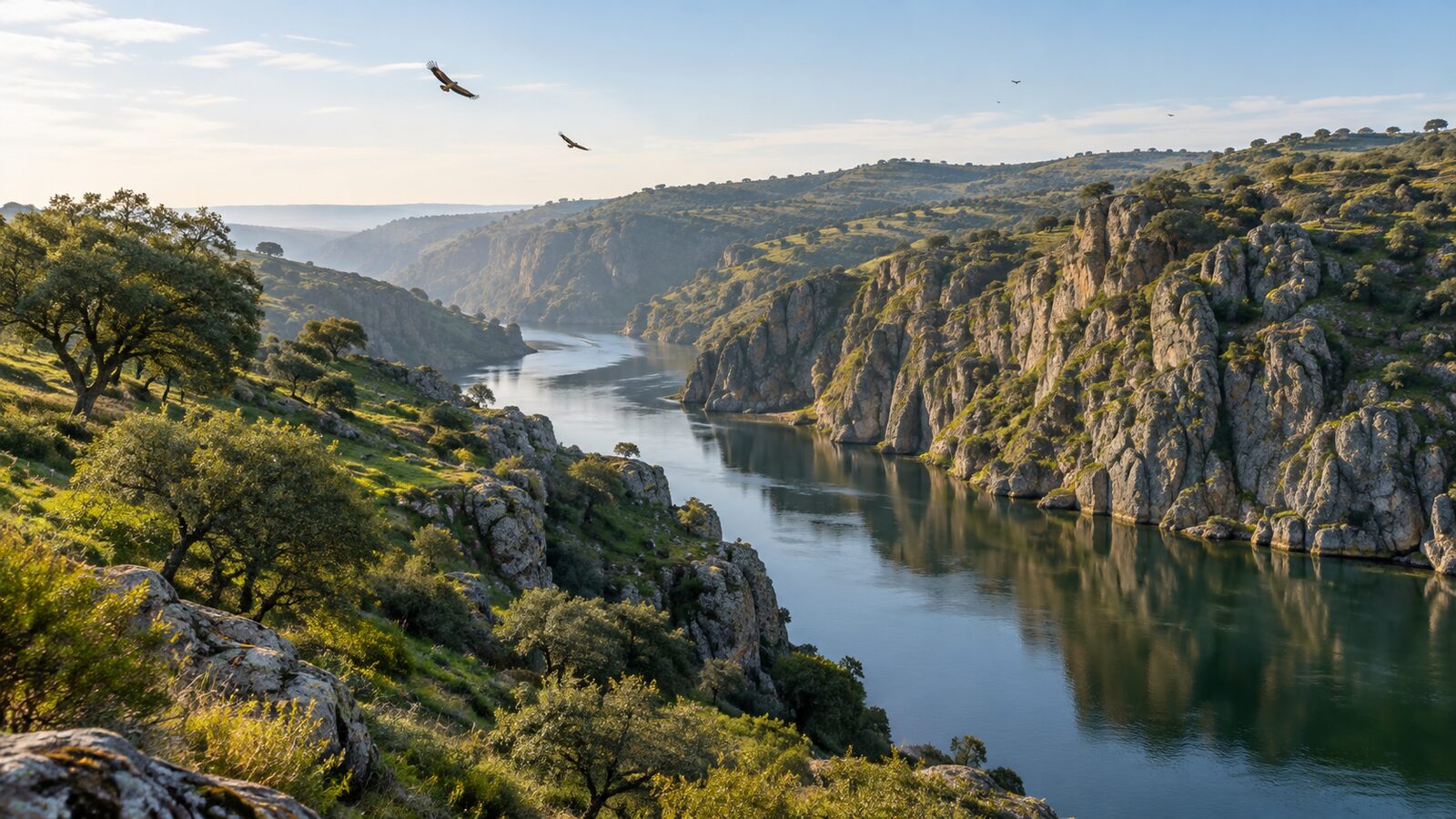
The Parque Natural del Tajo Internacional covers around 25,088 hectares in south-western Cáceres province, in municipalities including Alcántara, Cedillo, Herrera de Alcántara, Santiago de Alcántara, Valencia de Alcántara, Brozas, Membrío, Salorino, Carbajo, Herreruela and Zarza la Mayor. It protects the stretch of the Tajo river forming the border between Spain and Portugal, with rocky cliffs, well-preserved riverbanks and dehesas. Across the river, Portugal has its own protected area, and together they form the Reserva de la Biosfera Tajo-Tejo Internacional, designated in 2016.
Landscape and wildlife
It is one of the country's richest areas for cliff-nesting birds: vultures, eagles, Egyptian vultures and black storks find refuge in the river cliffs. Dehesa and Mediterranean woodland complete an open landscape, with few inhabitants and very clear skies. If you are interested in birdwatching, also read birds and cranes in Extremadura.
What types of estate are available?
- Livestock dehesas of holm oak and cork oak, with grazing for sheep, cattle and, on some, Iberian pigs.
- Woodland and recreational estates with an old house or outbuildings.
- Small plots near villages, with a vegetable garden, olive trees or fruit trees.
In general, estates in this area are larger and have less infrastructure than those in more populated places. Before deciding, understand how a dehesa works by reading what a dehesa is.
Environmental protection
Being within or beside a natural park affects permitted uses. Authorisations may be required to build, extend, fence, open tracks, extract water or change land use. The park's management plan defines zones with different protection levels. Before buying, ask the local council and the Junta's environmental authorities for the rules affecting the plot, and check its status using the cadastral reference. The guide to the Natura 2000 network and rural property explains the starting points.
The border with Portugal
Proximity to Portugal has advantages, such as the cultural and food offering across the river, as well as some particular considerations. In Spanish border areas, foreign nationals may need military authorisation to buy certain estates. If you are a foreign buyer, read the guide to buying an estate in Extremadura as a foreign national: NIE, banking and special considerations and consult a lawyer before signing. To compare another border area, see Alburquerque, Olivenza and La Raya.
Distances and services
This is a sparsely populated area. Basic services are in towns such as Alcántara, Valencia de Alcántara or Brozas, while a full range of hospital and shopping services is in more distant cities such as Cáceres. Calculate actual travel times carefully and check mobile and internet coverage, which can be limited in remote rural areas (see internet and remote working on a country estate).
Hunting, fishing and river use
Small- and big-game hunting is traditional on many estates in the area, and the river offers regulated fishing. Both activities are governed by specific regulations and the protected area's management plans. If the estate has a hunting reserve or leases, request current contracts and licences. To understand the basics, read hunting estates and reserves in Extremadura.
Nature tourism
Birdwatching, river boat trips, walking and wildlife photography attract visitors. For an owner, this may offer an opportunity for rural accommodation or activities, always with the appropriate licence and respect for environmental rules. Assess real off-season demand before investing.
Checklist before buying
- The plot's planning and environmental rules in writing.
- Year-round passable access and the track's condition.
- Water: an authorised well, pond or supply (see water on rural property).
- Existing buildings and their legal status (land registry extracts and the cadastre).
- Easements, boundaries and livestock routes (easements and boundaries).
- Grazing, hunting or lease contracts.
- If you are a foreign national, specific border-area authorisations.
When to visit
Spring brings green countryside and abundant bird activity; autumn brings acorns and mild temperatures; summer is harsh, but is the best time to see the true condition of ponds and wells. Visit the estate more than once and speak to local neighbours and livestock farmers before deciding.
To compare other parts of western Cáceres, read estates in the Sierra de San Pedro and Valencia de Alcántara and Monfragüe.
Local heritage and culture
Alcántara is known for its Roman bridge over the Tajo and its historic heritage, and the whole area has a strong livestock and border tradition. Dehesa culture, stone villages and proximity to Portugal give the area its own identity. For anyone seeking an estate with character and few crowds, it is an interesting option, provided you accept its remoteness and the surrounding environmental protection.
Summary
The Tajo Internacional area offers scenery, wildlife and peace, with the conditions of a protected border area. Check planning and environmental rules, access, water and, if you are a foreign national, applicable authorisations. With that information, you can assess whether the estate matches what you want.
Next step
Visit the area and walk the estate in more than one season. Speak to livestock farmers and neighbours, request the full documentation and consult a lawyer before signing. To review the buying steps, read how to buy rural property in Extremadura.