Where it is and why it appeals
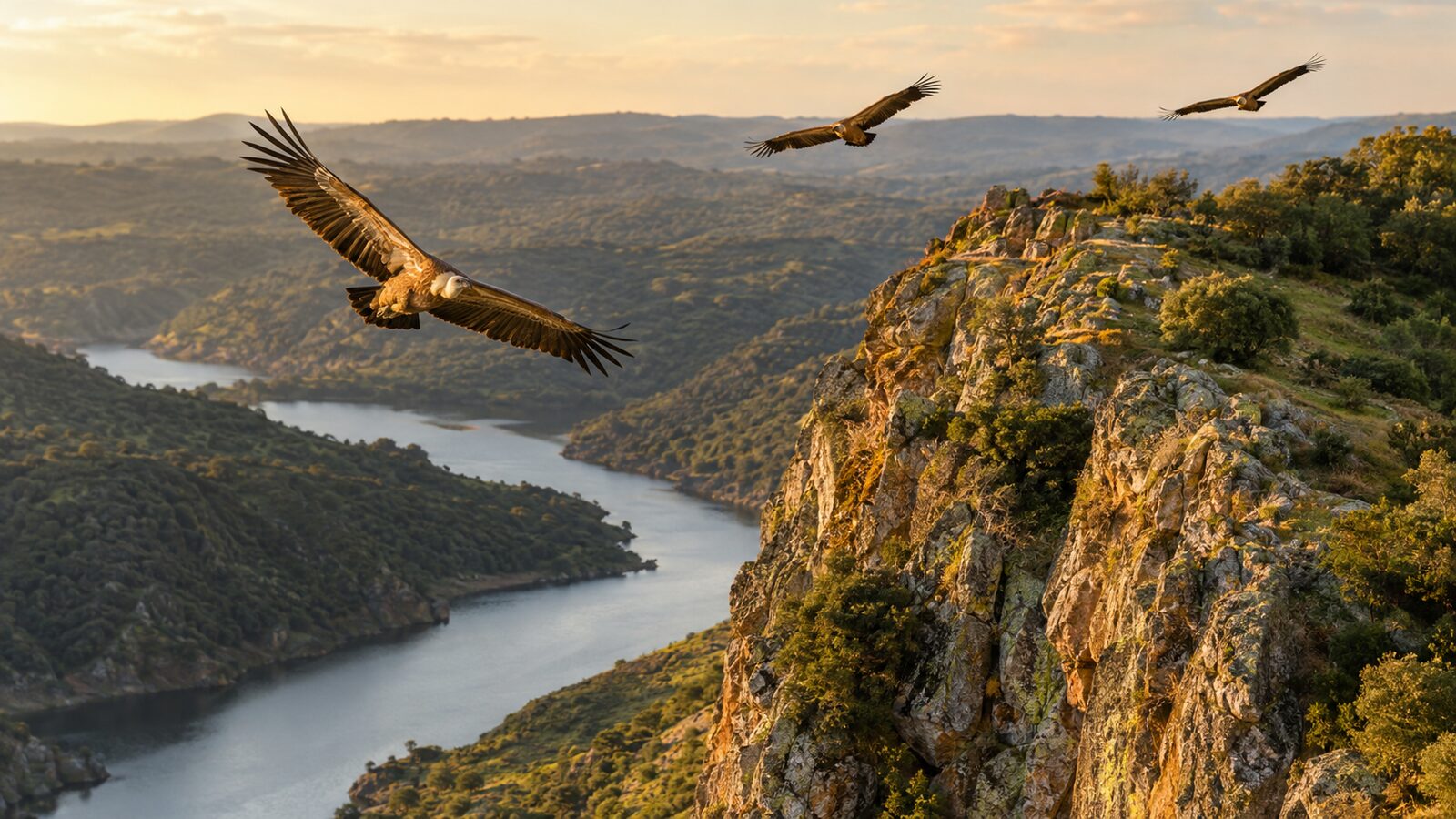
Parque Nacional de Monfragüe covers a stretch of the Tajo river and its tributary, the Tiétar, in northern Cáceres province. It is one of Europe's best-known areas for birds of prey, particularly cinereous and griffon vultures, and its landscape features Mediterranean dehesa and scrubland. The village of Villarreal de San Carlos, inside the park, and the Salto del Gitano viewpoint are two of its most visited places.
This reputation explains why the area attracts buyers looking for a leisure property, a house with land or a small farm. It also explains why the rules deserve careful attention: being near a protected area offers scenery and tourism advantages, but is not the same as buying unrestricted land.
Inside, in the buffer zone or outside
The first question is the most practical: where exactly does the property lie? There are three common situations.
- Inside the national park: protection is strongest. Uses and building work are heavily restricted, and any intervention usually needs permission from the park authority.
- In the protective buffer zone or under other designations (biosphere reserve, ZEPA, Natura 2000): restrictions apply, but are usually more flexible. We explain them in the guide to Natura 2000 and rural properties.
- Outside any protected designation: the municipality's general rural land rules apply.
An advert or the seller's word is not enough to establish this. Ask the town hall and Junta de Extremadura for the plot's planning and environmental status, and cross-check its cadastral reference against protected-area maps. If a lawyer or administrative adviser is helping you buy, ask them to verify it in writing.
What protection may restrict
Each protected area has its own rules, so no definitive list is possible. Conditions commonly arise in these areas:
- Building and renovation: extending a house, putting up a farm building or shed, or opening a track. First read the guide to building on rural land.
- Fencing: some fences may affect wildlife movement and require permission.
- Hunting and land uses: hunting estates and activities depend on the area's management plan.
- Tourism use: letting the house or setting up rural accommodation requires a licence (see rural tourism on a country property).
- Water and abstraction: a well or intake needs legal authorisation (see water, wells and concessions).
A typical local property
Around Monfragüe, holm oak and cork oak dehesa with pasture for extensive livestock farming predominates, alongside woodland and some river plains. Buyers here often want leisure use, small-scale livestock farming or landscape conservation. If you want to understand how this land is used, start with what a dehesa is.
Do not expect the returns of an intensive farm. Here, value lies in the scenery, peace and proximity to nature, and management must respect the balance of the woodland.
Living there: access and services
The area has reasonable road links to Plasencia, Trujillo and Navalmoral de la Mata, which offer services, shops and health centres. Madrid and Lisboa are several hours away by road. Even so, many properties are reached by dirt tracks, so check winter access and how the track is maintained.
Pre-purchase checklist
- Cadastral reference and confirmation of whether the plot is inside, in a buffer zone or outside protected areas.
- Written planning status from the town hall.
- Existing buildings and their legal status (land registry extract and cadastre; see how to check).
- Actual access, water and electricity supplies.
- Easements and boundaries (see easements and boundaries).
- Existing hunting, livestock or lease arrangements.
When to visit
Spring and autumn are the best times to explore: the countryside is green or full of acorns, and the heat is manageable. In summer the dehesa dries out, revealing the true seasonal low levels in ponds and wells, which is very useful when deciding whether to buy. Visit more than once and in different seasons.
To compare with other parts of northern Cáceres, also see Trujillo and Llanos de Cáceres and the general guide to Cáceres or Badajoz.
Nature tourism as an opportunity
Birdwatching and nature tourism bring visitors throughout the year, peaking in autumn and spring. For an owner, this may open opportunities for rural accommodation, guided walks or experiences on the property, always within the rules and with the relevant licence. Do not assume rural accommodation is possible on every plot: it depends on the existing building, land classification and protection.
Common mistakes
- Relying on the description "next to the park" without checking whether the plot is actually within a protected area.
- Buying on the assumption that an extension or farm building will be approved, only to find it is not.
- Failing to request current pasture or hunting leases, which may constrain use for years.
- Forgetting that summer wildfire risk requires cleared firebreaks and compliance with regional government rules.
Assessing the price
The price of property near a protected area usually reflects scenery and demand, not just acreage. Always compare similar properties in the district (same area, tree cover and access) and review the guide to valuing rural property. An independent valuation is useful when there is a large difference from the asking price.
If your aim is a home for personal use, also calculate utility and travel costs. If you are considering an investment, first review rural property returns using realistic figures.