Why Extremadura is a birdwatching destination
The combination of dehesas, reservoirs, mountains, rivers and cereal steppes creates very different habitats within a relatively compact region. This explains the wide variety of species and why birdwatchers from many countries visit each year. There are important protected areas, such as Parque Nacional de Monfragüe, and extensive Natura 2000 areas designated specifically for their value to birds.
Cranes: the symbol of winter
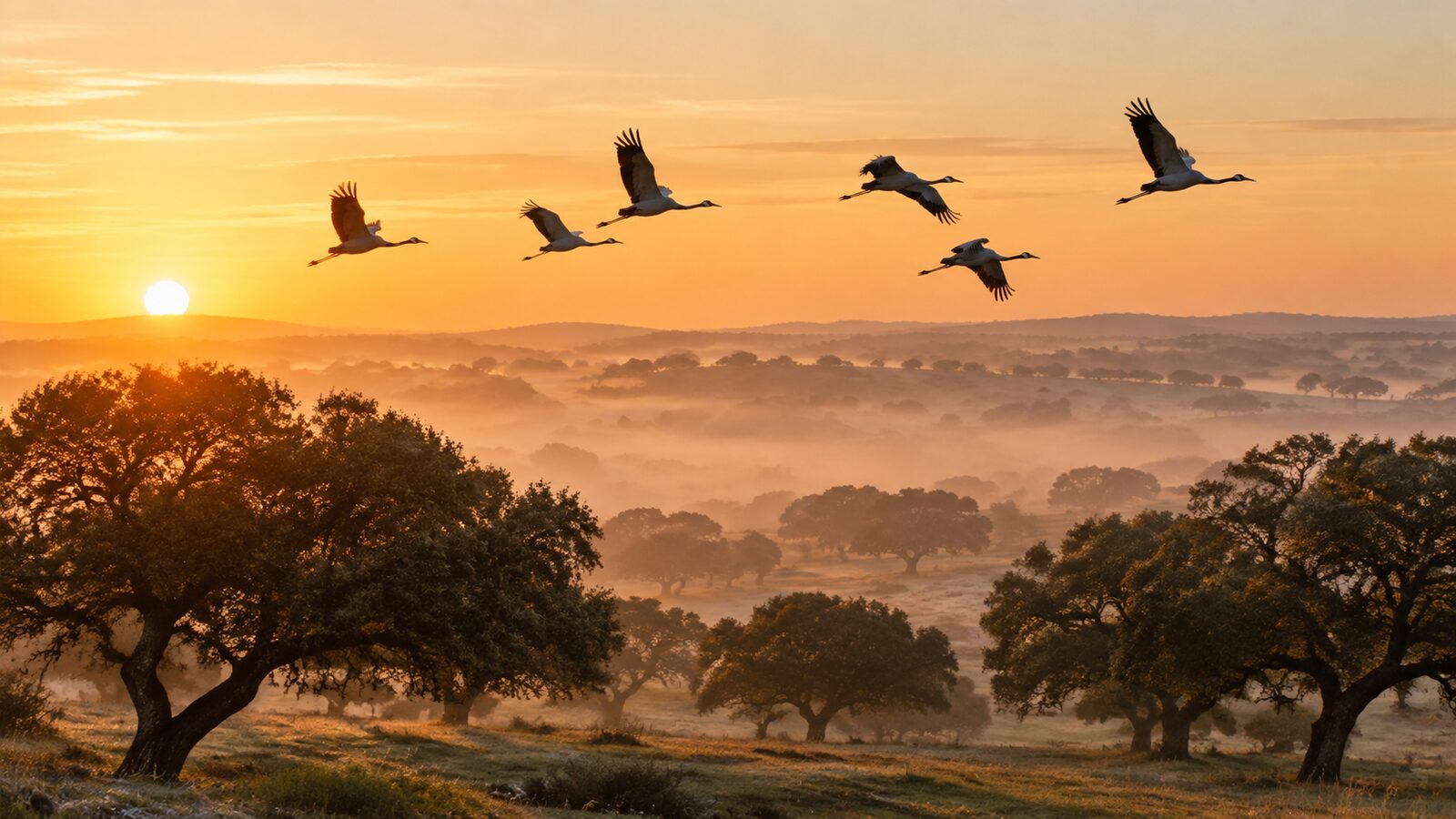
The common crane spends winter in the Iberian Peninsula, and Extremadura is one of its most important wintering areas. Cranes can be seen in dehesas, where they feed on acorns, and in fields near reservoirs, where they roost. They usually arrive in autumn and stay until the end of winter. They are recognisable by their large size, long necks and distinctive calls, audible from far away, particularly at dawn and dusk as they fly in formation.
If your property is dehesa, you may see them flying over or landing on it. This is usually a good sign of a well-preserved environment, although it also means you should avoid disturbing them, especially at roosts.
Other birds you may see
- Birds of prey: cinereous vultures, griffon vultures, Spanish imperial eagles and others, particularly around Monfragüe.
- White storks: conspicuous in villages and on towers, with large, recognisable nests.
- Black storks: more elusive, associated with rivers and mountains.
- Steppe birds: great bustards, little bustards and sandgrouse on flat cereal-growing land, such as La Serena.
- Reservoir and river birds: ducks, herons and waders on river plains and large reservoirs.
When to watch them
Autumn and winter are the best seasons for cranes and other wintering birds. Spring, from March to June, is excellent for birds of prey, storks and breeding birds. Dawn and dusk offer the best light and more activity. Binoculars and patience are enough to get started; a field guide and spotting scope greatly improve the experience.
What this means for your property
A property in a bird-rich area may appeal to nature tourists, but it may also fall under a form of protection. Before buying, check whether the plot lies within a ZEPA, a LIC or the Natura 2000 network, and what restrictions apply. We explain this in the guide to Natura 2000 and rural properties.
Some activities may need permission: fencing, new buildings, changes of crop or work during the breeding season. Following the rules helps avoid penalties and preserve your property's environmental value.
Birdwatching tourism as a business
Many owners and small businesses offer guided walks, hides and accommodation designed for birdwatchers. If this interests you as a business, you will need the relevant accommodation or activity licence, depending on the case. Review the guide to rural tourism on a property and licensing for the general steps.
How to watch without disturbing birds
- Keep your distance and stay away from nests and roosts.
- Avoid noise and use binoculars or a spotting scope.
- Do not use drones without checking the rules and required permits.
- Do not leave litter or stray from marked paths in sensitive areas.
- Respect breeding seasons, when birds are most vulnerable.
Dehesa properties and birds
Dehesa is a habitat that depends on human management: scattered holm oaks, pasture and extensive livestock grazing. Managing the trees and surroundings with care encourages birds. To understand how it works, read what a dehesa is. If you are looking for irrigated land with different wildlife, see the Guadiana plains.
In short, birdlife is one of Extremadura's defining features and can be a real asset for a property. You simply need to check the rules and respect the environment.
Recommended equipment for beginners
You do not need expensive equipment to enjoy birds. A pair of 8x42 or 10x42 binoculars is a good starting point, together with a guide to Iberian birds and a notebook. A spotting scope with a tripod helps with longer observations, particularly around reservoirs and plains. Muted clothing and comfortable footwear complete the essentials.
Places to start
Monfragüe and its Salto del Gitano viewpoint are classic starting points. The cereal plains of La Serena and Llanos de Cáceres are good for steppe birds, while reservoirs and the Guadiana and Tajo plains attract waterbirds and winter visitors. Check with each area's interpretation centres and tourist offices to find out which routes are open and when.
Citizen science and record-keeping
Many birdwatchers log sightings on citizen science platforms, helping scientists track population changes. If your property has an interesting area, recording the species you see throughout the year is a simple way to understand your land better and document its environmental value.
A sample weekend plan
A good winter plan is to rise early to watch cranes leave a roost, have breakfast in a nearby village and spend the morning on a short walk through a dehesa. In the afternoon, a reservoir or river plain is a good place for waterbirds. In spring, the same weekend could combine birds of prey in Monfragüe with a walk through a steppe area at dusk. Whatever the season, check each area's conditions first and follow access rules.
Practical summary
Birds are one of Extremadura's defining features and a real asset for many properties. To enjoy them, choose the right season, avoid disturbing them and check the environmental rules for your plot. If you are looking for a property, do not dismiss one simply because it is in a protected area: find out what that means and decide on the facts.