Where it is and what it is like
The Sierra de San Pedro extends across the west of the province of Cáceres and part of that of Badajoz, next to the Portuguese border. Valencia de Alcántara, San Vicente de Alcántara, Santiago de Alcántara, Herrera de Alcántara, Carbajo or Cedillo are common names in this area. A few kilometres away are Alburquerque and the Sierra de San Pedro proper in its Badajoz stretch, and to the north the River Tagus, which marks the border on the international stretch.
It is a territory of gentle relief with granite hills, cork and holm oak dehesas, Mediterranean scrub, seasonal streams and fairly large estates. It is an area of low population density, very good for someone looking for solitude, nature and livestock, and less practical for someone who needs immediate services.
Why the cork oak defines this district
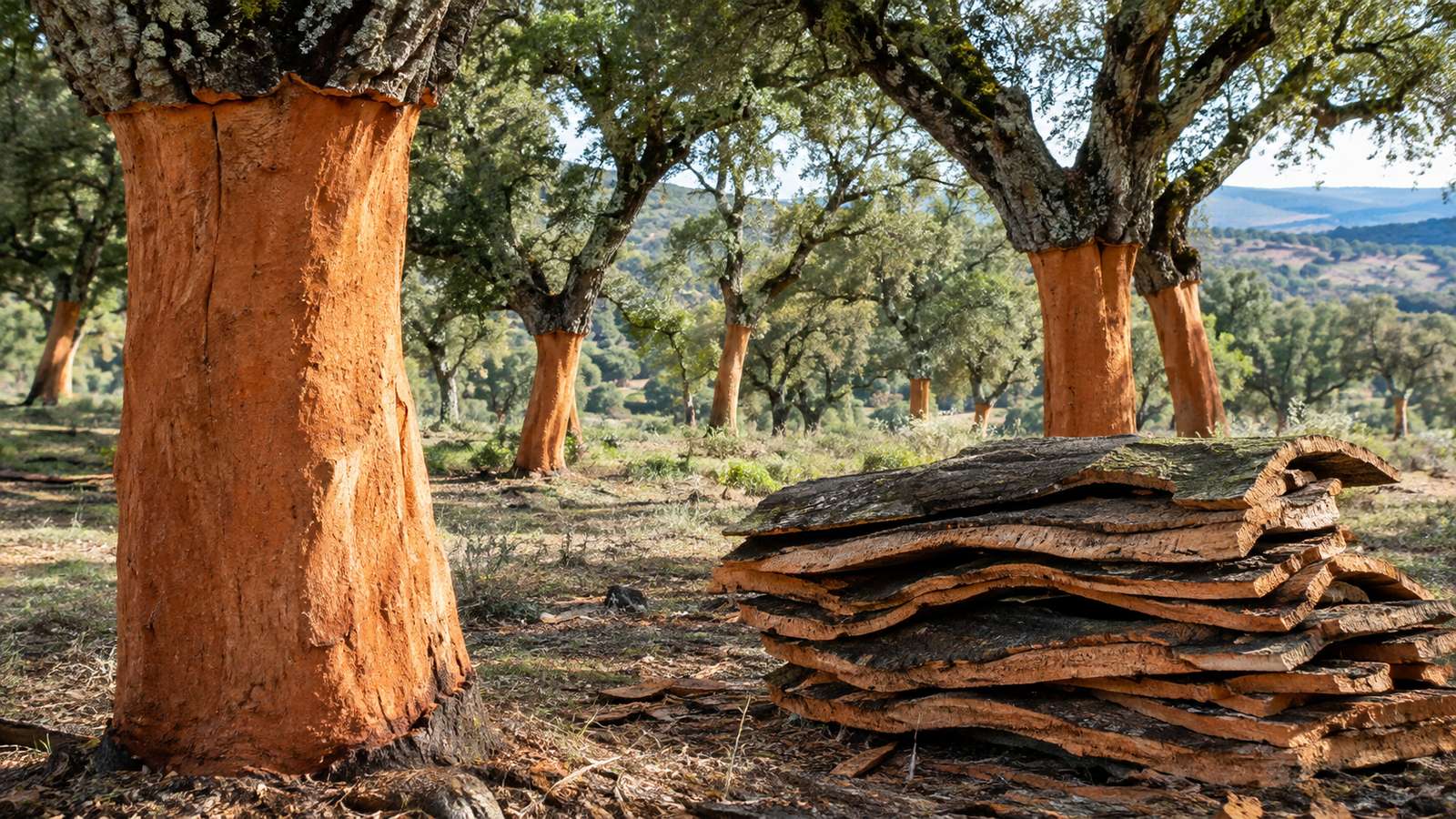
San Vicente de Alcántara is known for its tradition of cork industry, and the cork oak woodlands of the area are one of the economic bases of the estates. The cork oak is stripped for the first time when the tree reaches a minimum diameter, and cork is extracted every nine years or more, depending on the regulations and the tree. That extraction needs authorisation and specialised staff, and its calendar conditions the estate's income. If the cork oak woodland is part of the sale value, study the guide to cork: how it is harvested and what return a cork oak woodland gives thoroughly.
Key questions for the seller:
- When was the last stripping of each stand and when is the next due?
- Who has the right to the next harvest: the buyer or the seller?
- Are there long-term cork sale contracts?
- What percentage of the trees is healthy and what percentage is diseased or dry?
- Is there documentation of the last harvest?
Types of estate
- Mixed cork and holm oak dehesa. With sheep, cattle or Iberian pigs, sometimes with montanera. Income combines livestock, cork, hunting and subsidies.
- Woodland and hunting estate. With scrub, rockrose and scattered trees. Of interest to someone looking for big or small game. See the guide to hunting estates and hunting grounds.
- Pasture estate with granite. Poorer land, good for extensive sheep.
- Small leisure estates near villages. With a stone house or stable, which usually need renovation.
Price and what changes it
In our October 2026 catalogue the median for dehesas and livestock estates in Extremadura is around 7.000 € per hectare; this district usually sits below that on large woodland estates and above on those with good cork oak woodland in production, water and a house. The factors that weigh most are the condition of the trees, access, proximity to villages, water and fencing.
Always compare with estates of the same size. The guide to price per hectare in Extremadura explains why comparing a 5-hectare estate with a 500-hectare one leads to mistakes.
Environmental protection
This area includes Natura 2000 sites and is close to the Tajo Internacional Natural Park. That means there may be restrictions on building, earth moving, fences, power lines and some uses. Before making an offer, ask the town council and the environmental administration for written information on the specific estate. The guide to Natura 2000 and protected areas clarifies what each category usually implies.
Border with Portugal
Proximity to Portugal has practical consequences. There are Portuguese buyers, a livestock and cork market that crosses the border and estates that have historically been worked on both sides. Check:
- Whether the estate borders the frontier or a river that marks it, and what limitations exist in that strip.
- Traditional tracks and crossings that run across the estate.
- Mobile coverage, which sometimes jumps to Portuguese operators and can produce roaming costs.
- The real distance to the hospital, a large store and an airport. From this area the usual references are Cáceres, Badajoz or Portugal, not Madrid.
Document checks
- Nota simple and Cadastre with matching areas.
- Check of uses and enclosures in SIGPAC, which often do not reflect the real trees. The guide to nota simple, Cadastre and SIGPAC explains it.
- Easements, livestock routes and public tracks.
- PAC entitlements and livestock registers, if included in the sale (PAC when buying an estate).
- Condition and legality of the buildings and wells.
- Hunting permits and hunting ground registration if there is hunting use.
Life on the estate
If you plan to live here, assess isolation in winter, fire risk in summer, maintenance of dirt tracks and internet connection. In an area with estates of hundreds of hectares it is common for the nearest neighbour to be several kilometres away. That is an attraction for many buyers and a logistical problem for others. An intermediate alternative is to buy a smaller estate near a village and then consider extending it with neighbouring plots.
How to continue
If you are interested in similar districts with dehesa and cork oaks, also see the dehesa guide and compare with Cáceres or Badajoz. Before signing, follow the steps in how to buy a rural estate in Extremadura.