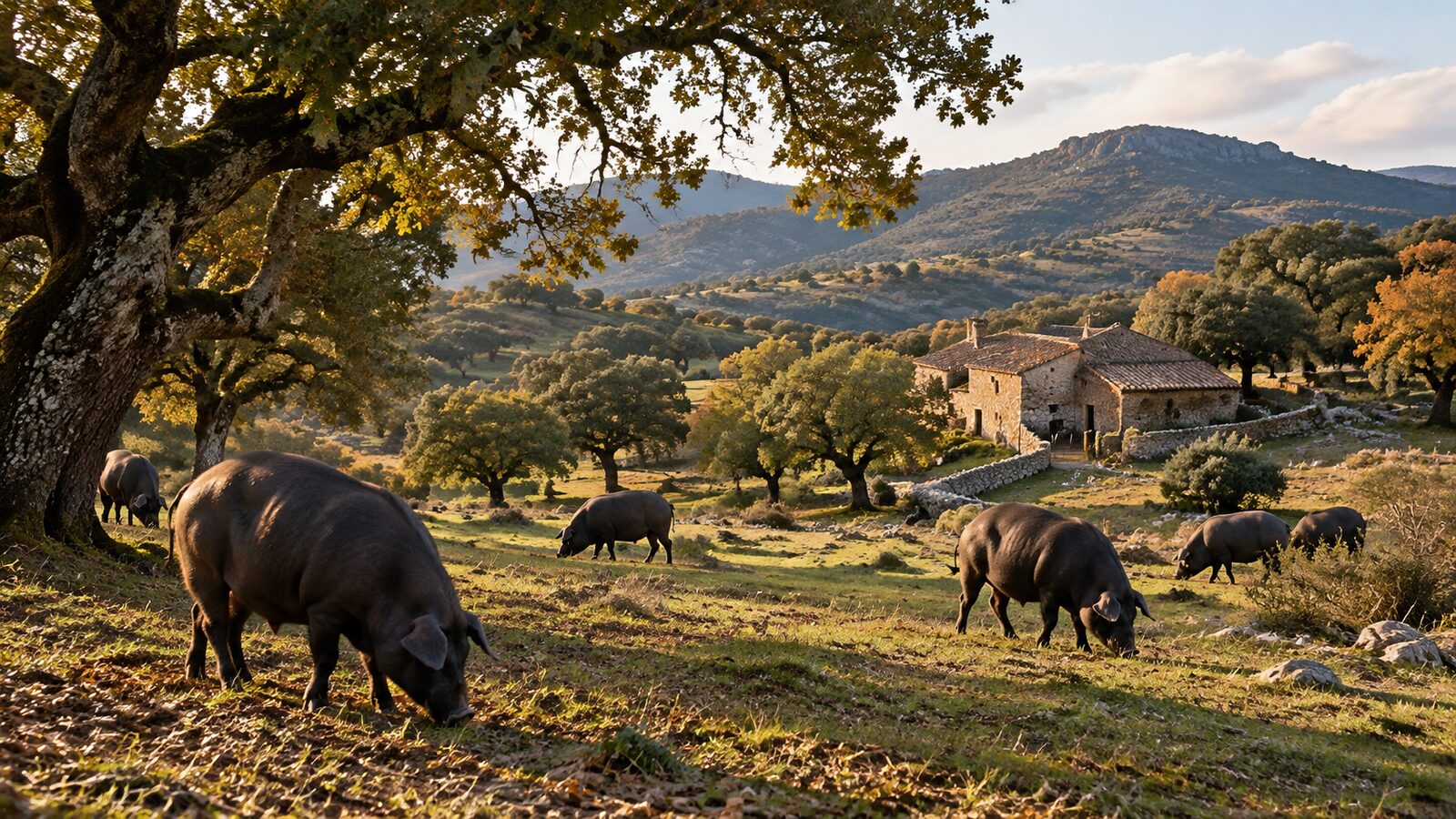
A region of dehesa and hills
Montánchez and Tamuja lies in central Cáceres province, between the cities of Cáceres and Mérida. Its landscape combines the Sierra de Montánchez, with its castle and white houses, and extensive holm oak and cork oak dehesas where Iberian pigs are raised during the montanera. Extremadura's food portal describes it as one of the birthplaces of acorn-fed Iberian ham. There are also olive groves, some vineyards and sheep and cattle farming.
Why it attracts buyers
- Location: within reasonable distance of Cáceres and Mérida, with access to services and regional transport links.
- Landscape: open dehesa, hills and villages with character.
- Livestock and food traditions: Iberian pork products, cheese, olive oil and wine.
- Varied prices, with options for recreational and livestock estates.
Types of estate
Medium-sized and large dehesas predominate, with country houses or livestock buildings, alongside smaller plots near villages. In the hills, estates have slopes and poorer soils; flatter areas have grazing or arable land. To understand how a dehesa is used, start with what a dehesa is and the montanera.
Iberian pigs and the dehesa
Raising Iberian pigs during the montanera depends on the trees' acorn production and appropriate stocking management. A well-preserved dehesa has trees of different ages, sufficient pasture and water. If you plan to use the estate for Iberian pigs, consider holding registration procedures, animal health and a possible connection with the Dehesa de Extremadura designation of origin. If you prefer to lease out montanera grazing rights, read leasing montanera grazing rights: price and conditions.
Vineyards and olive groves
The Montánchez area is also one of the subzones of the D.O. Ribera del Guadiana, with vineyards on hilly terrain. To understand that designation, read vineyards in Extremadura: Ribera del Guadiana. Traditional olive groves are common on slopes and in valleys.
What to check before buying
- Tree condition: density, age, health and regeneration. An ageing dehesa or one affected by oak decline can be very expensive to restore.
- Water: ponds, authorised wells or a spring (see water on rural property).
- Fences and subdivisions for managing livestock.
- Documents: consistent land registry extract, cadastre and SIGPAC records (how to check).
- Current contracts: grazing, montanera, hunting or leases.
- Actual year-round access and utilities.
The CAP and entitlements
A livestock or agricultural holding may have Common Agricultural Policy aid entitlements, which do not transfer automatically. Read the guide to the CAP and entitlements when buying an estate before assuming they are included in the price.
Living in the area
Local villages offer basic services and a peaceful atmosphere, with Cáceres and Mérida within driving distance for a full range of services. Check internet and mobile coverage, which varies greatly between the hills and plains (see internet and remote working on a country estate).
When to visit
Autumn, with acorns on the ground and pigs entering the montanera, lets you see the dehesa at its busiest. Spring is ideal for greenery and flowers. Visit in summer too, when you can see which estates genuinely have water. To compare other parts of central Cáceres, see Trujillo and the Llanos de Cáceres and Cáceres or Badajoz.
And if you are planning a visit, remember that the area lies beside the Ruta de la Plata, making it easy to include in a longer trip through the region.
Villages and local services
Montánchez is the town that gives the sierra its name, with its castle and historic centre. The district has other villages with basic services, shops, bars and cultural activities. For more complete services, Cáceres and Mérida are within reasonable driving distance, making the area attractive to people seeking peace without total isolation. Ask neighbours which services they use and how long the journeys take.
Festivities, food and tourism
The area has a recognised food offering based on Iberian pork, cheese, olive oil and wine, and a calendar of festivities and fairs that attract visitors throughout the year. For an owner, this may offer an opportunity for a supplementary activity, with the appropriate licence. Visit at different times to learn the area's real rhythm, not just its busiest tourist dates.
Practical advice for a buying visit
- Walk the estate with someone who knows the dehesa to assess the trees.
- Ask neighbouring livestock farmers about acorn production in recent years.
- Check the condition of fences and ponds.
- Ask to see contracts and bills from recent financial years if the estate is operating.
Summary
Montánchez and Tamuja offers dehesa, hills and Iberian pig traditions within comfortable reach of Cáceres and Mérida. It works well for a livestock or recreational estate if the trees are healthy, there is water and the paperwork is in order. Visit in several seasons, speak to neighbours and seek professional support before deciding.
Next step
Shortlist estates and compare them using the same criteria: trees, water, fences, access, documents and contracts. To review the buying process, read how to buy rural property in Extremadura and mistakes when buying rural property.