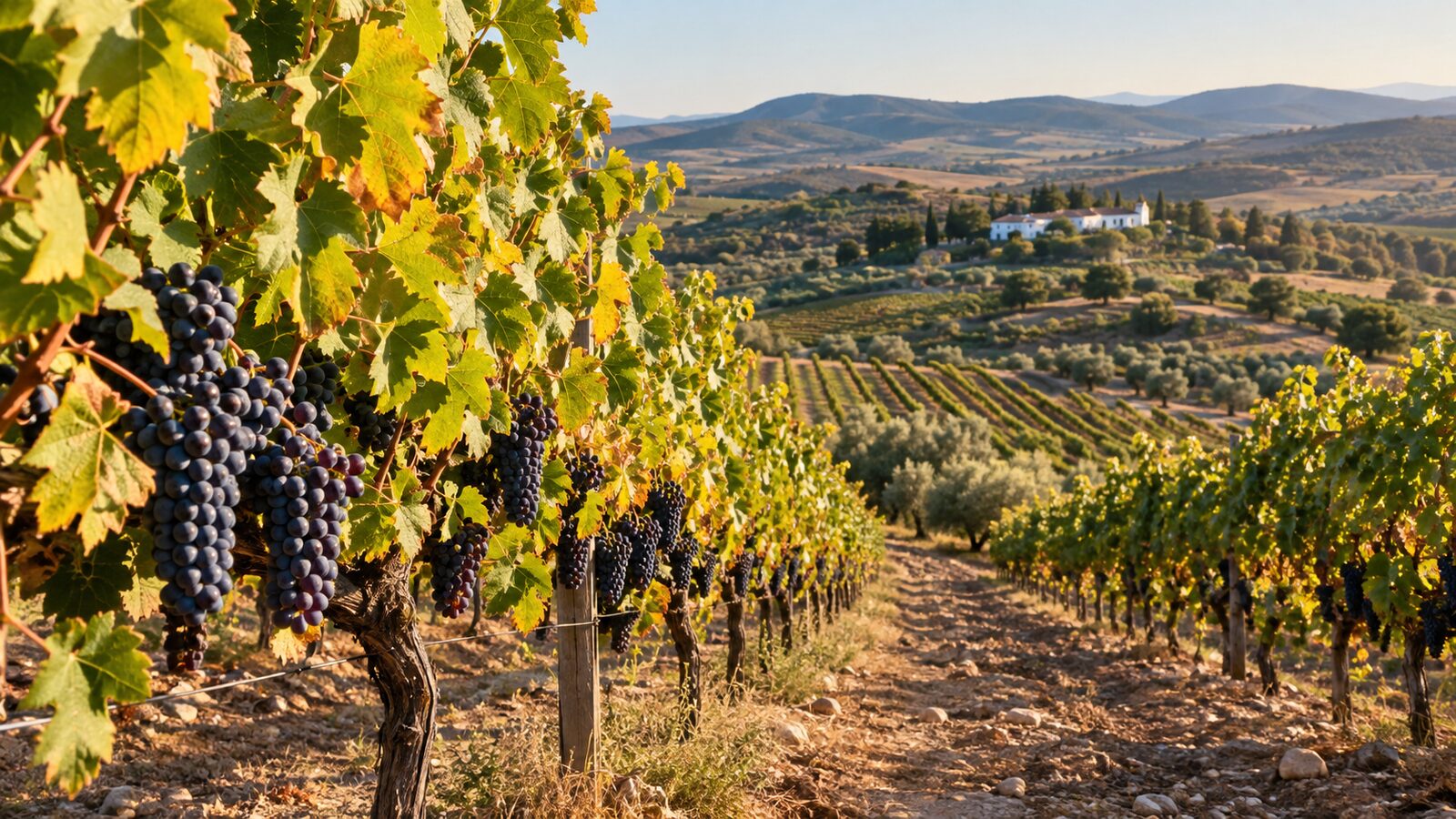
Extremadura's vineyards in brief
Extremadura is one of Spain's major wine-growing regions by area, with most vineyards in Badajoz province. Denominación de Origen Ribera del Guadiana, created in the 1990s, brings together several subzones: Tierra de Barros, Matanegra, Ribera Alta, Ribera Baja, Montánchez and Cañamero. Each has different soils, climate and wine styles. If you are interested in the main wine-growing area, also read the guide to Tierra de Barros: olives and vines.
Common grape varieties
White varieties such as Cayetana blanca, Pardina and Macabeo are grown locally, alongside red varieties including Tempranillo, Garnacha and others. Varieties from elsewhere have also been planted for years. Before buying, ask which varieties the vineyard has, how old the vines are and their intended use, as these factors affect the selling price of the grapes.
What to check in a vineyard
- Vineyard register entry: the planted area must be registered and plots must match SIGPAC and the cadastre. See how to check in land registry extract, cadastre and SIGPAC.
- Whether it is in the D.O.: not every vineyard is; registration affects to whom and how grapes can be sold.
- Age and condition of the vines: an old vineyard may yield fewer kilos, but sometimes higher-quality grapes. Missing vines and wood diseases reduce production.
- Training system: bush vines or trellises, rain-fed or irrigated. This affects mechanisation and costs.
- Water: if irrigated, check rights and concessions (see water on rural property).
How grapes are sold
Most small owners deliver grapes to a cooperative or winery. Ask who takes the current owner's grapes, under what contract, how the price is set and when payment arrives. Grape prices vary each year and should not be taken for granted. If you plan to make your own wine, you must meet registration and health requirements; consult the authorities before investing.
Costs each season
- Pruning, treatments and cultivation.
- Harvesting, by hand or machine depending on the property.
- Irrigation, if present, and installation maintenance.
- Owned or hired machinery.
- Fees and administration.
Make a realistic calculation using the property's average yield, historical grape prices and these costs. The guide to rural property returns helps you take a cautious approach.
Support and finance
A vineyard may qualify for agricultural support depending on its circumstances. Ask the district agricultural office or an administrative adviser what support applies and about the current owner's position, as some schemes depend on entitlements or farmer status. If you need finance for the purchase or operation, consult the guides to loans for farmers and the CAP and entitlements when buying rural property.
Wine tourism
Wine tourism can complement production through visits, tastings or accommodation. It requires compliance with tourism and health rules, and investment that is not always recovered quickly. If you are considering it, first review rural tourism on a property and licensing.
Making the most of a vineyard visit
Visit in different seasons: winter reveals pruning and vine condition; spring, new growth; summer, the grape load; and harvest, actual production. Speak to neighbouring growers and the cooperative. Always request real figures from recent seasons: kilos, prices and expenses. With these figures, comparing properties is much easier.
Taxes and deeds
Buying a vineyard follows the usual rural property process: deed, taxes and registration. Review taxes when buying rural property and deeds and the notary. For irrigated areas near vineyards, read irrigated properties in Vegas del Guadiana.
Subzones: not all are alike
Within Ribera del Guadiana, Tierra de Barros accounts for most production, with deep clay soils and vineyards on flat land. Others, such as Montánchez or Cañamero, have vineyards in hillier areas, with slate soils and lower production. These differences affect yield per hectare, costs and grape type. Compare properties within the same subzone, as prices and yields vary widely between them.
Machinery and mechanisation
Mechanical harvesting is common in widely spaced trellised vineyards on flat land. Old bush-trained vineyards are usually harvested by hand. Ask whether machinery can access the property and whether investment in a tractor, treatment equipment or harvester is needed. Many small owners hire service companies or neighbouring farmers for this work, a reasonable option when starting out.
Common mistakes when buying a vineyard
- Paying the price of a productive vineyard when the vines are exhausted or diseased.
- Failing to check that the declared area matches the actual area.
- Assuming grapes will sell at last year's price.
- Forgetting labour costs for pruning and harvesting.
- Failing to request contracts with the cooperative or winery.
A prior inspection by a local agricultural specialist often prevents disappointment. If a lawyer is helping you buy, ask them to review the registration status and current contracts.
Sustainability and changing growing practices
Some owners consider moving from traditional growing to organic management or varieties better adapted to heat. These decisions take time, investment and technical advice, and cannot be implemented overnight. If you buy a vineyard intending to transform it, carefully calculate the years without full production and ensure the change is compatible with the plot's registration.
Summary for your decision
An Extremadura vineyard can be a good project for someone comfortable with annual growing cycles, variable prices and work concentrated around pruning and harvest. Buy with actual seasonal figures, registration in order and a clear grape sales plan. Remember that the property's value depends on more than the vines: soil, access and water matter too.