What Plasencia is and where it is
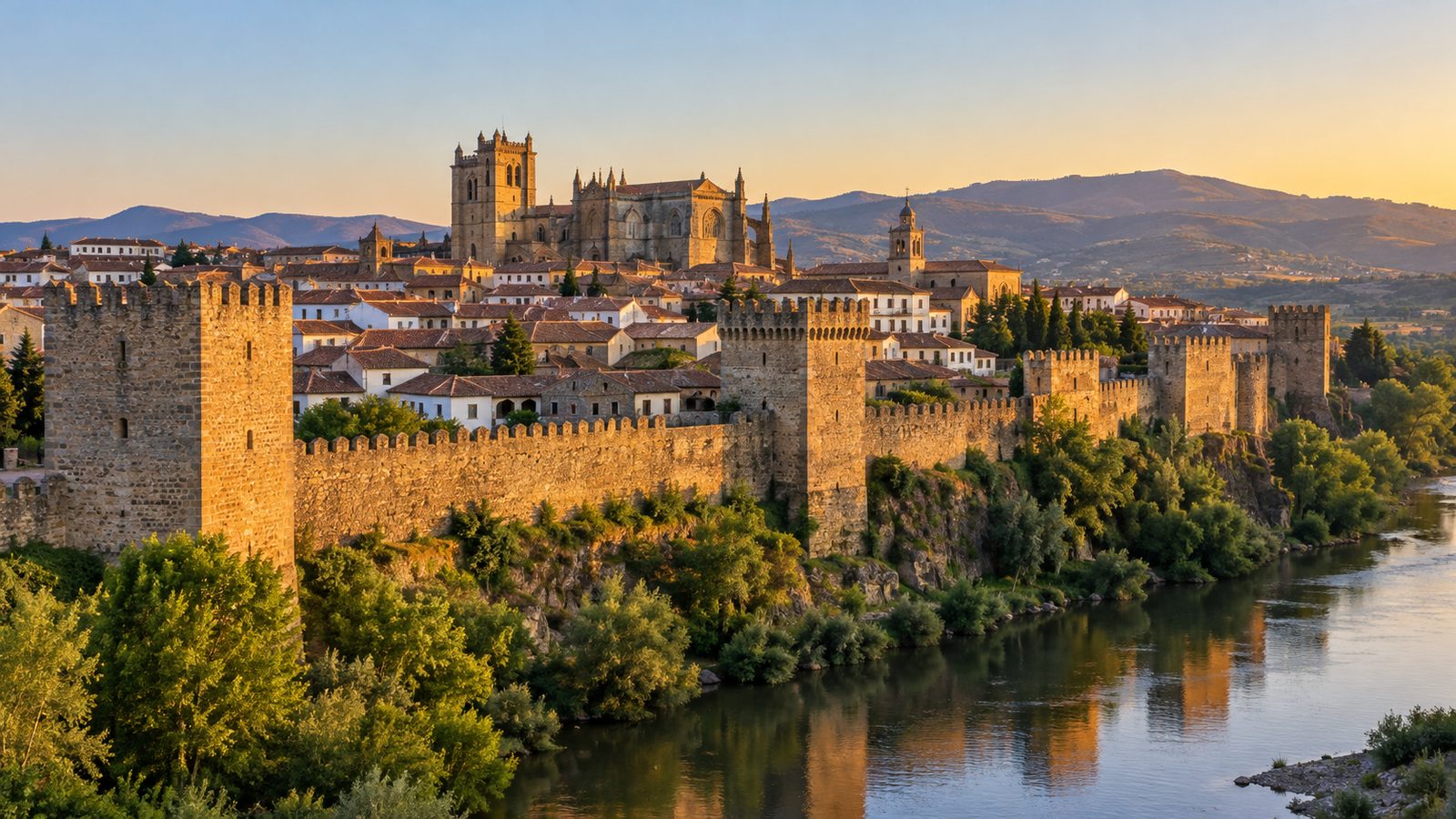
According to the University of Extremadura, Plasencia is in the north of the province of Cáceres, on the Ruta de la Plata and on the banks of the river Jerte. It was founded by the Castilian king Alfonso VIII in 1186. The Cáceres provincial tourism portal presents it as a gateway to the Ambroz, Jerte and La Vera districts. To understand the historical context of the north-south axis, read the guide to the Ruta de la Plata in Extremadura.
What the city preserves
Cáceres provincial tourism notes that Plasencia preserves part of its walls, with some defensive towers and the four access gates, and that the Tuesday market has been held in the Plaza Mayor since the 13th century. Its cathedral has two distinct buildings: the Old Cathedral, from the 12th to 14th centuries, and the New, begun at the end of the 15th century. The municipal tourism portal adds that the wall has more than 20 preserved defensive towers. These are visiting facts; they do not change the legal conditions of any estate.
Plasencia as a base for finding an estate
A large city in northern Cáceres gathers services an isolated estate does not have: notaries, agencies, technicians, agricultural suppliers, a hospital and shops. Many buyers stay there a few days and visit estates in several districts. Each district has a different character:
- The Valle del Jerte and the Ambroz, with slopes, water and mountain crops.
- La Vera and the Valle del Tiétar, with a milder climate and irrigation.
- The surroundings of Monfragüe, with dehesa and environmental figures.
The cherry tree and the valley
If cherry growing attracts you, the area has a well-known production. In the guide to the cherry tree in the Valle del Jerte we explain what it implies on a real estate: slope, harvest labour, frost risk and marketing. Always visit at different times of year; a slope in bloom does not show how work is done in August or January.
What the city does not settle
Plasencia being nearby says nothing about the access, water or paperwork of a specific estate. Time the real journey from the estate to the city with normal traffic and with rain. Check whether the track is public or private. Look at mobile and internet coverage (more in internet and remote work on an estate). And decide the province calmly in Cáceres or Badajoz: where to buy an estate.
Documents worth requesting
Before signing anything on an estate near Plasencia, ask the seller for the land registry extract, the cadastral certificate and the SIGPAC query if there are agricultural parcels. Check that the area, the boundaries and the owner match in all three documents. If there are differences, ask how they will be resolved before the deed. The guide to land registry extract, cadastre and SIGPAC explains what to look at in each one.
Also ask for the property tax receipts, the current contracts and any authorisation or licence for the constructions. An independent lawyer should read the deposit contract before you sign it; the guide to the deposit contract on a rural estate summarises the points to review.
How to visit the estate
Visit the estate at least twice and in different seasons: once in good weather and once in rain or strong heat. Time the real journey from the town where you would do your daily shopping. Check the access track, the mobile coverage, the state of the fences and the buildings, and take photos of everything. Talk to a neighbour without the seller present: they usually know things about water, dry years and tracks that appear in no document.
Costs that do not appear in the listing
Besides the price, an estate has expenses every year: rural property tax, insurance, maintenance of fences and tracks, utilities and, if there is an operation, production costs. There are also purchase costs, such as taxes, notary and registry. The guide to taxes when buying a rural estate helps with the former and the annual maintenance calendar with the latter. Make a sheet with three scenarios and check that your budget survives the worst.
Who to consult
You do not need to know everything, but you do need to know whom to ask. For this topic, consult an agricultural technician of the district. For the legal and purchase side, a lawyer who knows the district. For the planning side, the town hall, in writing and with the cadastral reference. Keep the answers and compare them with what the seller says. If two sources contradict each other, ask both to clarify before moving on.
Common mistakes
- Deciding on the fame of the product or the place without looking at the estate's documents.
- Signing a deposit contract before having the registry extract, the cadastre and the water confirmation.
- Trusting production figures that the seller cannot prove with invoices.
- Visiting the estate only once, in the best season of the year.
- Not asking the town hall and the competent administration in writing what can be done.
They all appear in the guide to mistakes when buying a rural estate.
Questions for the seller
Before negotiating, prepare a list of questions about an estate near Plasencia and ask for written answers: what is done on the estate today, since when, with what results, what expenses it has, what contracts are in force and what has stopped being done and why. Also ask about the problems of recent years, such as droughts, pests, fires or conflicts with neighbours. If the answers are vague or change from one conversation to another, take it as a sign to ask for more documents or to wait.
Conclusion
Plasencia is a good base for getting to know northern Cáceres: it has history, services and access to three districts. Use it to get your bearings and find professionals, and decide each purchase on the documents, the water, the access and several visits. Before taking steps, read living in Extremadura: pros and cons.