Two valleys, two markets
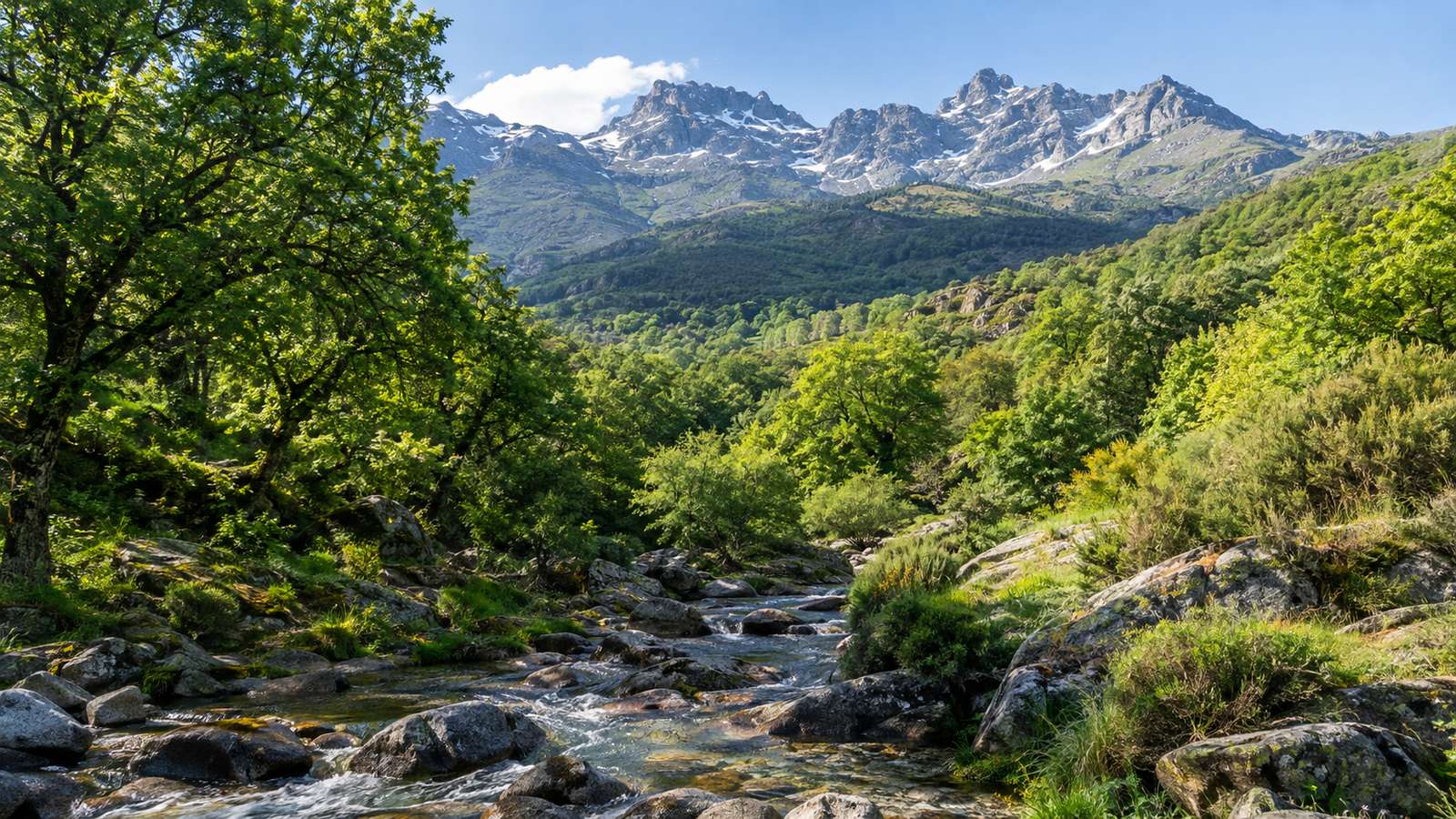
The Jerte Valley (Navaconcejo, Cabezuela del Valle, Jerte, Tornavacas, Piornal) and the Ambroz Valley (Hervás, Baños de Montemayor, Aldeanueva del Camino, Abadía) are in the north of the province of Cáceres, between Plasencia and the Sierra de Gredos. They share abundant water, cold winters and a mountain landscape, but the estate market is different.
The Jerte is a valley of agricultural smallholdings: thousands of small plots of cherry trees on stone terraces, famous for the Picota del Jerte, which has a protected designation of origin. The Ambroz combines chestnuts, olive groves, vegetable gardens, mountain dehesa and a strong tourist and residential component, with stone houses in Hervás and nearby villages.
Usual estates
- Terraced cherry orchards. Plots of 0,3 to 3 hectares, with trees of very different ages. They produce spring fruit, with harvest between May and July depending on altitude and variety. Profitability depends on the price of cherries in the season, the cost of picking and the absence of frost or rain at flowering or ripening.
- Chestnut woods. More common in the Ambroz and on the slopes of the Jerte. Use of chestnuts and timber, with plant-health risks worth discussing with a technician.
- Irrigated gardens and fruit trees. Near gorges, with channel irrigation.
- Leisure estates. Stone house, some trees and a gorge or well. They are the most expensive per hectare and the ones that compete most with the resident buyer or the second-home buyer.
- Woodland and high pastures. Cheaper, less useful for living and with environmental conditions.
Price: why it is not like the rest of Extremadura
The price per hectare in these valleys is usually far above the regional average, because size is small, water is abundant and demand mixes farmers, retirees and second-home buyers. In our October 2026 catalogue, leisure and tourism estates easily exceed 50.000 € per hectare median, and that logic shows here. A productive cherry orchard, without a house, can be valued very differently from a plot with a small house and road access. Always compare with the guide to price per hectare and with estates of similar size.
Water: an advantage with papers
Abundant water is the great attraction, but not every irrigation right is the same. Check:
- If the water comes from a channel with a turn system or from the local irrigation community, ask for the membership certificate and the turn regulations.
- If there is direct intake from a gorge, check the registration or concession with the Tajo River Basin Authority. Without a title, a consolidated use may not be a transferable right.
- If there is a well, check its legalisation and flow. The guide to water on a rural estate details which papers to ask for.
- The 100-metre police zone and the 5-metre easement along watercourses limit works and buildings near gorges.
Cherry trees: what to check in the field
A cherry orchard is not a static asset. Before making an offer:
- Look at the age and condition of the trees: trunks with wounds, gummosis, dry branches or ageing plantations lower production and require replacement.
- Ask which varieties there are, because not all have the same commercial outlet or the same picking season.
- Find out how the fruit is sold: cooperative, trader or direct sale. Ask for receipts from previous seasons, not just the seller's promise.
- Check the terrace walls. Repairing dry stone is slow and expensive, and a fallen wall changes the cost of the purchase.
- Consider labour. Picking is manual and concentrated; anyone who does not live nearby must count on crews.
Planning and houses
Almost all the land in these valleys is non-developable land, with areas of environmental and landscape protection. Building from scratch is usually very limited and the rehabilitation of huts or existing houses depends on their legal status. The guide to building a house on a rural estate and the one on Natura 2000 help identify the general framework. If in any doubt, ask the town council for a written planning report before signing arras.
Boundaries and titles
In smallholding areas plots without the correct area in the Registry, undivided inheritances and walls that have "walked" over time are common. Ask for the nota simple, compare with the Cadastre and SIGPAC as the guide to nota simple, Cadastre and SIGPAC indicates and demand, if necessary, a topographic survey. If they sell you a share, read the guide to undivided co-ownership.
Comparison with La Vera
Many people hesitate between the Jerte, the Ambroz and La Vera. In short: La Vera has a milder climate, more paprika and historic tobacco and more leisure supply; the Jerte offers cherries and plenty of mountain agriculture; the Ambroz has more tourist supply and a historic centre. If you are looking for another leisure option with water, see La Vera and the Tiétar Valley.
Practical recommendation
If you want to produce cherries, buy only if you can live nearby or count on a crew and a marketer. If you want a leisure estate, focus on legal water, access and the building. And if you are looking for investment, calculate the total cost of purchase, maintenance and picking before counting on a return: on small plots, agricultural income rarely justifies the purchase price on its own.