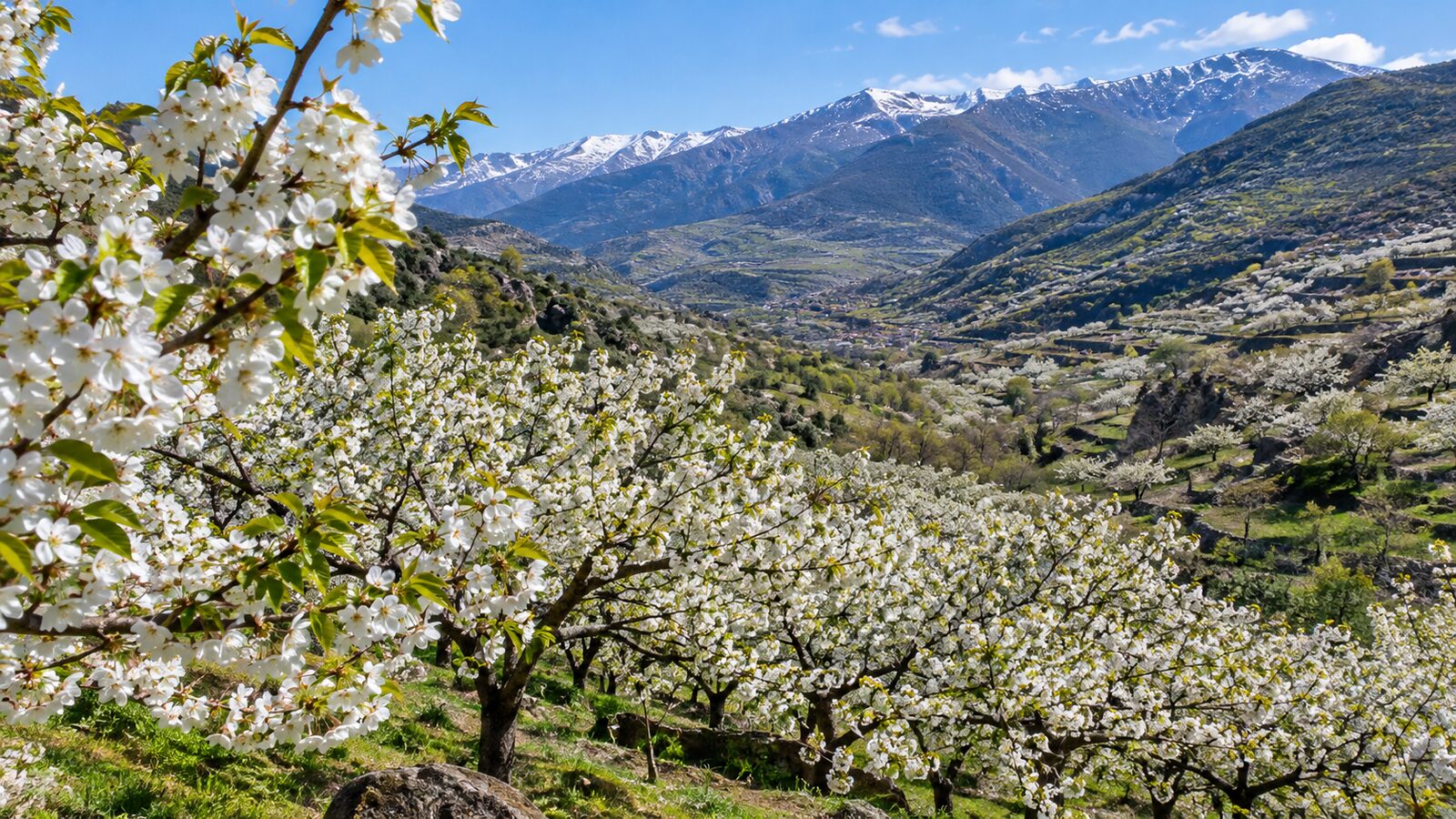
A landscape closely linked to its crop
Valle del Jerte, in northern Cáceres, is one of Extremadura's best-known destinations for cherry blossom. Its terraced slopes, covered with thousands of white trees, attract visitors every spring. Beyond its scenic value, the crop has a distinctive identity: Jerte cherries, including picota and other varieties, are protected by a designation of origin. If you are thinking of buying a property here, it is worth understanding how the crop is grown and how much work it needs.
The cherry-growing calendar
- Winter: pruning and maintenance while the trees are dormant.
- Late winter and spring: blossom, which usually creates the famous white landscapes. This is a period vulnerable to frost.
- Spring and early summer: ripening and harvesting, done by hand and in stages according to variety and altitude.
- Summer and autumn: post-harvest work, soil care and preparation for the next cycle.
Exact dates vary with altitude, variety and the year, so do not rely on a general calendar: ask local growers.
Land and terraces
Many Jerte properties lie on slopes, with terraces supported by stone walls. They are beautiful and valuable, but need maintenance: a collapsed wall means costly repairs. Before buying, check the terraces, access and tracks. Slopes limit mechanisation, making the work more labour-intensive than for other crops.
Water and irrigation
The valley has water from the mountains and gorges, and irrigation is often managed through scheduled turns, channels and irrigation communities. Check that the property has documented water rights and how water is allocated. To understand the permits, read water on a rural property: wells and concessions.
Labour and harvesting
Cherries are picked by hand, concentrating a great deal of work into a few weeks. You need to know who will pick the fruit, how labour is organised and what it costs. Many small owners rely on family, neighbours or picking crews. If you plan to manage the orchard remotely, work this out carefully, as it is often decisive.
Selling the crop
Selling well is part of the project. Cherries can be delivered to local cooperatives and businesses or sold directly. Ask what the current owner does, who buys the fruit and on what terms. Do not take prices for granted: they vary from year to year. Read the guide to rural property returns for a cautious assessment.
Growing risks
- Late frosts during blossom, which can reduce the harvest.
- Rain at harvest time, which can split the fruit and reduce its value.
- Pests and diseases requiring treatment and monitoring.
- Ageing trees: an old orchard produces less and may need replanting.
What to check before buying
- The age and condition of the trees, varieties and planting layout.
- The condition of walls, terraces and tracks.
- Water and irrigation rights.
- Existing sales or supply contracts.
- The cadastral reference, actual area and boundaries (land registry extract and cadastre).
- Any applicable CAP support or requirements.
Beyond growing cherries
The area is also a tourism destination. Some owners combine production with rural accommodation or activities during blossom, always with the necessary licence; see the guide to rural tourism on a country property. To learn more about the surroundings, read rural properties in Valle del Jerte and Ambroz and compare them with Sierra de Gata and Las Hurdes.
Getting started without experience
If you have never managed an orchard, it is wise not to improvise. Speak to valley growers, visit cooperatives and ask local agricultural advisers. One sensible option is to retain the farmer or person already tending the property during the first year, so you can learn the rhythm of the crop. Learning pruning, treatment and irrigation practices is part of the price of entering a traditional growing business.
Growers' paperwork and records
A farm has obligations: plant protection treatment records, use of approved products, a farm logbook and, where applicable, agricultural registrations. Ask which paperwork the current owner keeps up to date and what you would need to do after buying. A local administrative adviser or cooperative can usually provide useful guidance on these procedures.
The value of the landscape
Jerte also benefits from blossom tourism. An attractive, well-kept property with reasonable access may draw on that interest through a small complementary activity. But do not confuse scenic value with agricultural returns: they are different things and should be assessed separately before deciding.
Taxes and buying
Buying agricultural land involves the usual rural property taxes, depending on the circumstances. Review the guide to taxes when buying rural property and consult an adviser before signing. You may also find the guide to buying rural property in Extremadura useful.
When and how to visit a cherry orchard
Ideally, visit twice: during blossom to assess the scenery, and at the height of harvest to see the actual work and fruit quality. Ask to speak to the person managing the harvest and other valley growers. Look for diseased or missing trees, check that walls are sound and see whether tracks allow access for load-carrying vehicles.
Conclusion
A cherry orchard in Jerte offers scenery, tradition and a crop with a distinctive identity, but it is not a passive investment. It requires knowledge, labour concentrated into a few weeks and acceptance of each year's weather risk. Assessed with cautious figures and good local information, it can be a very rewarding project.