Why use a calendar?
Estate maintenance piles up when neglected: an unchecked roof ends up leaking, late vegetation clearance creates a fire risk, and an unmaintained well leaves you without water in August. An annual calendar with seasonal tasks turns maintenance into a routine. This is an indicative guide: dates change with the district, altitude and each year's weather, so adapt it using advice from neighbours.
Autumn: prepare for the year
- Roofs and gutters: check tiles and clear gutters and downpipes before heavy rain.
- Tracks and drainage: check ditches and culverts to prevent erosion and mud.
- Fences and gates: repair damage before winter.
- Water: check tanks, pumps, pipes and pond cleanliness.
- Firewood: if you use it, check that it is dry and properly stored.
- Winter sowing in the vegetable garden: leafy vegetables, garlic and broad beans.
Winter: pruning and repairs
- Prune fruit and olive trees while dormant, following local recommendations.
- Frost protection for sensitive plants and exposed pipes.
- Check inside the house: damp, ventilation, heating and chimneys.
- Minor repairs and building work, while the land needs less attention.
- Plan the year: budget, purchases and projects.
Spring: growth and vegetation clearance
- Clear vegetation from safety strips and tracks before grass dries out. This is key to fire prevention; see fire prevention on a country estate.
- Vegetable garden and fruit trees: summer sowing, watering, mulching and pest control (see vegetable gardens and fruit trees).
- Check irrigation and service timers and drippers.
- Bees, birds and wildlife: time to observe and respect nests.
- House maintenance visits: exterior painting, joinery and the pool, if there is one.
Summer: monitor and conserve
- Water: monitor levels in wells, tanks and ponds, and vegetable garden consumption.
- Fire risk: respect restrictions, avoid work during hot and windy hours, and keep firefighting equipment at hand.
- Shade and ventilation in the house to reduce cooling needs.
- Summer harvests and preserving.
- Security: check locks and alarms if you go away on holiday.
Tasks by estate type
A dehesa estate has its own tasks, such as caring for trees, checking fences and ponds, and planning grazing; to understand them, read what a dehesa is. An olive grove needs pruning, fertilising and harvesting, depending on the cultivation system (see traditional, intensive and super-intensive olive groves). A recreational country property with a house focuses on the dwelling, garden and access routes.
Annual budget
Set aside an amount each year for maintenance, with a contingency margin. Common expenses include vegetation clearance, repairs, utilities, insurance and local taxes. An indicative figure depends on the estate's size and the house's condition, and the best reference is the previous owner's bills from recent years. Ask for them before buying.
When to hire help
You do not have to do everything yourself. A trusted handyman, neighbouring farmer or small gardening or vegetation-clearance business can handle heavy tasks or specialist work such as electrics, plumbing or roofs. Always request a written quote and check that they have insurance. If you are often away, an estate caretaker is a worthwhile investment.
An estate notebook
Note what you do, when and how much it costs. Over the years, you will develop your own calendar adapted to your estate, and spot problems and costs before they grow. It also helps if you ever want to sell, because it shows how the property has been cared for.
Before buying
Ask the owner what maintenance the estate needs, how much it costs each year and which tasks are most demanding. A well-kept estate with a clear calendar is easy to manage. For the full picture, read living on a country estate in Extremadura and Extremadura's climate.
Common maintenance mistakes
- Leaving vegetation clearance until summer, when risk is higher and restrictions limit work.
- Putting off a small leak until it becomes a major repair.
- Not checking the well and pumps until they fail in August.
- Stacking firewood and pruning waste against the house.
- Hiring without a written quote or checking the worker's insurance.
Basic tools worth having
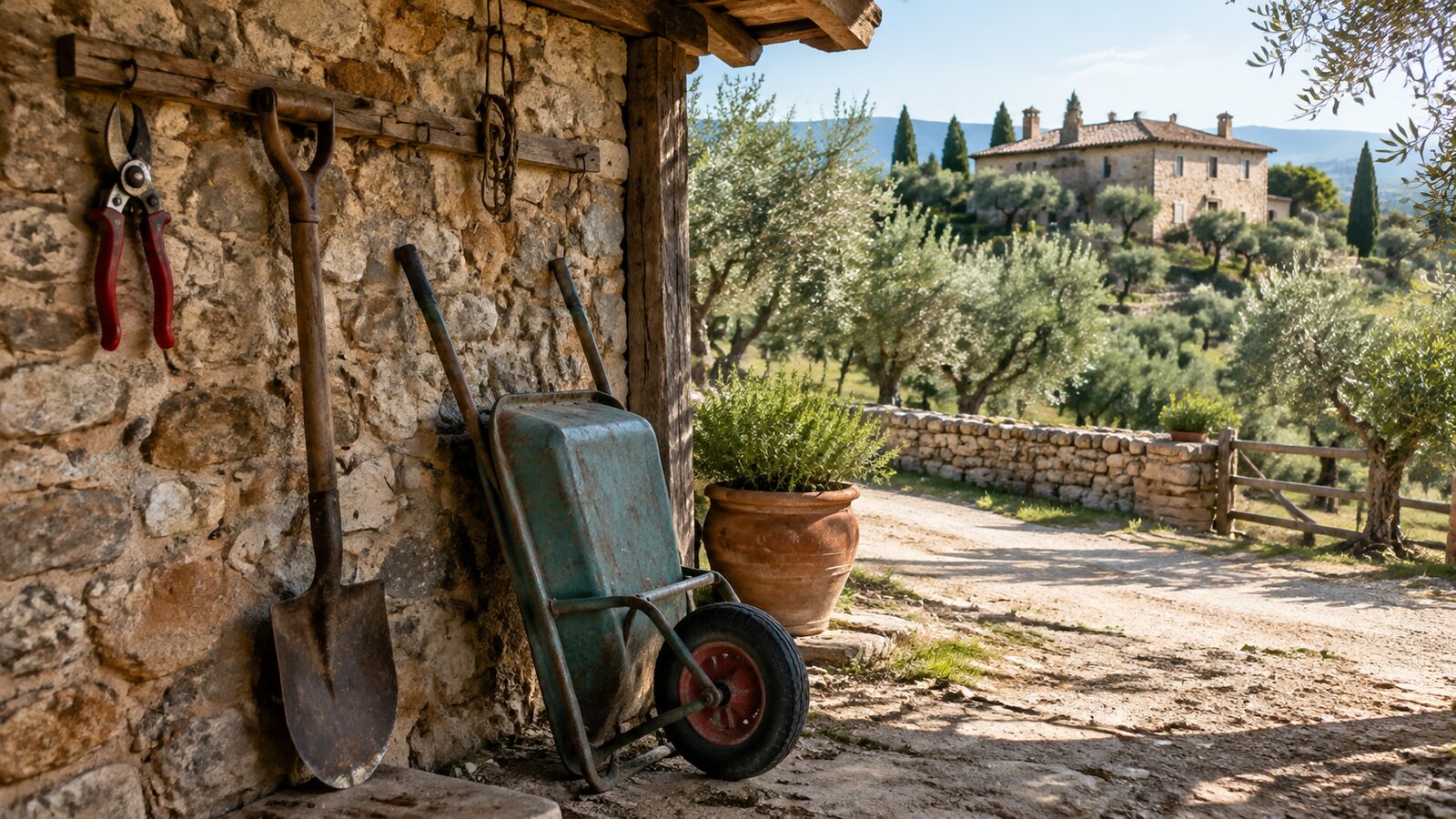
A small estate needs a basic tool set: brush cutter, chainsaw for minor pruning, secateurs and pruning saw, hoe and spade, hose and a safe ladder. For larger estates, a small tractor or an arrangement with a neighbouring farmer may be worthwhile. Buy quality equipment and store it dry; a tool in good condition works faster and is safer.
Summary
With a simple calendar, realistic budget and help from neighbours, an estate can be maintained without nasty surprises. Start with the highest-risk areas, namely water, the roof and vegetation clearance, and add the rest over time.
An example of allocating your time
For a recreational country property with a house, vegetable garden and a few hectares of woodland, a reasonable allocation might be a few autumn weekends for the house and access routes, several winter days for pruning and firewood, a couple of weeks spread through spring for clearing vegetation and the garden, and short but regular summer checks. It is not a fixed formula, but it helps avoid concentrating all the work at the worst time. If you can, set phone reminders for each season's key tasks.
When to seek technical advice
An agricultural or forestry technician, building surveyor or qualified installer can save you money when there are doubts about tree condition, a building's structure, or an electrical or water installation. Local agricultural offices and councils often advise on grants and obligations. Asking in time is cheaper than correcting a mistake.