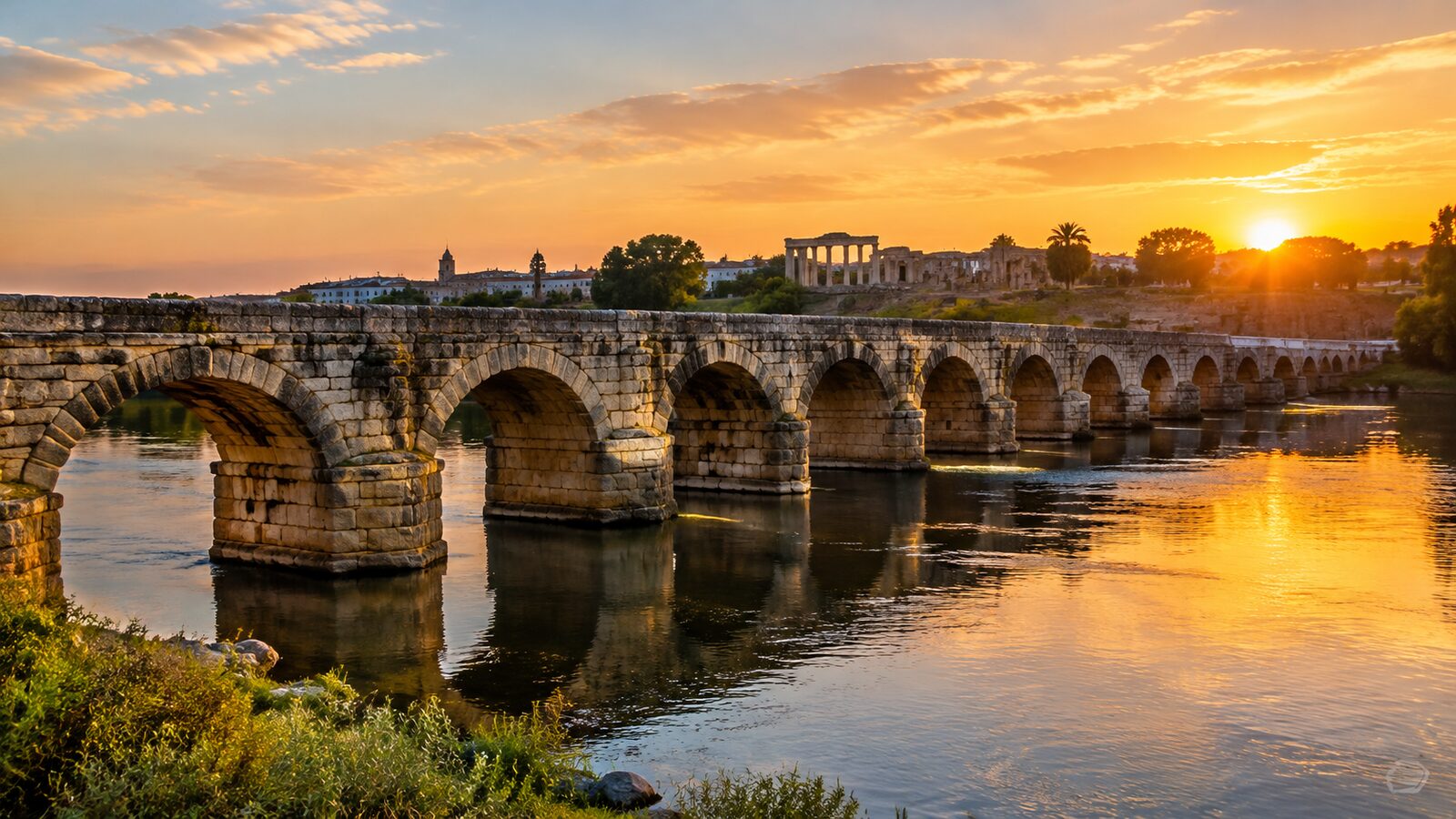
A capital with a long history
Mérida was founded by the Romans in 25 BC as Emerita Augusta and became the capital of a Roman province. It preserves a theatre, amphitheatre, circus, aqueduct and Roman bridge over the Guadiana, among other monuments. Its archaeological ensemble was designated a UNESCO World Heritage Site in 1993. Every summer, Festival Internacional de Teatro Clásico takes place in the Roman theatre, attracting audiences from across Spain.
Why look for rural property nearby?
As the regional capital, Mérida offers a hospital, government offices, shops, schools, a railway station and good road links. This is a real advantage for anyone who wants to live on a rural property without giving up services. The surroundings combine several agricultural landscapes: the Guadiana plains, olive groves, vineyards and dehesa, with properties of different sizes and uses.
Common property types in the area
- Irrigated land on the plains: properties with water from the Guadiana and canals, growing irrigated crops. See irrigated properties in Vegas del Guadiana.
- Olive groves and vineyards, towards Tierra de Barros and Almendralejo. See Tierra de Barros: olives and vines.
- Dehesa and pasture, to the north and west, for extensive livestock farming.
- Leisure plots with houses near villages and the city itself.
Prices and demand
Being close to a city generally means greater demand and higher prices than in more isolated districts. However, every property is different: soil type, water, access and planning status matter more than distance. For a sound comparison, consult price per hectare in Extremadura and the price of a rural property with a house.
Archaeological heritage and building work
Land close to archaeological sites or within protected archaeological zones may require studies or permissions before earthmoving, excavation or construction. If the property is near the historic centre or a known site, ask the town hall and heritage authorities which protection zone affects it. Do not leave this until after buying.
Transport links and travel
Mérida sits at a road and rail junction linking it with Badajoz, Cáceres, Sevilla and Madrid. This makes daily life easier for frequent travellers. If you plan to work remotely or travel often, weigh up motorway access and the property's internet connection (see internet and remote working on a rural property).
Climate and daily life
The Mérida area has very hot summers and mild winters. This affects house design, irrigation and outdoor work. For more details, read Extremadura's climate: what to expect on a rural property.
What to check before buying
- The plot's planning status and archaeological or environmental protection.
- Water rights for irrigated land.
- Cadastral reference, area and boundaries (land registry extract and cadastre).
- The house's condition and legal status.
- Access, electricity and internet.
- Livestock routes, public tracks and easements.
Cultural tourism as a complementary activity
Mérida receives visitors all year round, with peaks during the summer festival and long weekends. For an owner, this may create opportunities for rural accommodation or activities, always with a licence. The city is also a natural starting point for exploring the Ruta de la Plata.
If you are choosing between areas, review Cáceres or Badajoz: where to buy rural property and living on a rural property in Extremadura.
A day in Mérida: what to see
Anyone settling near Mérida eventually becomes a guide for visiting family and friends. The essentials are the Roman theatre and amphitheatre, Museo Nacional de Arte Romano, the Roman bridge over the Guadiana, Templo de Diana and Acueducto de los Milagros. Many local rural property owners draw on this cultural wealth to offer experiences combining heritage and countryside.
Food and local produce
The Mérida area and Tierra de Barros offer good wines, olive oil, Iberian pork products and cheeses. This suggests possibilities for agritourism projects based on local produce, provided health and tourism rules are followed. If you plan to sell your property's produce, consult the authorities about registration and direct-sales requirements before investing.
The cost of living nearby
Living near a medium-sized city means lower transport costs than on an isolated property, and access to services, leisure and shops. In return, purchase and rental prices tend to be higher than in remote rural areas. Consider what matters most to you: total peace or everyday convenience. Many families choose a middle ground, a few minutes from the city but with land of their own.
Organising your visits
To decide without rushing, plan a trip lasting several days: view properties in the morning, eat in local villages and speak to neighbours and local agents. Prepare questions and a notebook recording checks for each property. If buying from outside the region, rely on a trusted professional who knows the land and local rules.
Summary: who this area suits
The Mérida area suits anyone wanting a practical rural property: close to a full-service city, well connected and with varied land and crops. It is less suitable for those seeking total isolation or very low prices. If your priority is comfortable living, a good work connection and countryside a few minutes away, it is one of the region's most logical choices.
Next step
Shortlist three or four properties, visit more than once and request the essential documents in writing: land registry extract, cadastre, planning status and water rights. Also consult how to buy rural property in Extremadura for the process step by step, and the guide to mistakes when buying rural property to avoid the most common ones.