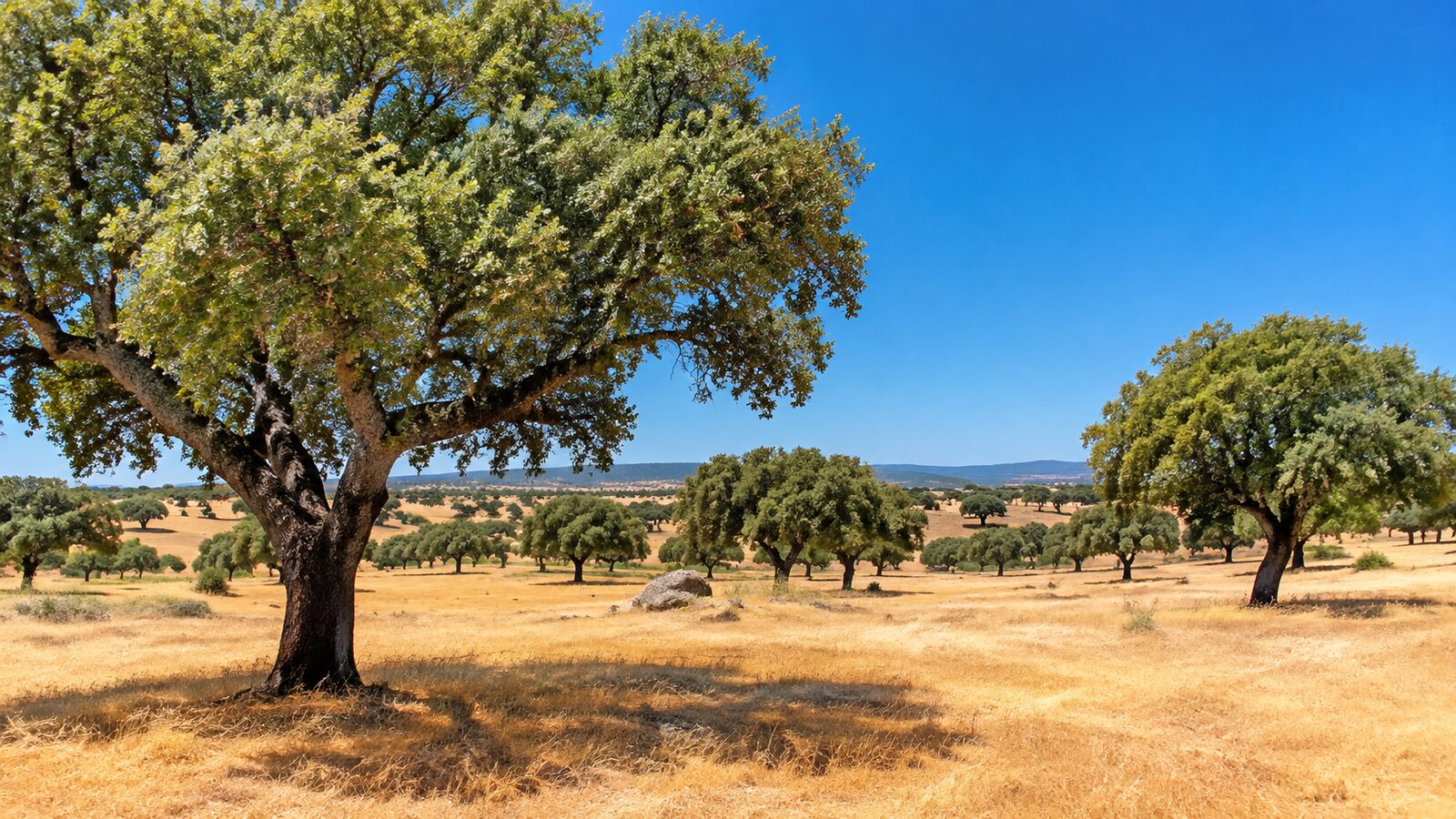
A climate of contrasts
Extremadura has a Mediterranean climate with continental influences. In practice, this means long, dry, hot summers; winters that tend to be mild in the river plains and colder in the hills; and pleasant spring and autumn weather when the countryside looks its best. Rainfall is not constant: it is concentrated in autumn, winter and spring, and varies greatly from year to year. This directly affects pasture, crops and water.
For temperature and rainfall figures for a particular area, consult Agencia Estatal de Meteorología (AEMET) data for the nearest station. Average conditions differ between the Guadiana plains, the northern mountains and the eastern districts.
Summer on the property
Summer is the season that most shapes life and work on a rural property in Extremadura.
- Water: ponds and wells fall, revealing whether a property really has enough water. See water, wells and concessions.
- The house: thick walls, shade, night-time ventilation and awnings help a home cope with the heat.
- Wildfires: dry grass increases the risk. Brush clearance, firebreaks and compliance with regional government rules are essential.
- Outdoor work: this is concentrated in the early morning and at dusk.
Winter on the property
Winter tends to be cool rather than extreme, but it is noticeable in poorly insulated country houses. There are frosty nights, particularly at higher elevations, and rain can make tracks muddy. Check access at this time of year and inspect roofs, gutters and heating. Firewood is a common source of heat, but needs storage and planning.
Spring and autumn: the best times to visit
In spring the countryside is green and full of flowers; autumn brings the first rains and, in the dehesa, acorns. These are the most comfortable seasons for viewing properties. Even so, do not decide on a spring visit alone: go in high summer too, to see the true condition of the water supply and land.
How the climate affects land use
- Dehesa and livestock: pasture depends on rain, and dry years mean buying in feed. See what a dehesa is.
- Olive groves: these tolerate heat well but respond to irrigation in dry years. See traditional, intensive and super-intensive olive groves.
- Vegetable gardens: these need regular watering and shade in summer; some crops grow well in winter.
Preparing the house
A good renovation takes the climate into account: roof insulation, efficient windows, cross-ventilation and sun protection. In an old stone or rammed-earth building, thick walls already help a great deal. Before renovating, check what work the land classification allows and whether the house has legal status; the guides to building on rural land and leisure properties with a house set out the criteria.
Climate change and droughts
Dry spells are a risk to consider before buying. A property with a reliable water supply, healthy trees and good soil management is better able to withstand them. When assessing a property, ask how it fared in recent dry years: how much water it had, what pasture it produced and what extra costs arose.
Pre-purchase climate checklist
- Check AEMET data for the nearest station.
- Visit the property in summer and winter.
- Ask the owner and neighbours about dry years and frosts.
- Check access in wet weather.
- Inspect the house's insulation and orientation.
- Plan water supplies and firebreaks for summer.
With this information, the climate stops being a surprise and becomes another factor in your decision. For a broader picture, read living on a rural property in Extremadura.
Differences between districts
Conditions are not the same throughout Extremadura. The lower-lying Guadiana and Tajo river plains are hotter in summer and milder in winter. Northern mountain areas, such as Gata, Las Hurdes and Jerte, are cooler and wetter, with colder winters and occasional snow on the peaks. Southern and eastern districts, such as Tentudía and La Siberia, have their own variations. If you compare properties in different districts, compare their actual climates as well as their prices. Read more in the guide to Cáceres or Badajoz.
Wildfire risk and owners' obligations
In summer, the Junta de Extremadura sets periods of wildfire danger with restrictions on using fire and machinery in the countryside. Each owner must keep their land reasonably clear of scrub and follow the current rules in their municipality. Ask the town hall what obligations apply to your plot, particularly if it contains houses or buildings. A properly made firebreak protects your home and your neighbours.
Frosts, storms and hail
Late frosts can damage fruit trees and new growth, especially in river plains and valleys. Summer storms sometimes bring hail, affecting crops and lightweight roofs. If you have fruit trees or sensitive crops, consider agricultural insurance and planting locations. Ask neighbours what has happened in recent years.
Clothing, the house and routines
The climate also shapes habits: shutters down at midday in summer, ventilation early in the morning and at night, dry firewood stored before winter, and a roof check in autumn. People living on rural properties soon learn that the countryside sets the calendar. Adapting tasks and working hours to the seasons makes life more comfortable and reduces heating and cooling costs.
Conclusion
Extremadura's climate has its demands, but with planning it can offer a very comfortable life: reliable summer water supplies, a well-insulated home and a seasonal work schedule. Visit the property at the toughest time of year and use that information to decide.