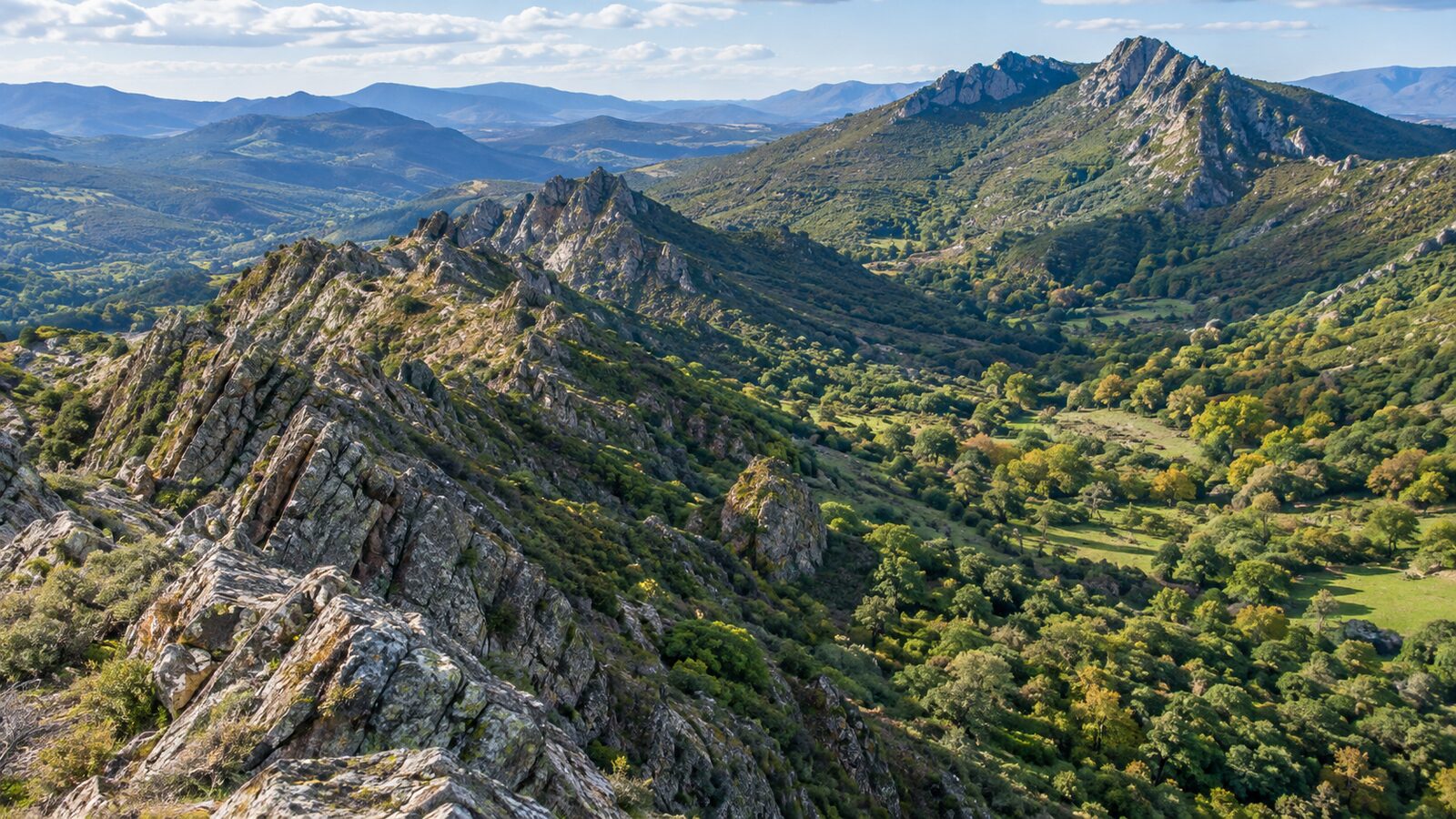
A district of mountains and valleys
Las Villuercas covers a mountainous area in the south-east of Cáceres province, with Appalachian-type landforms: long ridges with quartzite crests and valleys between them. Together with Los Ibores and La Jara, it forms Geoparque Villuercas-Ibores-Jara, recognised by UNESCO as a Global Geopark. Its geology, landscape and heritage attract a growing nature and cultural tourism market.
Guadalupe and its monastery
The town of Guadalupe is built around Real Monasterio de Santa María de Guadalupe, designated a UNESCO World Heritage Site in 1993. It is an important pilgrimage centre and one of Extremadura's most visited destinations. Visitors support accommodation, restaurants and shops, creating an economic opportunity for the district.
Landscape and land uses
- Chestnuts and woodland: wetter slopes have chestnut groves and Mediterranean woodland.
- Olive groves: on slopes and in more open valleys.
- Dehesa and pasture for extensive sheep, goat and cattle farming.
- Beekeeping and local produce: honey, cheeses and other local products.
- Fruit trees and vegetable gardens on river plains and land with water.
To understand livestock use, see what a dehesa is. For olive growing, read traditional, intensive and super-intensive olive groves.
Terrain: slopes and access
A mountain property may have considerable changes in elevation, affecting mechanisation, access, building and the cost of track maintenance. Check access conditions, particularly after rain, and whether the track is public or private. Also assess erosion and wildfire risks, both important on wooded land.
Environmental protection
Much of the district has environmental designations, such as Natura 2000 areas or natural monuments. These may restrict building work, fencing and certain uses. Before buying, request written confirmation of the plot's planning and environmental status. The guide to Natura 2000 and rural properties explains the key points.
Prices
Mountain areas far from major cities generally have lower prices than river plains and land close to large towns. However, that price sometimes reflects lower productivity and poorer access. Always compare similar properties in the same district and consult the guide to cheap rural properties in Extremadura and its list of cautions.
Rural tourism
The district has good reasons to attract nature, walking and cultural tourism. If you are considering rural accommodation, you need a licence and must comply with planning and tourism rules; the guide to rural tourism on a country property summarises the steps. Before investing, check actual year-round demand, rather than peak-season demand alone.
Daily life
The district's villages are small, with a fuller range of services in larger towns and in Navalmoral de la Mata, Trujillo or Cáceres, depending on location. Consider distances to health centres and schools, and internet coverage, which can be patchy in mountain areas (see internet and remote working on a rural property).
Quick checklist
- Written planning and environmental status.
- Access usable all year round.
- Slope, orientation and the condition of terraces.
- Water: spring, well or mains, with documented rights.
- Wildfire risk and clearance obligations.
- Land registry extract, cadastre and boundaries.
To compare with other Extremadura hill areas, see Sierra de Gata and Las Hurdes and Trujillo and Llanos de Cáceres. For everyday life, read living on a rural property in Extremadura.
When to visit the district
Spring is very pleasant for its greenery and flowers, while autumn stands out for the colours of chestnut groves and woodland. Summer is hot in the valleys, although the mountains offer cooler corners, and winter can bring cold days and fog. Visit in more than one season and, if possible, after a rainy spell to check tracks and streams.
Things to do locally
- Visit Guadalupe's monastery and old town.
- Walk trails through the mountains and gorges.
- Discover the district's villages and traditional architecture.
- Try local products such as honey, cheese and cured meats.
These attractions explain many buyers' interest in the area and may support small tourism projects, always subject to a prior feasibility study.
Common mistakes when buying in the mountains
- Underestimating track and access maintenance costs.
- Failing to check wildfire risk and clearance obligations.
- Buying an old house without checking its structure and legal status.
- Taking internet and mains electricity connections for granted.
A pre-purchase inspection with a technical specialist or architect helps avoid surprises. If the house needs renovation, review the criteria in the guide to building and renovating on rural land.
Where to stay and how to organise a buying trip
To get to know the district properly, allow several days: stay in local rural accommodation, visit properties at different times and speak to owners, neighbours and town halls. Prepare a property shortlist and questions, and record track conditions, mobile signal and water availability on each visit. You can then compare objectively when you return home.
Woodland management and wildfire risk
In the mountains, woodland is part of a property's value, but also a responsibility. Owners must maintain safety strips around buildings and follow rules on fire and machinery use during high-risk periods. Ask the town hall and forestry authorities what obligations you have and what support or management schemes may apply to your land. Well-managed woodland is better able to withstand fire and gains value over time.
How it fits your plans
This district suits people who value nature, mountain scenery and cultural tourism, and accept longer distances and more demanding access. It is less suitable for those needing immediate services or a highly mechanised farm. Think honestly about what you want before deciding.