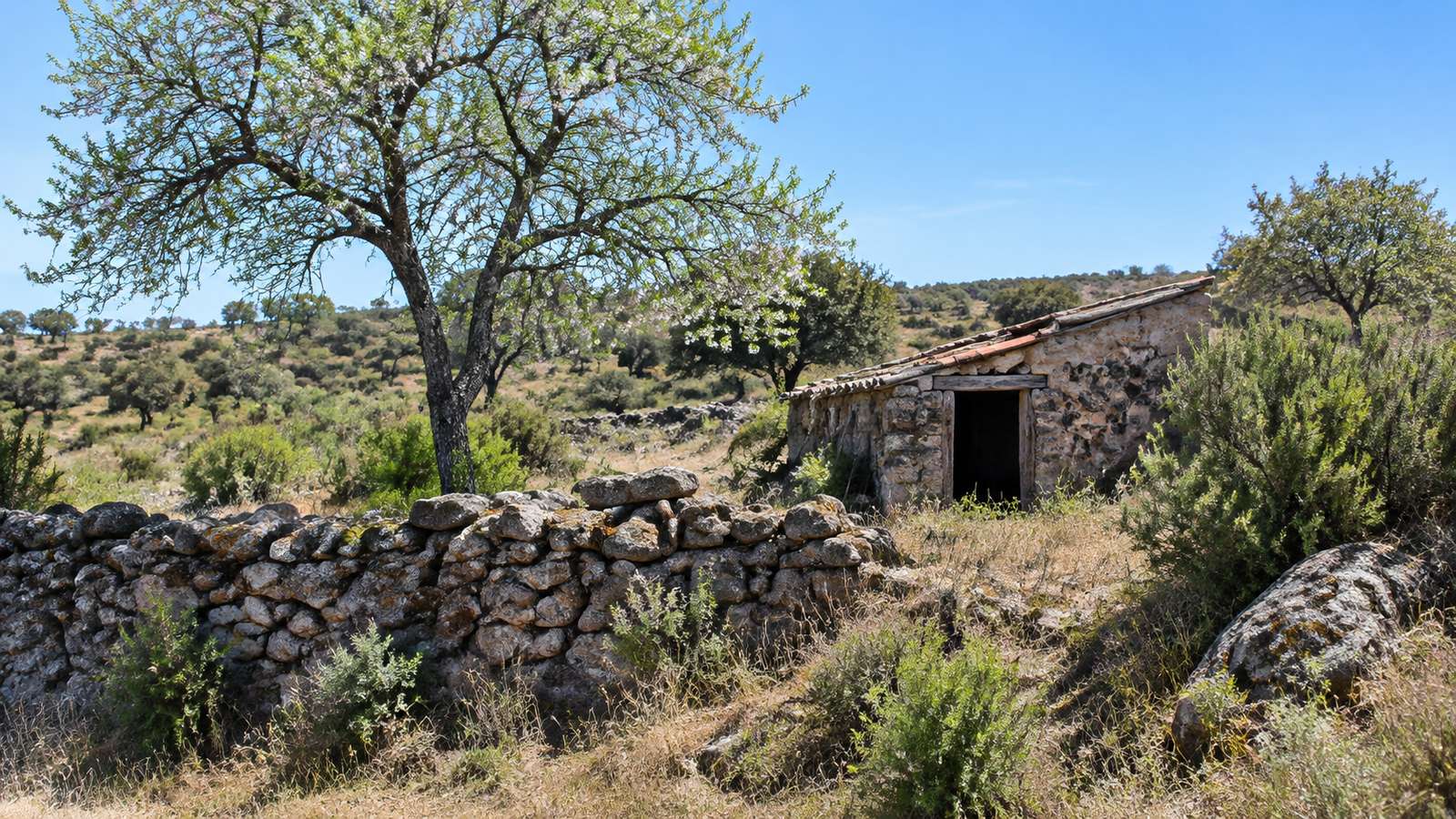
What estates appear for less than 100.000 €
- Small olive groves of 1 to 3 ha in Tierra de Barros, Fuentes de León or Villarta de los Montes.
- Woodland or pasture plots in La Siberia, La Serena and Los Ibores, sometimes for less than 10.000 €.
- Estates of 1 to 2 ha in La Vera, without a house.
- Some estates with olive groves and holm oaks that can be built on in La Serena.
Why they are cheap (the honest reasons)
Almost no cheap estate is cheap because of a seller's mistake. The most common legitimate reasons are size (small plots that do not interest livestock farmers), distance from towns and services, lack of water, poor or stony soil, and the owner's need for cash (inheritances, partitions, age). Understanding the reason is the first check: "cheap because it is far away" is an opportunity if distance does not bother you; "cheap because it is a share of an undivided property" is something else entirely.
Common traps in cheap listings
- Proindivisos (undivided shares): you buy a percentage of an estate, not a specific plot (see undivided shares and inheritances).
- Auctions and debts: some portals mix auctions or mortgage credits with normal sales.
- No access: enclosed plots with no track.
- Wrong areas: listings that say hectares and are square metres, or the other way round.
- Price per hectare shown as the total price.
The real cost of a cheap estate
The purchase price is only the entry fee. A woodland plot at 20.000 € may need as much again to get it ready: fencing it, clearing it, legalising a well or drilling a borehole, providing a passable access or bringing in electricity. Before making an offer, make a list of the improvements essential for your use and ask for rough quotes. The items most often underestimated are fencing (kilometres of fence are expensive), the access track and the regularisation of old buildings.
| Common item | Order of magnitude |
|---|---|
| Clearing and initial cleaning | Depends on condition; budget per hectare |
| Livestock or hunting fencing | Several thousand euros per kilometre |
| New borehole with legalisation | Several thousand euros depending on depth |
| Track upgrading | Very variable depending on length and surface |
How to check a bargain before signing
- Ask for the nota simple: owner, charges and whether what is being sold is the whole estate or a share.
- Locate it in SIGPAC and check that access does not depend on a neighbour's goodwill.
- Visit it and measure real times to the nearest village with services.
- Ask why it is being sold and how long it has been advertised: months without a sale justify negotiating firmly.
- Check the rules before dreaming of a hut: see building on rural land.
When a cheap estate is a bad purchase
Rule out the bargain when the problem is structural and has no financial fix: a share of an undivided property you cannot delimit, a plot with no possible legal access, land where your intended use is prohibited or trees that were burnt recently (the price should already discount it, but sometimes it does not). By contrast, money problems - clearing, fencing, a well - are negotiable: the seller knows they exist and usually accepts reductions that cover them.
How to find them here
In the search tool, sort by "Price ↑" or set a maximum price. Also check the section of featured good-value listings and save an alert with your budget: good cheap estates go fast, and we email you when one that fits your filters comes in. If your limit is tight, also look at the most affordable areas in Cáceres or Badajoz depending on what you are looking for.
Auctions: opportunity with small print
Some of the cheapest estates circulating on the portals are court or Tax Agency auctions. They can come out well on price, but the mechanism is different from a normal sale: you bid blind, the estate is sold "as is", it may come with occupants, leases or charges that survive, and there is no seller to ask for explanations. Before bidding you have to read the full notice, ask for the nota simple, visit the estate if possible and calculate the total cost including the costs of cancelling charges. For a first-timer, a normal sale with room to negotiate is usually safer than an apparently cheaper auction.
Search strategy on a small budget
With less than 100.000 €, the key is deciding what you sacrifice: area, house, water or proximity. Whoever wants everything does not find it; whoever picks a single priority does. The profiles that work: the small productive olive grove for someone who wants a hobby with some income, the woodland plot with access for someone looking for nature and regulated camping, the medium-sized estate in La Serena for someone thinking of livestock in the long term. Define your priority, set an alert with that filter and have the financing or the money ready: good opportunities last weeks, not months.
The questions that give away a bad purchase
In conversation with the seller or the agent, some answers should set off alarms: "the deed is in process", "the boundaries have been known forever", "the well works but has no papers because they are not needed", "the house cannot be put in a deed but everybody does it like this". Each of those phrases describes a specific problem - paperwork, boundaries, water or legality - that becomes yours on the day of the deed. It does not mean you should not buy: it means the price must absorb the full risk or the solution must be settled before the arras. The cheaper the listing, the more discipline these checks need, because the purchase saving can evaporate in a single case file or in a badly estimated adaptation job.
In short: cheap and good exists, but you recognise it by the papers, not by the listing. The checks of nota simple, Cadastre and SIGPAC cost a few euros and a bit of time; skipping them on a 30.000 € estate can cost more than the estate itself.
If you are torn between two options, visit both on the same day: the direct comparison of access, surroundings and real condition settles most of the doubts that listings do not.
Before buying a cheap share, read undivided shares and inheritances.