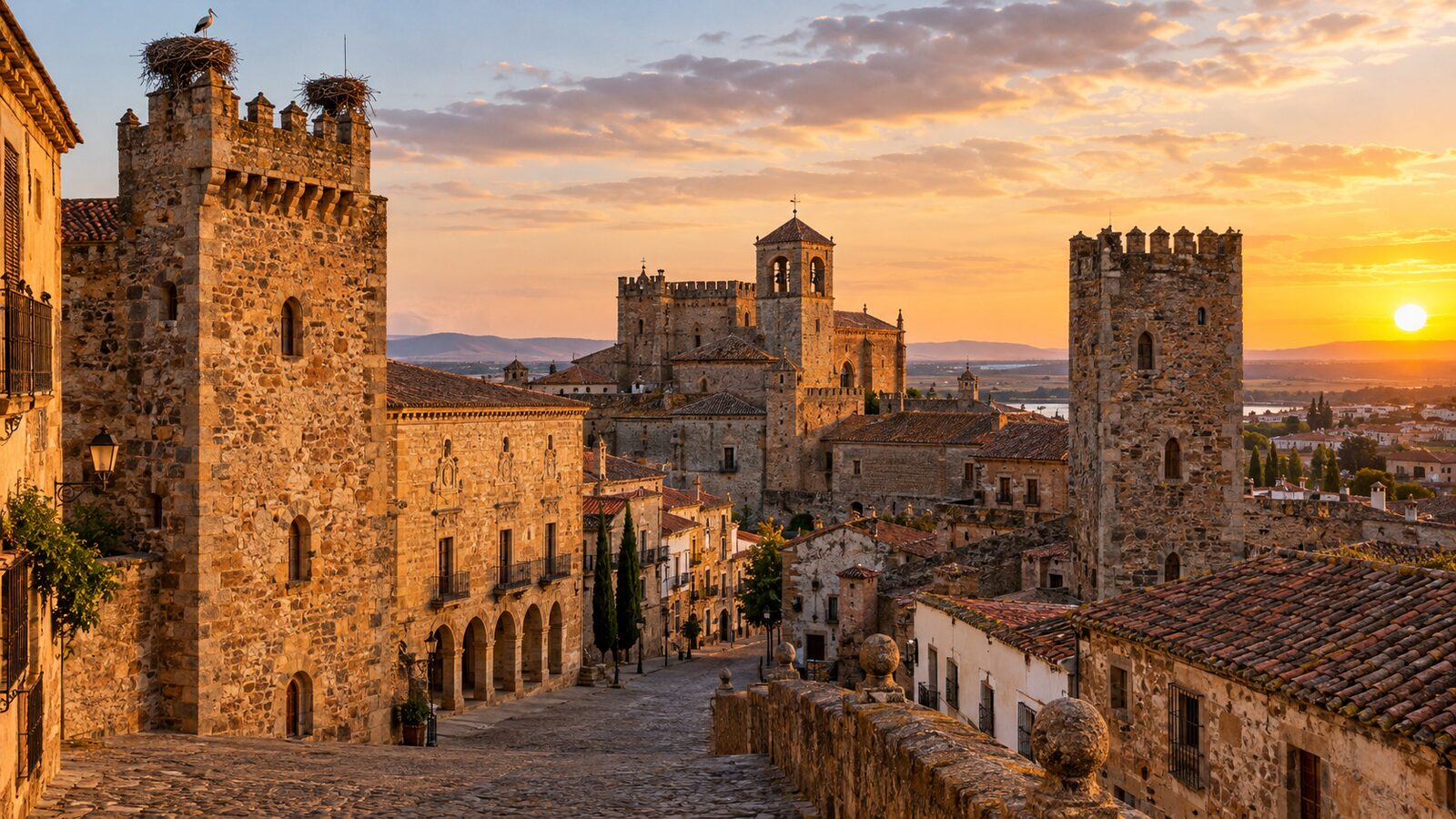
What UNESCO protects in Cáceres
The UNESCO listing names the property "Old Town of Cáceres" and inscribed it in 1986 under criteria (iii) and (iv). It states an area of 9 hectares and a buffer zone of 60.63 hectares. The enclosure is surrounded by a 1,174-metre wall. A minor boundary modification was inscribed in 2016.
According to UNESCO, the history of conflicts between Muslims and Christians is reflected in the blend of Roman, Islamic, Northern Gothic and Italian Renaissance styles. The Ministry of Culture adds that the centre keeps several albarrana towers, among them Bujaco, Horno, Santa Ana and Postigo, and that it includes a former Jewish quarter in today's San Antonio district.
What it means for a buyer
The UNESCO protection concerns the old town, not the estates of the province. An estate in the municipality of Cáceres or in a nearby village is neither protected nor limited because of it. What does affect the estate is its own land classification, its environmental designations and its charges. If you plan to buy a house inside the old town, the building and use conditions are set by the town hall under the protection rules for that area, and you must ask there before buying.
The city as a base for the purchase
Many buyers use a large city as a base during the search: that is where the notaries, registries, administrative agencies and technicians you need are. Before deciding on a district, read the guide to Cáceres or Badajoz: where to buy an estate. If the plains area and the town of Trujillo interest you, see estates in Trujillo and the Llanos de Cáceres. For the full process, start with how to buy a rural estate in Extremadura.
Questions the city does not answer
- How long it takes to reach the estate on a normal day and in rain. Time the real journey, not the map kilometres.
- Which access track the estate uses and whether it is public, shared or private.
- Whether the estate has water with a documented right.
- Whether there are buildings, and whether they are registered and titled.
- What internet and mobile coverage the estate has. Read internet and remote work on an estate.
How to visit the city with a buyer's eyes
If you go to Cáceres to see estates, spend an afternoon in the old town. It is a way to understand the city's rhythm and to talk to people in the sector. Take the chance to ask neighbours and shopkeepers what living outside the city is like, which services they use and what problems they have in winter and summer. That information does not appear in any listing.
Also book an appointment with a local administrative agency before buying. A local professional knows the procedures of the town hall and the registry of your district. The guide to land registry, cadastre and SIGPAC tells you which documents to request.
Budget and expectations
Being close to an important city usually influences the price and demand of estates, but there is no general figure. To compare, use the guide to price per hectare in Extremadura as a method and always ask for comparable sales in the area. And review living in Extremadura: pros and cons before deciding whether you want to live there all year or only for seasons.
Documents worth requesting
Buying the estate must rest on paperwork, not words. Request the up-to-date land registry extract, the cadastral record and the SIGPAC data, and compare them with each other. If the seller lacks any of them, ask them to obtain it before going further. To know what to look for in each document, read land registry, cadastre and SIGPAC.
Also ask about charges such as mortgages or attachments, and about rights of way or water easements. The guide to easements and boundaries helps you spot them, and the one on deeds and notary explains the final step.
How to visit the estate
One visit is not enough. Go in spring and summer, or in winter and autumn, and note what changes: water, pasture, mud on the track, noise and neighbours. Time the journey and check mobile coverage. Walk the boundaries with the plan in hand and take dated photos. Talking to local stockbreeders or farmers gives you information no listing includes.
Costs that do not appear in the listing
The purchase price is only part of the spend. Count the taxes on the transaction, notary, registry and administrative fees, and then the annual costs: property tax, insurance, maintenance and utilities. For the first block, see taxes when buying a rural estate; for the second, the maintenance calendar. Leave a margin for surprises and do not spend the whole budget at once.
Who to consult
Before deciding, talk to a local technician. For the purchase paperwork, find a lawyer experienced in local estates, and for licences and land use, ask the town hall in writing. Keep every answer. When one source contradicts another, do not pick the one that suits you: ask for written clarification.
Common mistakes
- Assuming that a designation, a crop or a famous landscape guarantees a good purchase.
- Not checking who the real owner is and what charges the estate carries.
- Accepting production or income figures without invoices or contracts.
- Budgeting only on the good year.
- Starting works or activities without a licence or without asking the administration.
The guide to mistakes when buying a rural estate expands the list.
Questions for the seller
Ask the seller concrete questions about the estate: how much the estate produces or yields, what part can be proven with invoices, what contracts it has and what aid it has received. Ask them to describe the two worst years they remember. Write down the answers and cross-check them with a neighbour or a technician. When something does not add up, do not let it pass: ask for clarification before committing a deposit.
Conclusion
Cáceres offers an old town of universal value recognised by UNESCO and a useful base for an estate search, but that recognition says nothing about a specific estate. Verify each estate through its documents, visit it in different seasons and use the city as support, not as a buying argument.