What the regional plan says
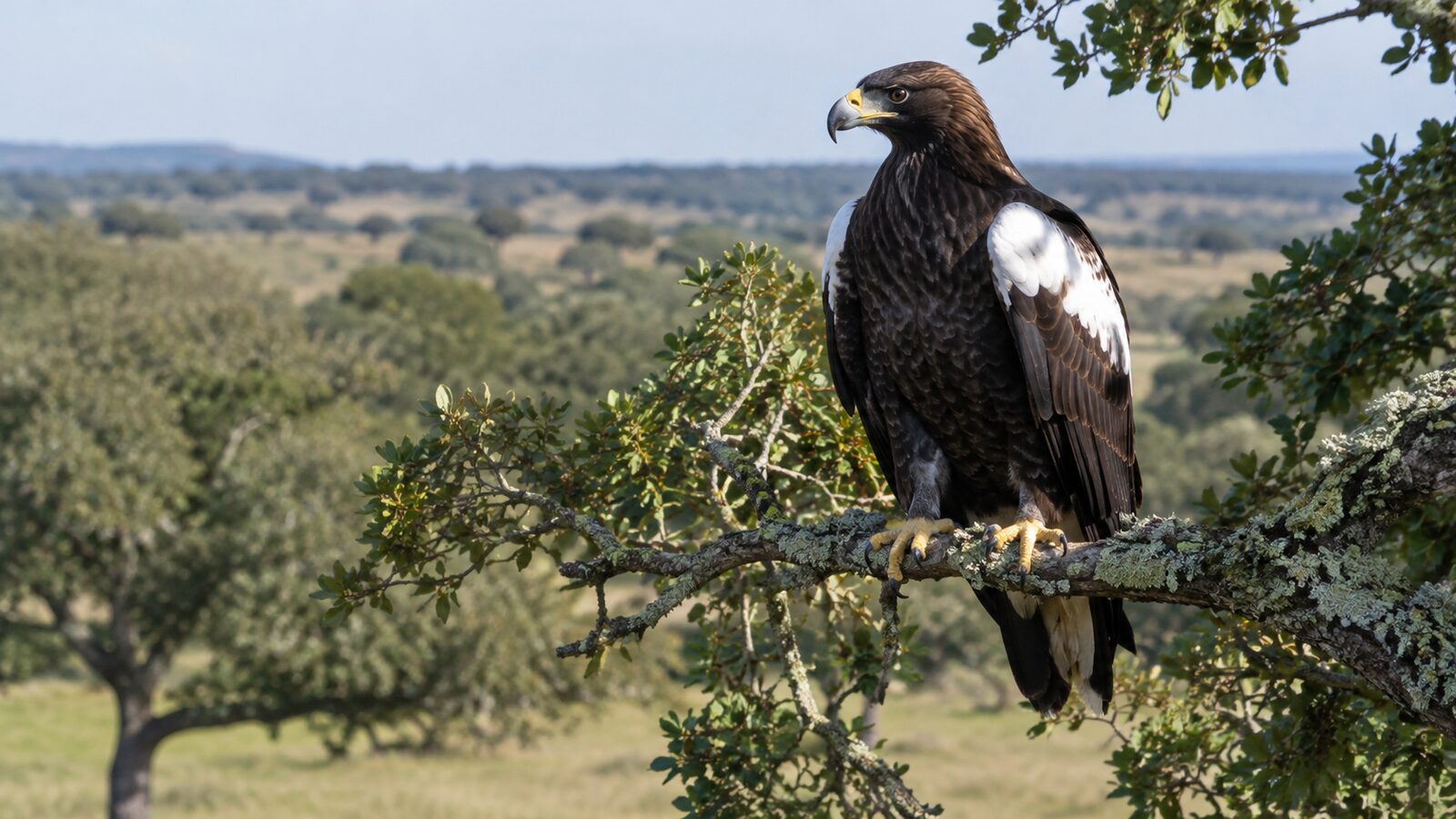
The Order of 25 May 2015 approved the Recovery Plan for the Iberian Imperial Eagle (Aquila adalberti) in Extremadura. Its purpose, in the words of the plan itself, is to foster the maintenance of the species' population in the region. The figures the plan gave in 2015 are now outdated: do not use them as current data.
According to a note from the Ministry for the Ecological Transition dated 31 March 2023, the species working group in Spain and Portugal counted, between 2021 and 2022, a total of 821 pairs in Spain and 20 in Portugal, 841 in total, an increase of 53% since 2017. These are figures from that census, not the current state of each territory, and the administration updates them periodically.
What it means for a buyer
The plan affects how areas with the species are managed. Before buying a dehesa or woodland estate, ask the Junta de Extremadura whether there are known nests or areas of importance for the eagle on the estate or nearby, and what conditions the plan applies to building works, scrub clearing, hunting or other activities. Do not assume that what you see is all there is: estates can sit inside designations such as the Natura 2000 network. Read Natura 2000 and rural estates.
What to ask the administration
- Whether the estate lies in an area of importance for the species.
- Which activities require authorisation or have seasonal restrictions.
- What permits are needed for building works, scrub clearing or changes of use.
- Whether there are grants or management agreements affecting the estate.
- Who to contact if a nest or an injured bird turns up.
Activities worth asking about
If you plan building works, scrub clearing, a hunting estate or tourism activities, ask the administration first how the presence of protected species affects them. Read hunting estates in Extremadura. Fire prevention also matters in these environments; check wildfire prevention for owners.
An estate with wildlife is an asset
For some buyers, sharing the land with protected species is part of the appeal. If birdwatching interests you, see birdwatching in Extremadura and estates near Monfragüe. Always respect the animals' peace and follow the administration's guidance.
Documents worth requesting
Buying a dehesa or woodland estate must rest on paperwork, not words. Request the up-to-date land registry extract, the cadastral record and the SIGPAC data, and compare them with each other. If the seller lacks any of them, ask them to obtain it before going further. To know what to look for in each document, read land registry, cadastre and SIGPAC.
Also ask about charges such as mortgages or attachments, and about rights of way or water easements. The guide to easements and boundaries helps you spot them, and the one on deeds and notary explains the final step.
How to visit the estate
One visit is not enough. Go in spring and summer, or in winter and autumn, and note what changes: water, pasture, mud on the track, noise and neighbours. Time the journey and check mobile coverage. Walk the boundaries with the plan in hand and take dated photos. Talking to local stockbreeders or farmers gives you information no listing includes.
Costs that do not appear in the listing
The purchase price is only part of the spend. Count the taxes on the transaction, notary, registry and administrative fees, and then the annual costs: property tax, insurance, maintenance and utilities. For the first block, see taxes when buying a rural estate; for the second, the maintenance calendar. Leave a margin for surprises and do not spend the whole budget at once.
Who to consult
Before deciding, talk to an environmental technician or the district's natural environment agents. For the purchase paperwork, find a lawyer experienced in local estates, and for licences and land use, ask the town hall in writing. Keep every answer. When one source contradicts another, do not pick the one that suits you: ask for written clarification.
Common mistakes
- Assuming that a designation, a crop or a famous landscape guarantees a good purchase.
- Not checking who the real owner is and what charges the estate carries.
- Accepting production or income figures without invoices or contracts.
- Budgeting only on the good year.
- Starting works or activities without a licence or without asking the administration.
The guide to mistakes when buying a rural estate expands the list.
Questions for the seller
Ask the seller concrete questions about a dehesa or woodland estate: how much the estate produces or yields, what part can be proven with invoices, what contracts it has and what aid it has received. Ask them to describe the two worst years they remember. Write down the answers and cross-check them with a neighbour or a technician. When something does not add up, do not let it pass: ask for clarification before committing a deposit.
Conclusion
The imperial eagle is a species with its own recovery plan in Extremadura. Before buying an estate in an area with the species, consult the Junta, review the environmental designations and factor in how they affect your plans.