Why it matters so much
Extremadura's summer is long, hot and dry, and grass, scrub and trees lose moisture. A fire can destroy years of work in hours, endanger lives and affect neighbours and protected areas. A prepared owner greatly reduces that risk. It is not about fear, but maintenance and common sense. To understand the climate, read Extremadura's climate: what to expect on a country estate.
Regulations: check every year
The Junta de Extremadura sets a wildfire danger period each year, with restrictions on fire, machinery and certain countryside activities. Exact dates and conditions can vary by season and weather circumstances. Before each summer, check the current rules on the Junta de Extremadura website and with your local council, and respect daily risk-level warnings. Breaching them can lead to penalties and liability for damage.
Safety strips and vegetation clearance
- Around the house: keep a strip clear of scrub and dry grass, with little woody vegetation against the walls.
- Tracks and firebreaks: keep access routes passable for emergency vehicles and clear of vegetation.
- Fences and boundaries: clear areas adjoining neighbouring estates and public tracks.
- Trees: prune low branches near buildings and remove accumulated firewood and pruning waste.
The timing and method of vegetation clearance are also regulated: using machinery in hot, windy conditions can cause a fire from a spark. Work early in the day, with tools in good condition and firefighting equipment at hand.
Using fire and burning waste
Burning agricultural or forestry waste is subject to authorisation and specific periods. Do not light a fire in the countryside without knowing the rules and obtaining authorisation where required. Barbecues and burning wood in outdoor fireplaces may also be restricted during the danger period. If in doubt, do not do it and consult the local council.
Water and firefighting equipment
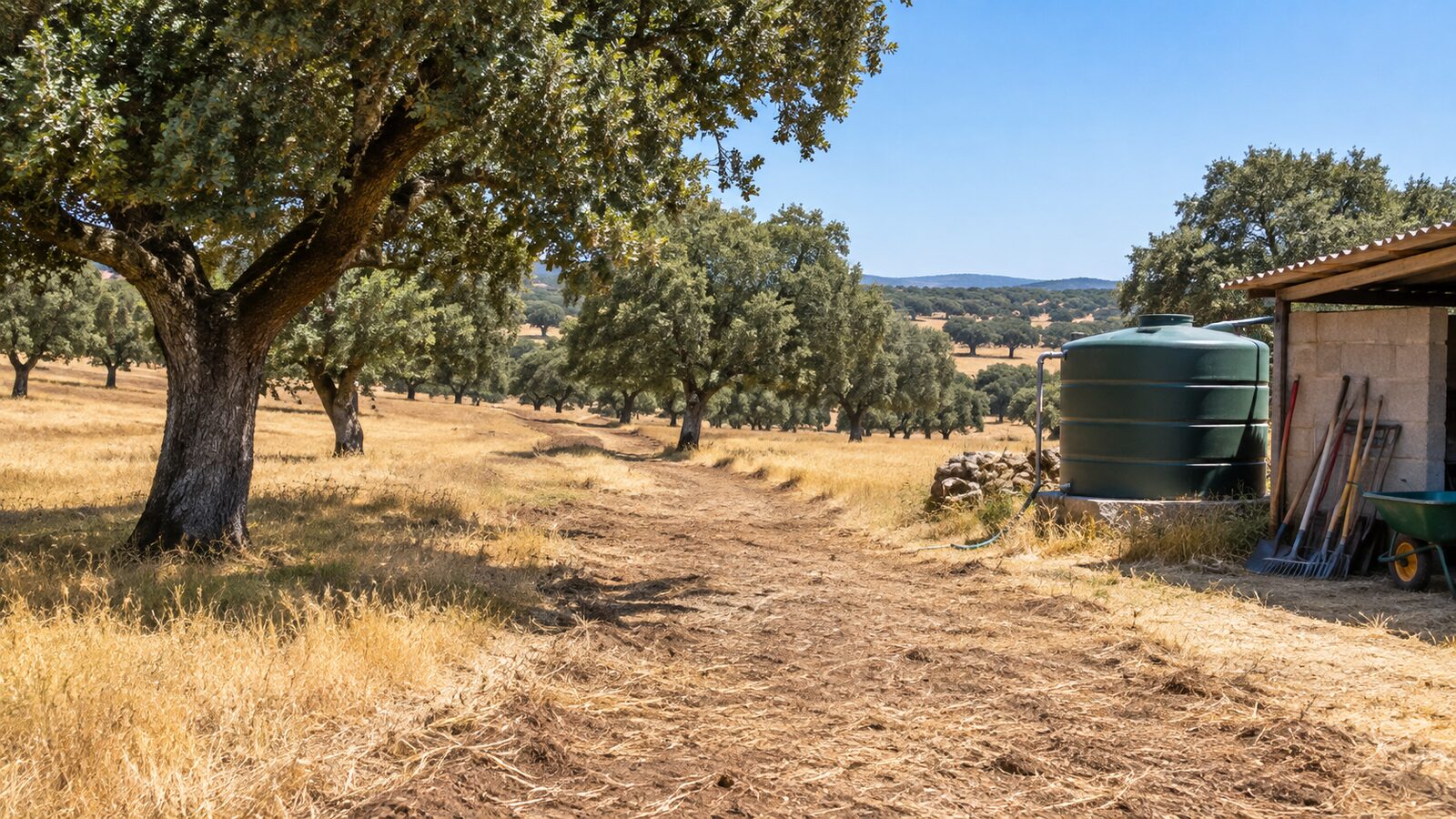
Having water available can make a difference when a fire starts. An easily accessible tank with a hose, a pump, extinguishers and hand tools such as fire beaters and hoes form the basic equipment. If you have a well or pond, check whether it can be used in emergencies and whether emergency crews can reach it. To understand water rules, read water on rural property: wells and concessions.
Access for emergency services
- A track wide and firm enough for a heavy vehicle.
- Gates that can be opened quickly without a key in emergencies.
- Entrance coordinates written down and visible.
- Clear signs showing the estate's name and access track.
A family emergency plan
Spend half an hour agreeing on a simple plan: who calls 112, the exit route, the meeting point, what to take (documents, medication, animals) and what not to try to save. Review the plan before summer and practise it if there are children or older people. If you see smoke or fire, call 112 immediately, give your coordinates and follow emergency services' instructions. Your safety comes first.
The house and its materials
A house's materials affect its resistance: tiled roofs, stone or brick walls and well-sealed windows withstand fire better than exposed timber structures. Check gutters, eaves and vents, clear dry leaves and avoid storing firewood against the house. Awnings and outdoor furniture made of flammable materials should be removed on high-risk days.
Insurance
Check that your home and estate insurance covers fire, including wildfire, and what exclusions apply, such as unauthorised buildings or particular activities. Also ask about third-party liability if a fire starts on your estate. Keep photographs of the estate and belongings as evidence in case of a claim.
Dehesa, woodland and management
Tree and pasture management affect risk: a dehesa with livestock and controlled grass burns less intensely than dense, neglected woodland. If your estate is dehesa, read what a dehesa is to understand how management helps prevention. In mountain areas such as Las Villuercas, the risk requires particular attention to safety strips and access.
Neighbours and cooperation
Prevention works better as a community: coordinate with neighbours to clear boundaries, share information and alert one another. Review rights of way and shared tracks (easements and boundaries) and agree who maintains what. A well-kept estate protects its neighbour, and vice versa.
Before buying
When visiting an estate, look at the condition of vegetation, safety strips and access, and ask the owner what maintenance they carry out and whether there have been fires or near misses. A neglected estate may require significant initial investment in clearing vegetation and firebreaks. For the full picture of everyday life, read living on a country estate in Extremadura.
After a small fire or a nearby wildfire
If there is a fire in the area, follow emergency services' instructions and evacuate when asked. Afterwards, inspect the estate carefully: embers, damaged trees, wiring and water. Report damage to your insurer and the authorities, and do not return to areas where access is not authorised. Woodland recovery takes years, and aid and restoration programmes may apply to your land; ask the forestry authorities about them.
Summary
Fire prevention is a set of habits: clearing, monitoring, following the year's rules and having a plan. Every hour of preventive work reduces risk. Do it before summer and review your plan every year.