What the specification says
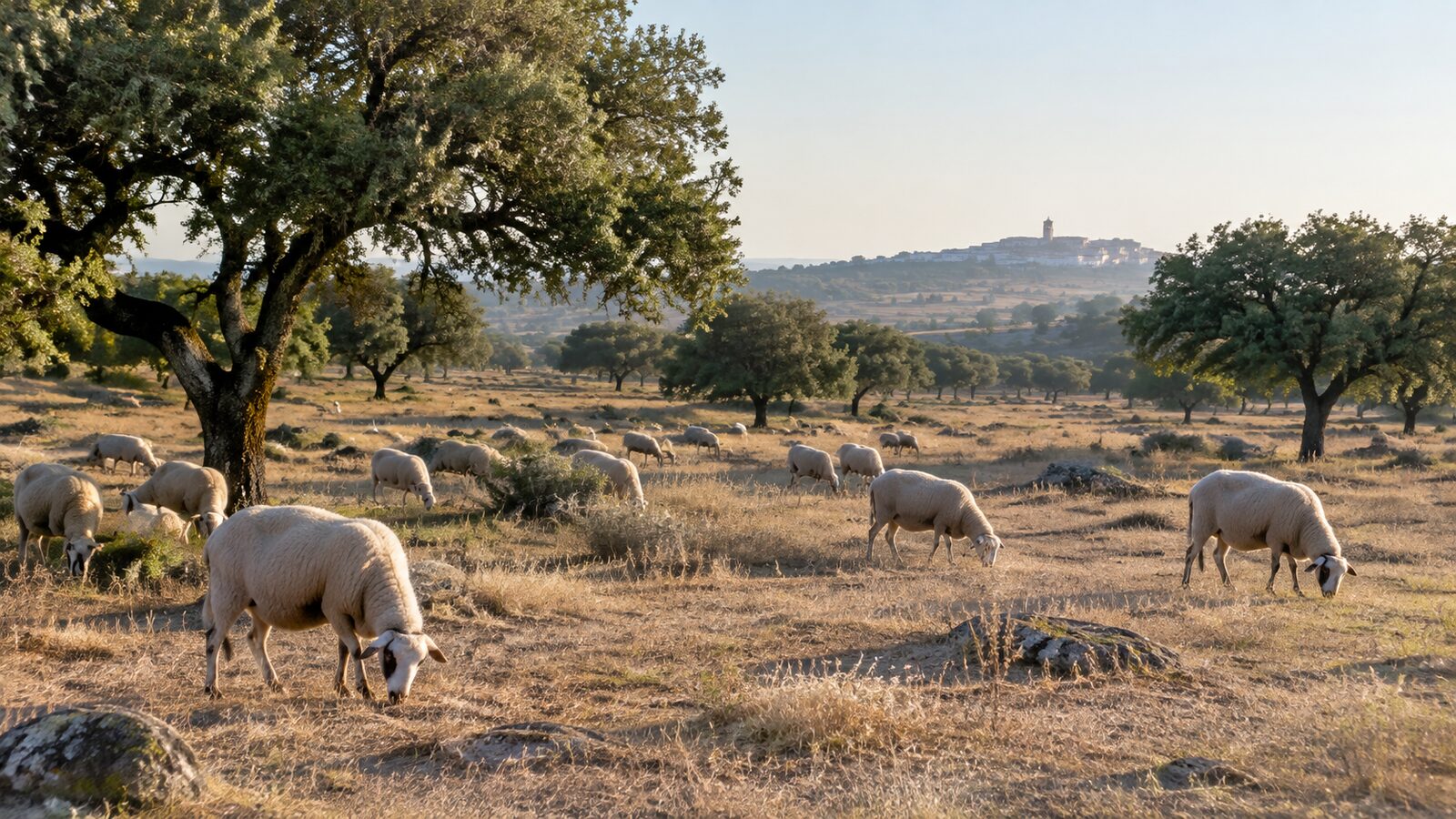
According to the specification, Torta del Casar is a cheese made with raw milk from sheep of the merino and entrefino stocks, whose coagulation is done with vegetable rennet from the thistle Cynara cardunculus, and whose maturing is at least 60 days. Both the milk and the processing must come from the geographical area set by the specification.
The production area
The specification places the area in the province of Cáceres, within the districts of Los Llanos de Cáceres, Sierra de Fuentes and Montánchez, in the centre-south of the province. The Regulatory Council states on its website that it covers approximately 400,000 hectares and includes municipalities such as Albalá, Alcuéscar, Aliseda, Arroyo de la Luz, Brozas, Cáceres, Casar de Cáceres, Garrovillas, Malpartida de Cáceres, Montánchez or Sierra de Fuentes, among others. The full list is with the Regulatory Council; check that your estate's municipality appears on it before counting on the designation.
What it means for an estate
- Location: if the estate is outside the municipalities of the specification, the milk cannot be used for this cheese with designation.
- Breed: the specification speaks of sheep of the merino and entrefino stocks. If you are thinking of another breed, consult the Regulatory Council.
- Control: using the designation implies registration and control by the Regulatory Council.
- Marketing: ask to which dairy the milk is delivered and under what conditions.
What to look at in a sheep estate
- Pasture area and stocking capacity in a normal year and in a dry one. Read what a dehesa is.
- Water for the livestock: wells, ponds or troughs, with their right. Review water on a rural estate.
- Fences, handling pens and sheepfolds.
- Milking installations, if milk is produced, with what the sanitary rules require.
- The livestock holding registers required by the administration.
- Access for the milk and feed lorry.
Prudent figures
There is no single profitability figure. Ask for the operation's real data: milk production per ewe, sales, expenses and aid received, and cross-check with neighbouring stockbreeders. Use the guide to profitability of a rural estate as a method and build a bad scenario with a dry year.
Comparing with other designations
Torta del Casar and Queso de la Serena share the vegetable rennet from thistle, but they are different designations with their own areas and specifications. For the other case, read Queso de la Serena and sheep estates. And for the region's panorama, products with designation of origin in Extremadura.
Talking to those who already produce
Before buying, visit a dairy in the area and ask how they work: where the milk comes from, which sheep breed they use, how they organise milking and what relationship they have with the Regulatory Council. Also talk to neighbouring stockbreeders. They will tell you which years have been dry, how much pasture the estate had and what extra costs appeared. That conversation is worth more than any brochure, and it lets you cross-check the seller's figures with the real experience of the surroundings.
If the project is to make cheese on the estate itself, ask the administration which registers and installations the sanitary rules require. Do not assume that an existing barn meets the requirements.
Documents worth requesting
Buying the estate must rest on paperwork, not words. Request the up-to-date land registry extract, the cadastral record and the SIGPAC data, and compare them with each other. If the seller lacks any of them, ask them to obtain it before going further. To know what to look for in each document, read land registry, cadastre and SIGPAC.
Also ask about charges such as mortgages or attachments, and about rights of way or water easements. The guide to easements and boundaries helps you spot them, and the one on deeds and notary explains the final step.
How to visit the estate
One visit is not enough. Go in spring and summer, or in winter and autumn, and note what changes: water, pasture, mud on the track, noise and neighbours. Time the journey and check mobile coverage. Walk the boundaries with the plan in hand and take dated photos. Talking to local stockbreeders or farmers gives you information no listing includes.
Costs that do not appear in the listing
The purchase price is only part of the spend. Count the taxes on the transaction, notary, registry and administrative fees, and then the annual costs: property tax, insurance, maintenance and utilities. For the first block, see taxes when buying a rural estate; for the second, the maintenance calendar. Leave a margin for surprises and do not spend the whole budget at once.
Who to consult
Before deciding, talk to a local technician. For the purchase paperwork, find a lawyer experienced in local estates, and for licences and land use, ask the town hall in writing. Keep every answer. When one source contradicts another, do not pick the one that suits you: ask for written clarification.
Common mistakes
- Assuming that a designation, a crop or a famous landscape guarantees a good purchase.
- Not checking who the real owner is and what charges the estate carries.
- Accepting production or income figures without invoices or contracts.
- Budgeting only on the good year.
- Starting works or activities without a licence or without asking the administration.
The guide to mistakes when buying a rural estate expands the list.
Questions for the seller
Ask the seller concrete questions about the estate: how much the estate produces or yields, what part can be proven with invoices, what contracts it has and what aid it has received. Ask them to describe the two worst years they remember. Write down the answers and cross-check them with a neighbour or a technician. When something does not add up, do not let it pass: ask for clarification before committing a deposit.
Conclusion
Torta del Casar has a clear specification on milk, rennet, maturing and area. For an estate, the first thing is to check the municipality and the breed, and the second is to do real figures. The designation is a sales route, not a guarantee of result.