A comarca of sheep and cheese
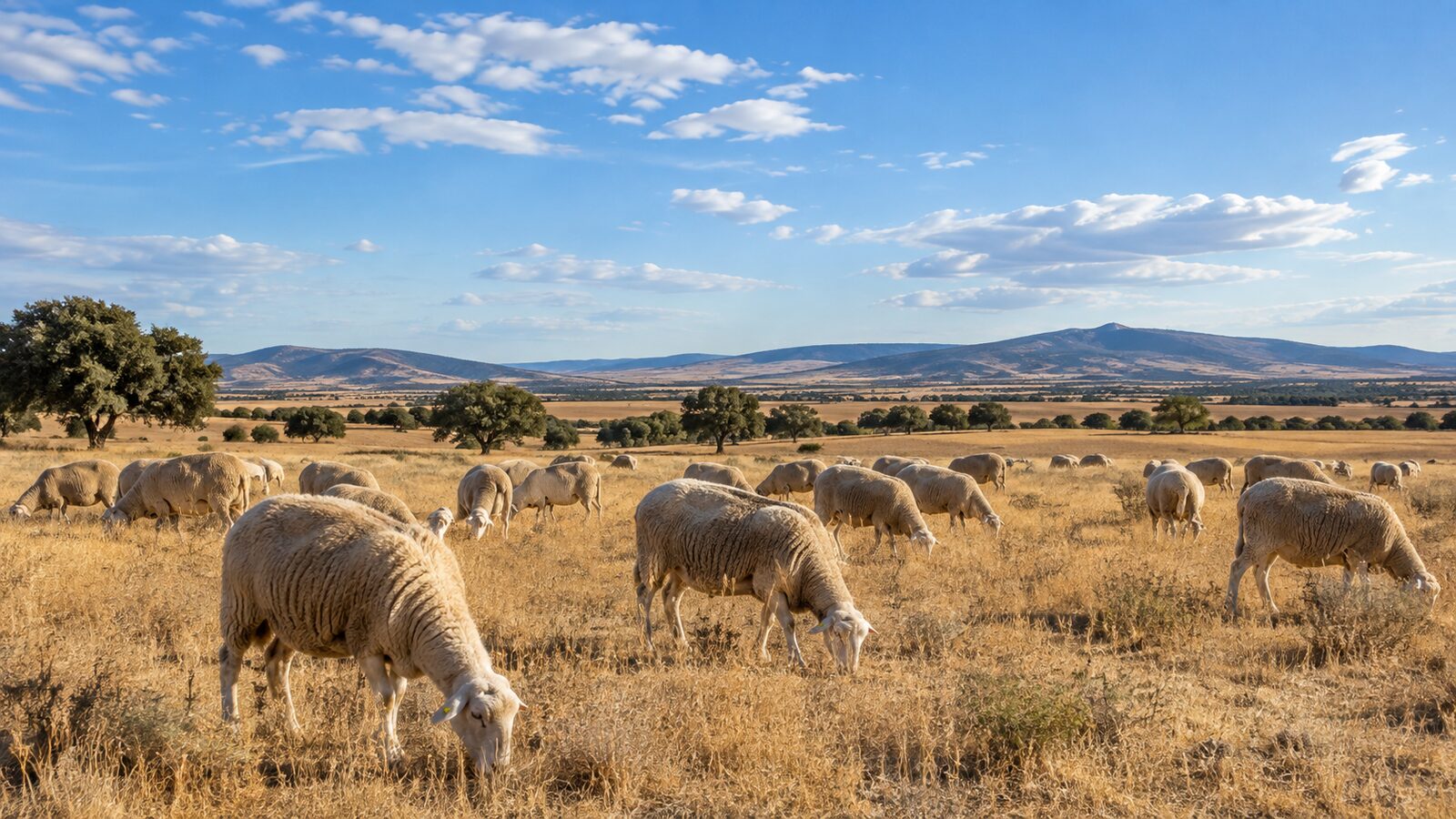
La Serena, in eastern Badajoz, is one of the best-known livestock comarcas of Extremadura: open plains, grasslands and dehesas where sheep farming has centuries of tradition. From that tradition comes Queso de la Serena, a cheese with a protected designation of origin. If you are thinking of buying an estate in the area to raise sheep, or simply want to understand the territory, this cheese is a good starting point. To get to know the comarca as a place to buy, first read the guide on estates in La Serena.
What the Queso de la Serena PDO is
Queso de la Serena is a designation of origin protected by the European Union since its registration in 1996. Its regional regulation was approved by Decree 148/2018 of the Junta de Extremadura, and the product specification was updated in 2025. According to that specification, it is a soft to semi-hard cheese made with milk from Merina and Lacaune sheep and their crosses. It is a full-fat or extra-fat cheese with a minimum curing of 20 days, and its weight at the end of ripening ranges from 250 grams to 3 kilos. In the European register, the Regulatory Council is listed with its address in Castuera.
The vegetable rennet
What most distinguishes this cheese is that it is obtained by enzymatic coagulation of the milk with vegetable rennet, from the dried flowers of the cardoon, Cynara cardunculus, known in the area as yerbacuajo. According to the specification, cardoon rennet is used at a temperature generally below 30 ºC and gives fairly soft curds, resulting in a cheese of less firm texture. After the 20 days of curing, the cheese may become "atortado", the term the specification uses for cheese that softens inside.
Where it is produced
The area of making, ripening and production is made up of 21 municipalities in the province of Badajoz. The specification lists them: La Haba, Magacela, La Coronada, Campanario, Esparragosa de Lares, Valle de la Serena, Zalamea de la Serena, Higuera de la Serena, Quintana de la Serena, Malpartida de la Serena, Esparragosa de la Serena, Castuera, Cabeza del Buey, Sancti-Spíritus, Risco, Garlitos, Peñalsordo, Zarzacapilla, Capilla, Monterrubio de la Serena and Benquerencia de la Serena. If your estate is outside those municipalities, your milk cannot be used for Queso de la Serena PDO, even if it is in the comarca.
What it means for an estate
- Location: check that the estate's municipality is on the PDO list if you want to produce or sell milk for cheese with the designation.
- Breed: the specification speaks of Merina, Lacaune and their crosses. If you are thinking of another breed, ask the Regulatory Council.
- Registration: holdings and dairies that want to use the PDO register and are subject to control by the Regulatory Council.
- Marketing: it is usual to deliver the milk to a dairy or make the cheese yourself, with registered facilities.
What a sheep estate needs
A flock of sheep needs more than pasture. Look at these elements when visiting an estate:
- Pasture area and its carrying capacity in a normal year and in a dry year.
- Water for the animals, with wells, ponds or troughs. Read water on a rural estate.
- Fences in good condition and handling races.
- Barns or sheepfolds for lambing, milking and shelter.
- Milking parlour, if milk is produced, with the facilities required by health regulations.
- The livestock holding registrations and requirements that the administration indicates to you.
- Access for milk, feed and transport trucks.
Prudent calculations
The profitability of a flock depends on the price of milk or lamb, the cost of feed and fodder, animal health and labour. There is no single figure. Ask the seller for the real data of the holding, such as milk production per sheep, sales, costs and subsidies received, and compare with livestock keepers in the area. CAP subsidies may be part of the income; review CAP and eco-schemes in the dehesa, and use the guide on profitability of a rural estate as a method.
Livestock routes and neighbours
In livestock comarcas there are very likely to be livestock routes and stock passages nearby. Understanding which ones they are and how they are used avoids surprises. Read livestock routes and public paths on a rural estate. And talk to the neighbouring livestock keepers before buying: they will know which years have been dry, who delivers milk to whom and which pastures are good.
Try the product and get to know the area
If you do not yet know the cheese, try it in the comarca itself and visit a dairy. Understanding how it is made helps you assess what a sheep estate means in practice. It is also a good way to meet people in the sector. The guide on products with designation of origin in Extremadura explains the region's other products.
Conclusion
Queso de la Serena is a product with identity, with a clear specification on milk, rennet and area. If you want to raise sheep in La Serena, check the municipality, the breed, the facilities and the real numbers before deciding. The estate is the base, but the flock, the water and the labour determine the result.