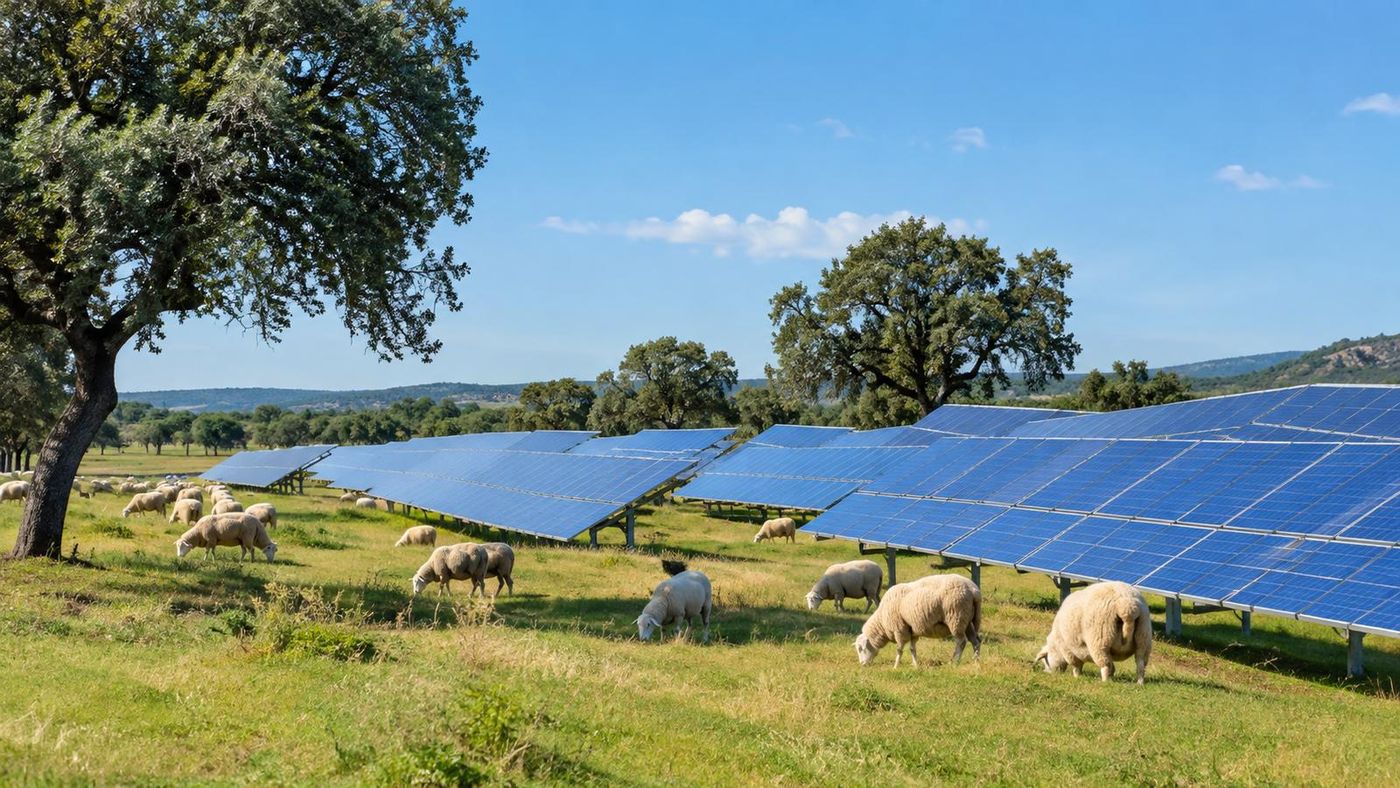
Extremadura is one of the regions with the most solar plants in Spain. Some listings for dryland estates mention their suitability for panels.
Why Extremadura
The region combines some of the highest solar radiation in Europe, large flat expanses of dryland with low agricultural value and an electricity grid that has been reinforced with the arrival of plants. That is why photovoltaic developers have been going round the region estate by estate for years, and why many dryland listings carry the argument "suitable for solar".
What developers look for
- Flat land without protected trees.
- Proximity to a substation with capacity.
- Large area in a single piece.
- Outside protected areas.
The critical point is not the land, but the connection: without evacuation capacity at a nearby node, the project does not go ahead. That is why serious offers mention the substation and the distance, and why two identical estates five kilometres apart can have very different solar value.
The phases of a project
A photovoltaic project goes through signing an option or initial lease, applying for the grid connection point, administrative and environmental authorisations, construction and, finally, operation for decades. Several years can pass between the first signature and the first panel, and many projects fall by the wayside because they do not get connection or authorisation. It is essential to understand what phase the project being offered to you is in.
How much is paid
Rents are agreed per hectare and year, usually combine a fixed part with a variable one tied to production, and on low-productivity dryland clearly exceed agricultural rent. But the range is wide and changes with the electricity market and competition among developers: compare several offers and do not sign the first one that arrives.
Clauses to review
- Term, extensions and exit if the project does not advance.
- Rent and its updating.
- Decommissioning and guarantees at the end.
- What happens with the PAC.
Pay special attention to the option phase: some developers tie up the estate for years paying little while they process the project, and the contract should limit that period and compensate for the lock-up. Also review who can assign the contract (projects change hands), what decommissioning guarantees are deposited and who bears the taxes the project generates.
Basic taxation of solar rent
Lease income is taxed as income, and the project may bring local taxes (such as IBI or installation fees) that the contract must split clearly between owner and developer. The usual practice is for the developer to bear the taxes arising from the plant, but "usual" is not "automatic": require it in writing and check your tax return with an adviser before signing.
Questions to ask the developer
- What phase is the project in and what real probability does the connection have?
- What do you pay me during processing and what happens if it is not authorised?
- How many projects have you completed and put into operation?
- Who will be the final holder of the plant and can it change?
- What guarantees are deposited for decommissioning?
What happens when the estate is sold
A signed solar contract travels with the estate: if you sell, the buyer acquires with that burden or opportunity, depending on how you look at it. A signed option can hold up a sale if the buyer does not want the project; a lease in operation with good rent can, on the contrary, turn the estate into a highly sought-after income asset. Think about that horizon before signing long terms.
Is it worth it?
For low-productivity dryland it can be good income; for a dehesa or irrigated land, agricultural use is lost for decades.
The impact on the landscape and on the estate
A solar plant occupies the whole estate: perimeter fencing, internal tracks, piles and structures. Residual livestock use is possible in some projects (grazing between panels), but it must be agreed. Think about the afterwards too: the estate will come back to you in decades, and the quality of the decommissioning agreed today will decide what state it comes back in.
The small alternative: self-consumption
Without waiting for any developer, the sun on the estate can work for you: solar pumping for wells and irrigation, panels with batteries for an isolated house, or a small installation that reduces a farm's bill. They are much smaller investments, often with subsidies, and improve the usable value of the estate without tying it up.
Buying an estate that already has a signed option
More and more listings reach the market with a solar lease option already signed by the owner. The buyer must know exactly what they are buying: the option can usually be registered and binds the estate, so ask for the full contract before valuing. It can be an opportunity (an estate with future rent already on track) or a trap (an estate tied up for years with hardly any compensation): the difference is in the clauses.
Warning signs
Be wary of contracts that tie up the estate for many years without compensation, of very high rents with no project or connection applied for (they may be speculative land hoarding), of automatic extensions with no exit and of any pressure to sign quickly "because there is a queue of projects". Good developers show references and let you study the contract.
Panels and PAC: possible coexistence
Installing panels changes the land use and can affect PAC entitlements and subsidies, although grazing between panels can keep part of the eligibility if well managed. It is a technical point that should be settled with the administration and the developer before signing, not left for later.
A note on timelines
Photovoltaic projects move through administrative milestones counted in years. If you sign an option, your calendar comes to depend on the developer and the administration: be clear about that and charge for that wait.
Before signing
Do not sign anything without a lawyer, compare at least two offers, ask for references of completed projects from the developer and demand in writing compensation for the lock-up, decommissioning guarantees and annual updating of the rent. The difference between a good and a bad solar contract is measured in decades.