Before you go
- Ask the seller for the cadastral reference and the registry extract. With them you can see the boundaries in the cadastre and SIGPAC before setting foot on the land. Read land registry extract, cadastre and SIGPAC.
- Ask who will be at the visit and who holds the keys to gates and buildings.
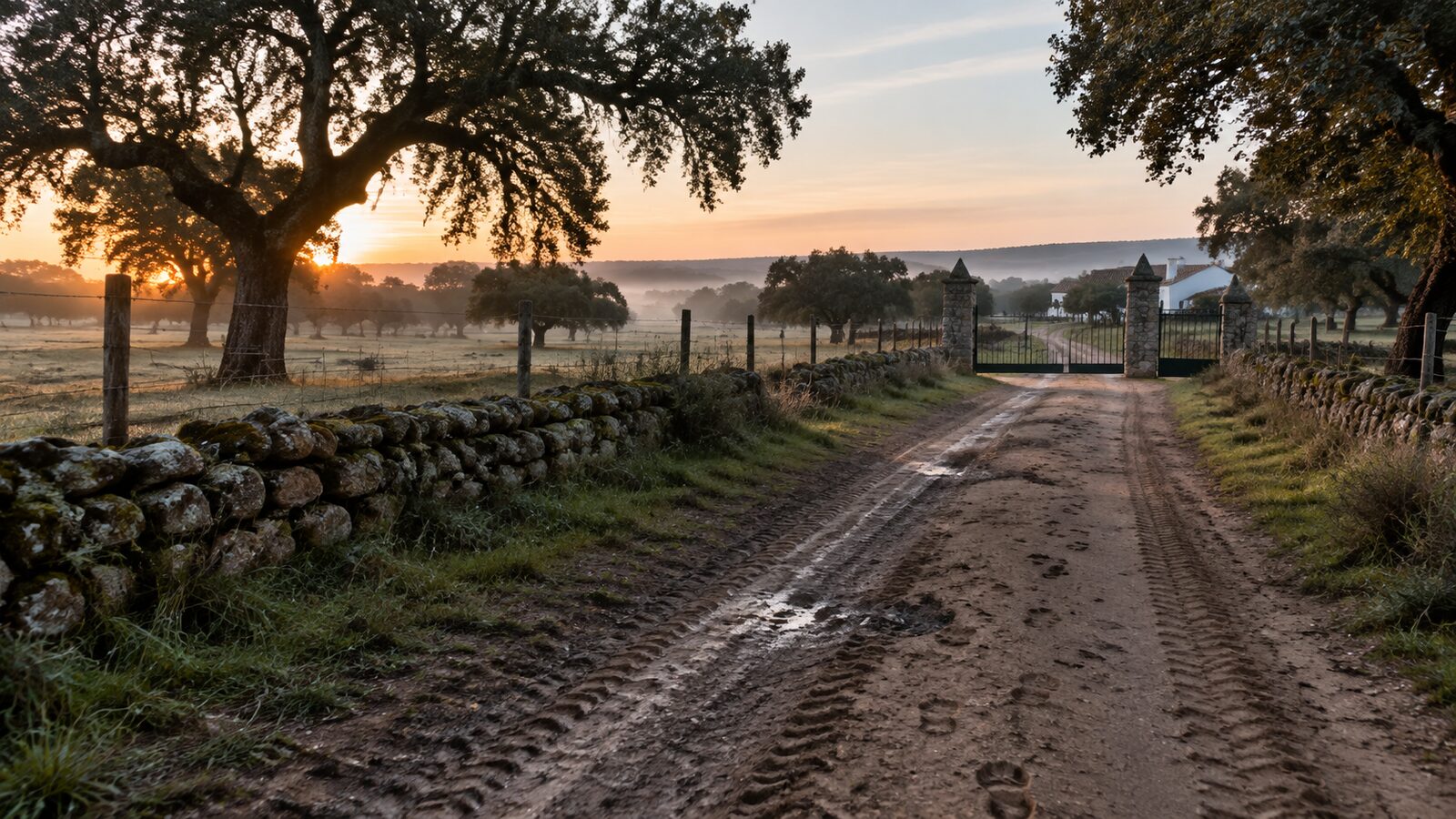
- Check the weather forecast: a visit in the mud shows things a sunny visit does not.
- Prepare a list of questions and leave room to note the answers.
- Tell someone your route if you are going alone to an isolated place.
What to bring
- The cadastral map and the SIGPAC capture, printed or on the phone.
- A tape measure or a measuring app, and a GPS or a maps app.
- A camera or a phone with battery, and a notebook.
- Boots, clothing suited to the season, water and sun protection.
- A torch, if there are buildings or wells to check.
- Binoculars, if the estate is large or has relief.
Access and surroundings
Make the journey from the town where you would do your daily shopping and note the real time. Check whether the track is public, shared or private, what condition it is in and whether it can be used in rain. Look at whether there are neighbours nearby, what is done on the adjoining estates and whether there are activities that might bother you, such as livestock, hunting estates or installations. The guide to easements and boundaries explains the most common problems.
Water
Ask where the water for the house and the irrigation comes from, with what right and since when. If there is a well, ask for the documentation. Look at ponds, troughs, tanks and pipelines, and ask how they behaved in the last dry year. Read water on a rural estate: wells and concessions.
Boundaries and area
Walk the boundaries with the map in hand. Look at marker stones, fences, tracks and streams, and check that they match what the cadastre and the registry extract show. If there are differences, note them and ask the seller for a written explanation. A surveyor can confirm the real area before signing.
Buildings and installations
- Ask for the title or licence of each construction and check that they appear in the cadastre and the registry extract.
- Check roofs, damp, electrical installation and septic tank.
- Look at barns, fences, handling pens and machinery included in the sale.
- Ask what maintenance each element has had.
If there is a house, read recreational estate with a house: what to look at.
Questions to ask the seller
- Why are they selling and how long has it been on the market?
- What fixed costs does it have per year? Ask for the receipts.
- Are there current contracts for lease, hunting, grazing or supplies?
- Are there charges, mortgages or easements?
- What subsidies has the estate received and what commitments remain?
- What problems have there been in recent years?
After the visit
Write your impressions the same day, with photos and notes. Ask in writing for whatever the seller promised verbally. Return in another season, if possible with a technician or a lawyer. Compare with other estates and do not let yourself be rushed. Before signing a deposit contract, read mistakes when buying a rural estate and how to buy a rural estate in Extremadura.
Signs to wait or keep looking
It is worth taking more time if the seller does not show documents, if the figures change from one conversation to the next, if there is pressure to sign or if the water or the access is not clear. None of this proves a problem, but it justifies asking for more information before committing.
Documents worth requesting
Buying the estate must rest on paperwork, not words. Request the up-to-date land registry extract, the cadastral record and the SIGPAC data, and compare them with each other. If the seller lacks any of them, ask them to obtain it before going further. To know what to look for in each document, read land registry, cadastre and SIGPAC.
Also ask about charges such as mortgages or attachments, and about rights of way or water easements. The guide to easements and boundaries helps you spot them, and the one on deeds and notary explains the final step.
How to visit the estate
One visit is not enough. Go in spring and summer, or in winter and autumn, and note what changes: water, pasture, mud on the track, noise and neighbours. Time the journey and check mobile coverage. Walk the boundaries with the plan in hand and take dated photos. Talking to local stockbreeders or farmers gives you information no listing includes.
Costs that do not appear in the listing
The purchase price is only part of the spend. Count the taxes on the transaction, notary, registry and administrative fees, and then the annual costs: property tax, insurance, maintenance and utilities. For the first block, see taxes when buying a rural estate; for the second, the maintenance calendar. Leave a margin for surprises and do not spend the whole budget at once.
Who to consult
Before deciding, talk to a local technician and an independent lawyer. For the purchase paperwork, find a lawyer experienced in local estates, and for licences and land use, ask the town hall in writing. Keep every answer. When one source contradicts another, do not pick the one that suits you: ask for written clarification.
Common mistakes
- Assuming that a designation, a crop or a famous landscape guarantees a good purchase.
- Not checking who the real owner is and what charges the estate carries.
- Accepting production or income figures without invoices or contracts.
- Budgeting only on the good year.
- Starting works or activities without a licence or without asking the administration.
The guide to mistakes when buying a rural estate expands the list.
Questions for the seller
Ask the seller concrete questions about the estate: how much the estate produces or yields, what part can be proven with invoices, what contracts it has and what aid it has received. Ask them to describe the two worst years they remember. Write down the answers and cross-check them with a neighbour or a technician. When something does not add up, do not let it pass: ask for clarification before committing a deposit.
Conclusion
A useful visit is prepared, documented and repeated. With a list, a map and patience, you can compare estates with criteria and avoid the most common mistakes.