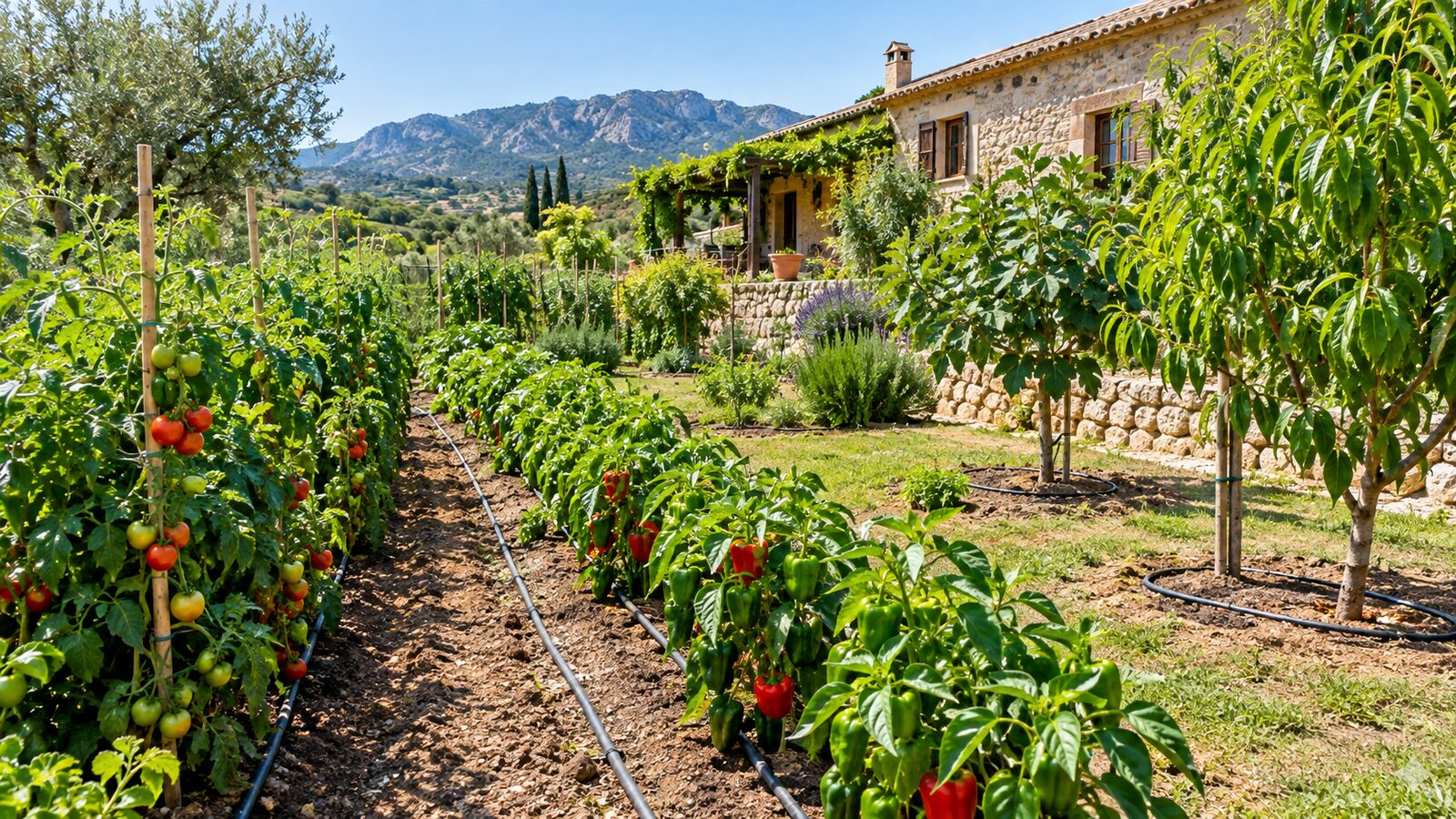
A climate with plenty of potential, on its own terms
The climate shapes the garden: plan around summer heat, winter frost risk and irregular rainfall, and check the data of the Spanish state weather agency (AEMET) for the nearest station. Also ask local gardeners what works in each season. Planning with the climate in mind saves a great deal of disappointment. To understand the climate, read Extremadura's climate: what to expect on a country estate.
Water first
A vegetable garden without reliable water will not work. Before planting, check the water source: mains, an authorised well, pond, tank or irrigation right. Calculate summer consumption and the risk of shortages. If you use a well, verify its legal status and water quality; the guide to water on rural property: wells and concessions explains the essentials. Drip irrigation with a timer saves water and work.
The soil
Before starting the garden, examine the soil on your property, its drainage and depth; a simple test gives guidance on pH and organic matter. A generous addition of compost and a mulch of straw or plant material improve structure and retain moisture. Ask a technician or an experienced neighbour what the soil is like in your area.
Location and protection
- Near the house and water: easier to care for and water with less effort.
- Enough sun, but partial summer shade for leafy crops.
- Fencing against rabbits, wild boar and livestock if there are animals in the area.
- Shelter from wind with hedges or reed screens.
An indicative calendar
Exact dates depend on the district and year, but the general pattern is as follows. In spring, plant tomatoes, peppers, aubergines, courgettes and other summer vegetables once the risk of frost has passed. In summer, water, mulch and harvest. In autumn, sow winter vegetables such as lettuce, spinach, chard, cabbages, garlic and broad beans. In winter, protect against frost and prepare the soil. Ask local vegetable growers which varieties work best for them.
Fruit trees that adapt well
Choose fruit trees and varieties suited to your district and altitude, and buy plants from trusted nurseries. Ask local farmers and technicians which species work there; in northern Cáceres, for example, cherry growing is well known (see cherry trees in the Jerte). A fruit tree takes years to produce, so it is worth planting early.
Olive trees for home use
A few olive trees let you produce oil for home use and add shade and structure to the landscape. If there is already an olive grove, learn to prune it and harvest the olives at the right time. If you plan to expand, read traditional, intensive and super-intensive olive groves to understand the systems.
Hens and small-scale livestock
Many estates keep hens, and some keep sheep, goats or bees. Each species has registration, health, housing and animal welfare requirements. Before keeping animals, check what you must comply with for the species and number, and confirm that the land rules and estate's licence allow it.
Pests and diseases
The warm climate favours some pests. Prevention starts with crop rotation, diversity, mulching and soil care. If you use plant protection products, follow usage rules and dosages, and consult a qualified technician. Organic methods can work well in a family vegetable garden, although they require constant observation.
Beginner mistakes
- Making the garden too large in the first year.
- Planting without a secure water supply for August.
- Forgetting fencing and losing the harvest to rabbits or livestock.
- Planting poorly adapted fruit tree varieties.
- Not mulching the soil or protecting against strong sun.
A realistic approach
A vegetable garden and a few fruit trees provide a good share of a family's vegetables and fruit, but do not replace all food supplies. Enjoy it as part of country life, without expecting a financial return. For a full picture of everyday life, read living on a country estate in Extremadura and recreational country property with a house: what to look for.
Tools and time
A family vegetable garden does not need heavy machinery: a hoe, rake, spade, pruning shears, hose and, if the plot is large, a small rotavator. Expect to spend a few hours a week on it, more in spring and summer. A garden left for two weeks in August suffers, so prepare an automatic irrigation system and an arrangement with a neighbour for when you travel.
Seeds and plants
Local or traditional varieties are often better adapted to the area's climate and pests. Many gardens in the region save their own seeds; neighbours are often happy to share. Buy seedlings and seeds from trusted nurseries and shops, and note what works each year. A garden notebook is the best tool for improving.
Using and preserving the harvest
When there is a surplus, preserving in jars, freezing or drying lets you make use of the harvest. Tomatoes, peppers and fruit are easy to turn into preserves and jams. If you plan to sell surplus produce, check the applicable health and registration requirements before doing so.
Practical summary
Start with a small, well-watered garden, plant a few adapted fruit trees and learn each year from what works. Self-sufficiency is a process, not an immediate goal. With water, shade, mulch and patience, a garden in Extremadura yields rewarding harvests and is one of the best parts of country life.
Next step
Draw a simple plan of the estate showing the house, water, sun and shaded areas, and decide where the vegetable garden, fruit trees and, if appropriate, henhouse will go. A good initial design avoids redoing the work two years later and allows gradual growth.