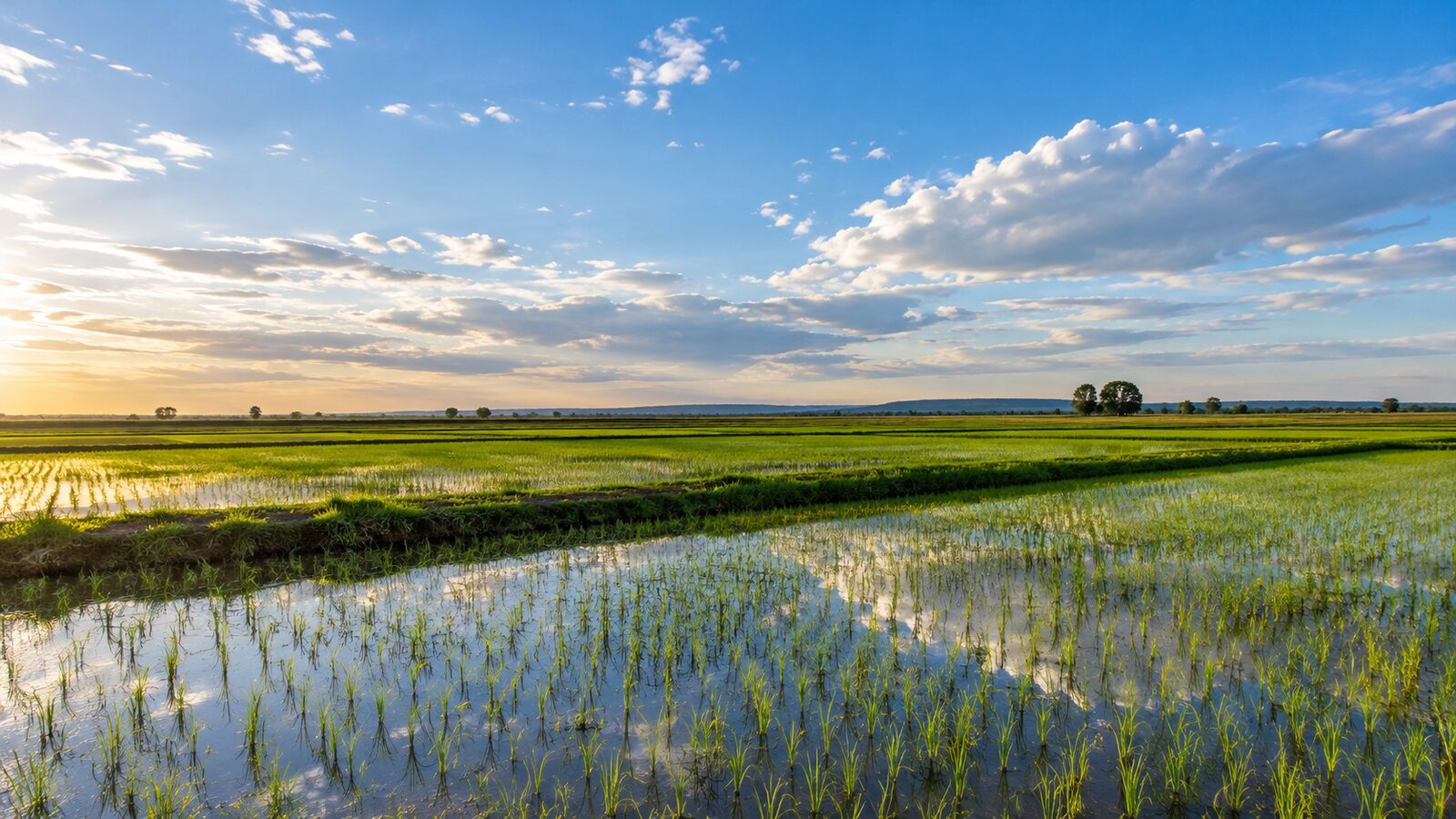
Its weight in the region
According to the CICYTEX rice fact sheet, consulted in October 2026 with no date given for the data, Extremadura is the second rice-producing region of Spain, behind Andalusia, with just over 20,000 hectares, roughly 20% of the national area. Press sources from 2019 spoke of more than 24,000 hectares, so the area varies from year to year. The crop is concentrated above all in the Vegas del Guadiana: 76% in the province of Badajoz and 24% in Cáceres.
Water first
Rice is a summer, irrigated crop, so the first thing is the estate's water right: who supplies it, under which concession and at what cost. Ask for the irrigation community's bills from recent years and check the estate is up to date. Read water on a rural estate and irrigated estates in the Vegas del Guadiana.
A rice estate, step by step
- Confirm the plot lies in an irrigable zone and has a documented water right.
- Ask for the area declared in SIGPAC and compare it with the real one.
- Ask what type of rice is grown and who it is sold to.
- Check the state of the levelling, the irrigation channels and the drains.
- Ask what machinery is included and its condition.
- Ask what aid the estate has received. Read basic payment rights when buying an estate.
Market and contracts
According to a report published by Extremadura21 in 2019, around 70% of the region's rice was of the long or indica type, and the sector was going through difficulties because of imports from third countries. Prices and conditions change every year, so ask the current farmer and the industry for the real contracts and settlements of recent campaigns, not an average figure.
Figures and financing
Build a budget with real costs of the area and a bad scenario. If you need financing, see loans to finance a farm and use the guide to profitability of a rural estate as a method. Compare with processing tomatoes if you are hesitating between crops.
Visit in full season
If you can, visit the area while the crop is growing, not only in winter. With the plot in production you will see the state of the irrigation, the tracks and the drains, and you can talk to the neighbouring farmers while they are working. Ask what problems with water, machinery or labour they have had and how they solved them.
Documents worth requesting
Buying a rice estate must rest on paperwork, not words. Request the up-to-date land registry extract, the cadastral record and the SIGPAC data, and compare them with each other. If the seller lacks any of them, ask them to obtain it before going further. To know what to look for in each document, read land registry, cadastre and SIGPAC.
Also ask about charges such as mortgages or attachments, and about rights of way or water easements. The guide to easements and boundaries helps you spot them, and the one on deeds and notary explains the final step.
How to visit the estate
One visit is not enough. Go in spring and summer, or in winter and autumn, and note what changes: water, pasture, mud on the track, noise and neighbours. Time the journey and check mobile coverage. Walk the boundaries with the plan in hand and take dated photos. Talking to local stockbreeders or farmers gives you information no listing includes.
Costs that do not appear in the listing
The purchase price is only part of the spend. Count the taxes on the transaction, notary, registry and administrative fees, and then the annual costs: property tax, insurance, maintenance and utilities. For the first block, see taxes when buying a rural estate; for the second, the maintenance calendar. Leave a margin for surprises and do not spend the whole budget at once.
Who to consult
Before deciding, talk to the irrigation community and an agricultural technician of the Vegas del Guadiana. For the purchase paperwork, find a lawyer experienced in local estates, and for licences and land use, ask the town hall in writing. Keep every answer. When one source contradicts another, do not pick the one that suits you: ask for written clarification.
Common mistakes
- Assuming that a designation, a crop or a famous landscape guarantees a good purchase.
- Not checking who the real owner is and what charges the estate carries.
- Accepting production or income figures without invoices or contracts.
- Budgeting only on the good year.
- Starting works or activities without a licence or without asking the administration.
The guide to mistakes when buying a rural estate expands the list.
Questions for the seller
Ask the seller concrete questions about a rice estate: how much the estate produces or yields, what part can be proven with invoices, what contracts it has and what aid it has received. Ask them to describe the two worst years they remember. Write down the answers and cross-check them with a neighbour or a technician. When something does not add up, do not let it pass: ask for clarification before committing a deposit.
Conclusion
Rice carries real weight in Guadiana irrigation, but each estate depends on its water and its contract. Check documents, talk to local farmers and do the numbers with real data.