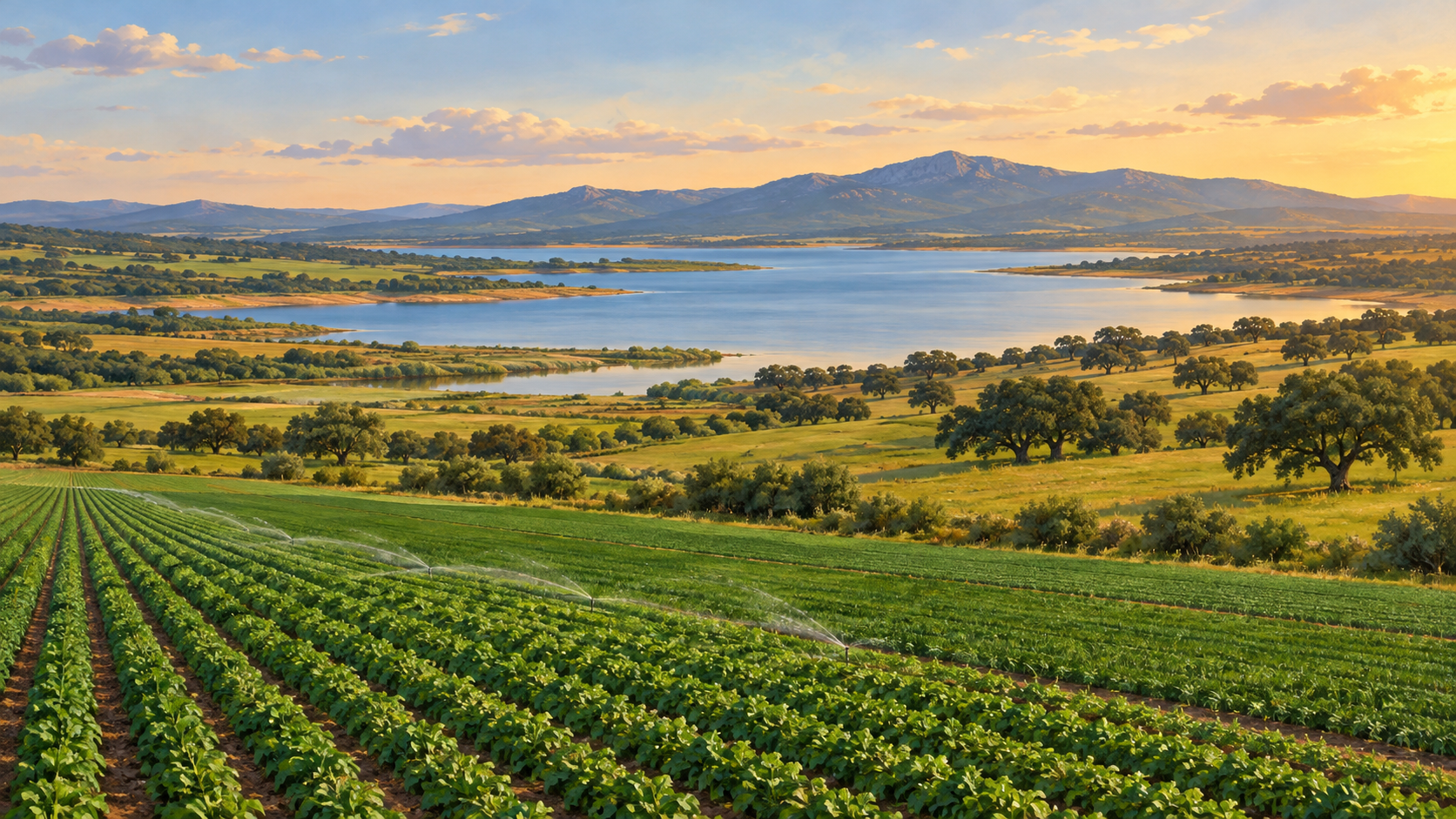
The comarca and its 17 municipalities
According to the comarca's website (Campo Arañuelo - Reto Demográfico), the comarca covers 1,027.80 km² and is made up of 17 municipalities: Almaraz, Belvís de Monroy, Berrocalejo, Bohonal de Ibor, Castejada, El Gordo, Majadas, Mesas de Ibor, Millanes, Navalmoral de la Mata, Peraleda de la Mata, Pueblonuevo de Miramontes, Rosalejo, Talayuela, Tiétar, Valdecañas de Tajo and Valdehúncar. Navalmoral, with 17,352 residents on 1 January 2025 (municipal register, INE), concentrates the services: the Campo Arañuelo hospital, shops, secondary schools and a train station on the Madrid-Cáceres line, as well as the A-5 motorway.
Tajo irrigation: the value of water
Next to the Tajo river and the Valdecañas reservoir (capacity 1,446 hm³, according to the reservoir's iAgua fact sheet) there is a strip of historic irrigated land. On an irrigated farm, what matters is not only that "water reaches it", but what irrigation rights the plot holds: which irrigators' community it belongs to, what fee is paid, whether the intake and channels are in order and whether the irrigation transfers with the farm. Ask in writing for the registry situation and the community's situation, and read the water, wells and concessions guide for the key points. If the farm is in SIGPAC, the registry extract, cadastre and SIGPAC guide explains how to cross-check it.
Tobacco and irrigated crops
The comarca's emblematic crop is tobacco, concentrated above all in Talayuela, according to the comarca's agricultural employment analyses. The irrigated land also grows maize, fodder and vegetables. If you are offered a farm "with a tobacco crop", ask about the real situation of the crop: what was sown last year, which contracts or rights are alive and which facilities (drying sheds, irrigation) transfer with the sale. The return on an industrial crop depends on contracts and campaigns; do not deduce it from a listing photo.
Dehesa and dry farming
Away from the Tajo, dry farming and dehesa predominate, with cereals, pasture and extensive livestock. These are larger farms, with a different price per hectare than irrigated land; the guide to the price per hectare in Extremadura gives you the framework to compare. On dehesa, look at stocking rate, the condition of the trees and the fencing, and whether there are CAP rights attached: the CAP and basic payment rights guide explains what transfers and what does not when you buy.
The Almaraz nuclear power plant
The municipality of Almaraz hosts the nuclear power plant of the same name, an economic reference for the comarca for employment and activity. For a farm buyer it does not change the usual checks, but it is worth knowing the farm's real distance to the plant and how your circle values it, because it affects how the area is perceived and its resale.
Surroundings: Monfragüe and the Tajo
Monfragüe National Park lies to the north, under half an hour from Navalmoral, and the Valdecañas reservoir and the meanders of the Tajo shape the landscape of the north of the comarca. For farms near protected areas, check the environmental limitations before buying: the guide to Monfragüe and the farms around it explains which designations affect the area.
Documents worth asking for
Before signing anything on a farm in Campo Arañuelo, ask the seller for the registry extract (nota simple), the cadastral certificate and the SIGPAC consultation if there are agricultural plots. Check that the surface, the boundaries and the owner match in all three documents, and that the irrigation or CAP rights being sold are registered to the same owner. If there are differences, ask how they will be resolved before the deed. The registry extract, cadastre and SIGPAC guide details each check.
Also ask for IBI receipts, any current lease or sharecropping contracts and any authorisations for the buildings. An independent lawyer should read the deposit contract before you sign it; the deposit contract guide for rural farms summarises the points to review.
How to visit the farm
Visit the farm at least twice and in different seasons: in summer the irrigated land is in full campaign and the dry land parched; in winter you will see the real state of tracks and drainage. Walk the boundaries with the cadastral certificate in hand, ask the neighbours and note the state of fencing, water intakes and channels. If there are buildings, measure what the documents say against reality. One well-used afternoon in the field avoids most of the surprises that later cost money.
What to check before buying
- Registry extract, cadastre and SIGPAC consistent with each other and with the reality of the plot.
- On irrigated land: irrigation rights, irrigators' community, fees and the state of intakes and channels.
- On dry land and dehesa: fencing, access tracks, wells or troughs and CAP rights.
- Buildings: what appears in the registry and cadastre and what does not; tool sheds and barns must be recorded.
- Access: public track or registered right of way, and its state 365 days a year.
If you are coming from the Trujillo area, the guide to farms in Trujillo and the Llanos de Cáceres helps you compare a plains-and-dehesa comarca with this one, where Tajo irrigation changes the kind of farm.