Why beekeeping suits Extremadura
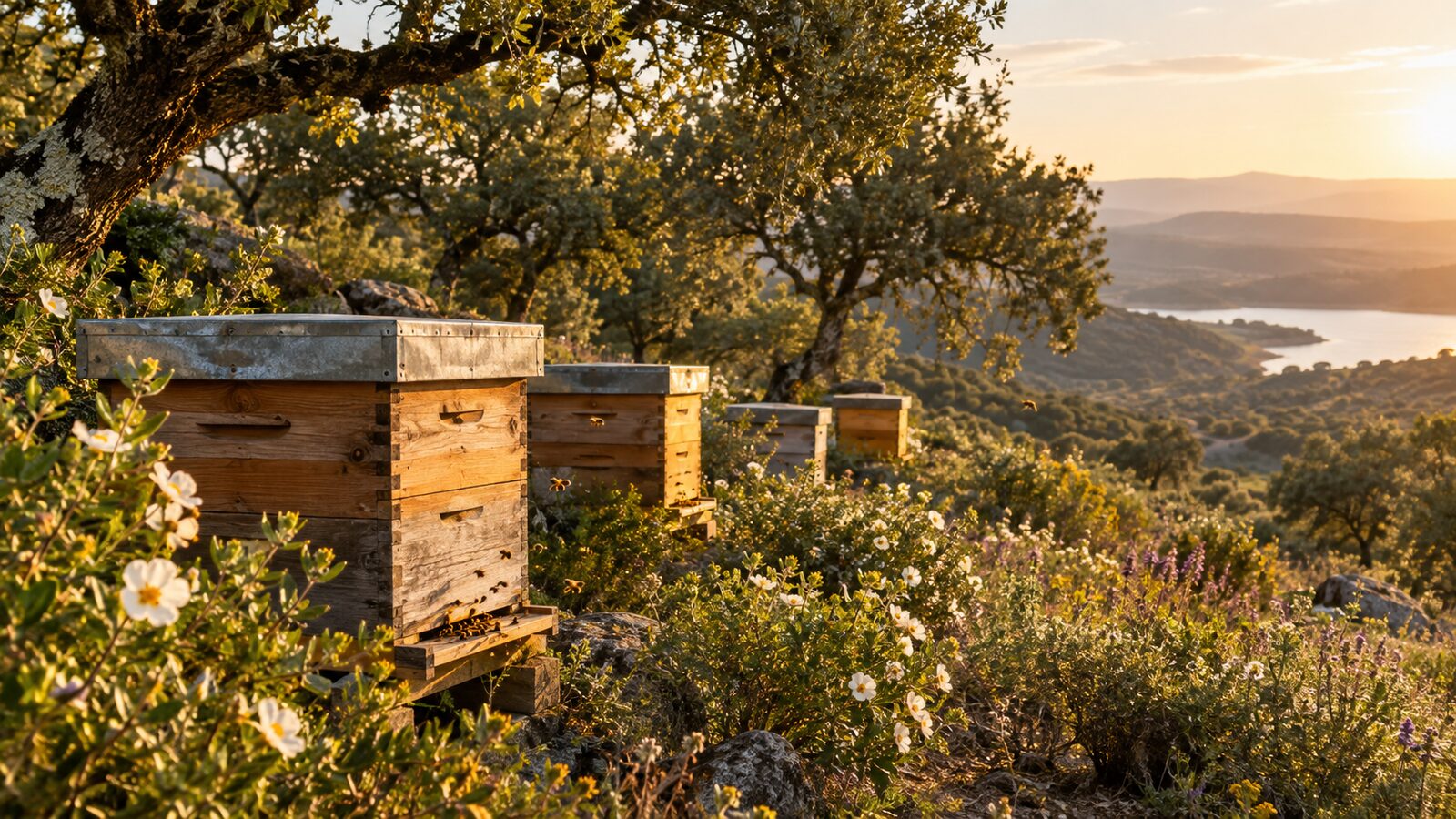
The region has a wide variety of nectar- and honeydew-producing flora: holm oak and cork oak, rockrose, thyme, rosemary, eucalyptus in some areas, crops and fruit trees. This variety allows different types of honey to be produced depending on the location and season. Las Villuercas and Los Ibores have a designation of origin for their honey, which gives an idea of the activity's importance in the region. On an estate with dehesa or woodland, hives can complement livestock farming or rural tourism.
Start with a few hives
The cautious approach is to start with a small number and learn the trade from someone who knows it. Beekeeping requires regular hive observation, disease and pest control, management of flowering periods and harvesting, and adaptation to each year's weather. An introductory course and a few weeks accompanying a local beekeeper can prevent many mistakes. A swarm or nucleus colony bought from a reputable producer is a better starting point than one of uncertain origin.
Registration and obligations
Beekeeping is a livestock activity and must be entered in the registers required by the regulations, with hive identification and notification of their location. There are also rules on health, movements and honey traceability. Ask your local agricultural office and a beekeepers' association which procedures apply to your case. Do not start selling until you are clear about them.
Where to place the hives
- Partial shade and shelter from wind, facing the morning sun.
- Water nearby, such as a pond or a drinking station for bees.
- Honey-producing flora within a reasonable radius, with staggered flowering.
- Distance from tracks, houses and animals to avoid disturbance and stings.
- Vehicle access during harvesting, taking care on wet ground.
Regional or municipal regulations may set minimum distances from homes, tracks or crops. Ask before installing hives.
Migratory beekeeping
Some beekeepers move their hives to other areas to make use of different flowering periods. It is a traditional practice with its own notification and transport requirements. If you plan to move hives, find out about movement rules. To begin with, a stationary holding, with hives kept on the estate, is simpler.
A basic beekeeping calendar
- Late winter and spring: inspections, feeding if needed and preparation for flowering.
- Spring: the main flowering period, swarm control and, in many cases, the first harvest.
- Summer: harvesting depending on the flora, water and shade for hives, and monitoring heat and robbing.
- Autumn: health treatments, checking stores and preparing for winter.
Dates depend on the area and year. Ask neighbouring beekeepers what they do at each stage.
Common risks and problems
- Diseases and varroa mites, which require constant health monitoring.
- Heat and water shortages in harsh summers.
- Wildfires in woodland areas, which can destroy hives and flora.
- Theft or vandalism affecting isolated hives.
- Toxic agricultural products used on neighbouring estates.
Selling honey
The options are bulk sales to a packer or cooperative, direct sales on your estate or at markets, and packaging under your own brand. Each route has health registration, labelling and traceability requirements. Direct sales allow a better price, but require more work and compliance. If your honey may qualify for a designation of origin, see the guide to Extremadura products with a designation of origin.
Beekeeping and other estate activities
Hives fit well with dehesa management and rural tourism, provided they are well placed. Some estates offer hive visits and honey tastings as part of their accommodation offering; read rural tourism on a country estate and licensing. And if your holding receives agricultural aid, check how eco-schemes affect estate practices in the CAP and eco-schemes in the dehesa.
If you buy an estate with hives
If the estate includes hives, check what is and is not being sold: hives often belong to a beekeeper who keeps them on the estate, and their removal or continued presence must be agreed. Ask the seller or beekeeper about contracts, registrations and health history. A beekeeping operation transferred with clear paperwork is a good starting point. To understand how other dehesa resources are used, read what a dehesa is and cork and cork oak woodland.
Equipment and start-up costs
To start, you need hives, a suit and gloves, a smoker, hive tool and brush, and storage space for equipment. The largest cost is usually the initial investment in hives and extraction equipment if you want to process your own honey. A reasonable alternative is to use a cooperative's or neighbouring beekeeper's extraction room while starting out. Always request quotes and compare them; second-hand equipment can be useful, but check that it is clean and disease-free.
Learn from people already doing it
Beekeepers' associations and cooperatives organise courses and training days, and many beekeepers take on beginners during the season. Learning by observing a full harvest is worth more than a great deal of reading. And if you buy an estate in an area with a tradition of beekeeping, such as Las Villuercas (see Guadalupe and Las Villuercas), you will have neighbours who can guide you from day one.
How much time it takes
A few hives need only a few hours a month for most of the year, but work is concentrated in spring and at harvest time. If you are often away, consider whether you can care for them at critical moments. A trusted beekeeper can look after them in exchange for part of the production, a common arrangement that should be put in writing.
Summary
Beekeeping is an accessible activity, with excellent flora and a regional tradition, provided it is carried out with training, registration and respect for regulations. Start small, learn from experienced people and do not rely on honey as your only source of income at first.