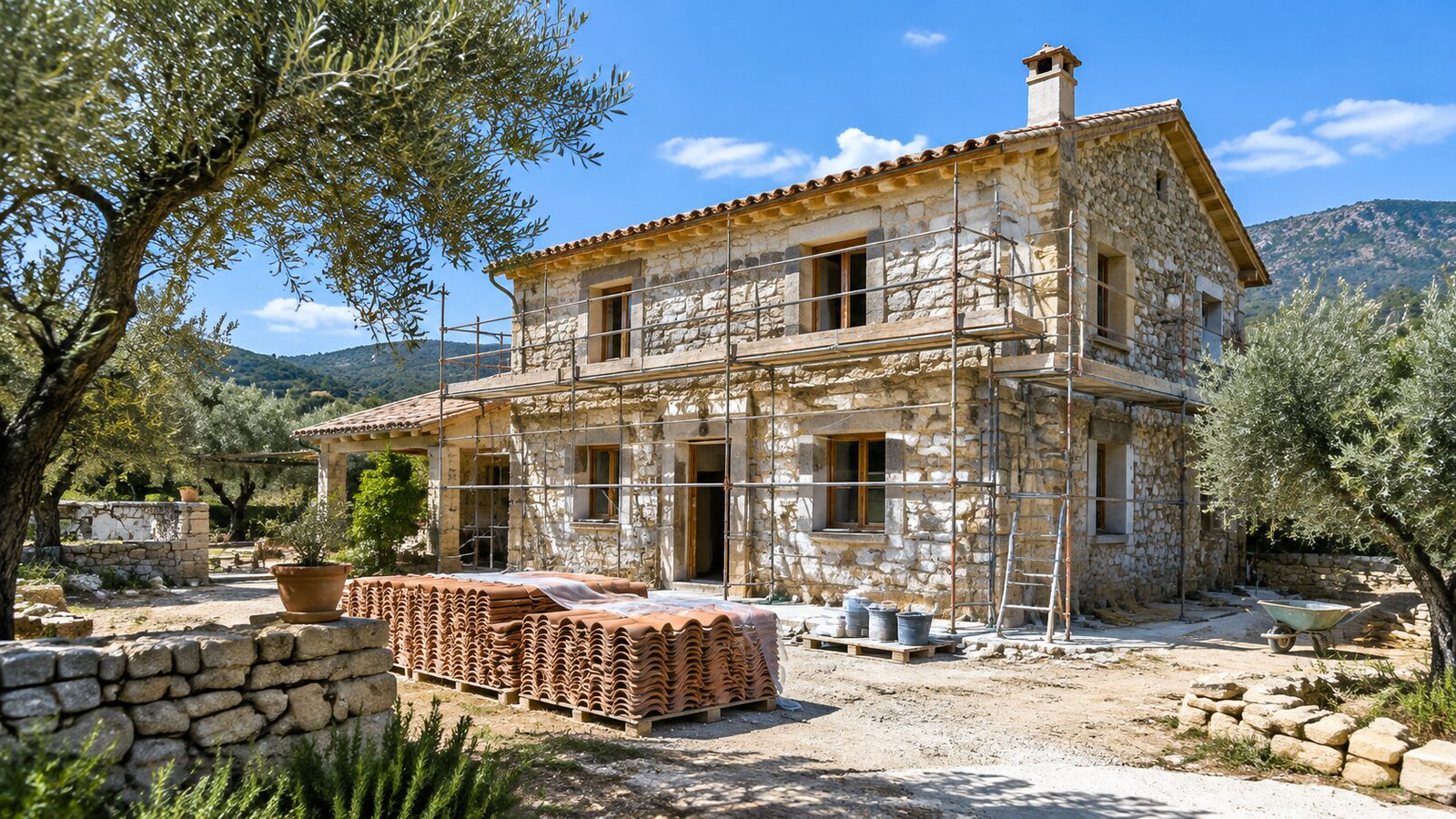
Before renovating: is tourist use possible?
The first step is not the building design but the legal checks. On rural land, tourist accommodation depends on the municipality's planning rules, the plot's environmental protection status and the autonomous community's tourism regulations. A beautiful house where tourist use is not allowed becomes a second home, not a business. Consult the local council and the Junta de Extremadura and ask for their answers in writing. Read the guides to rural tourism on a country estate and licensing and building on rural land.
The house's legal status
Check that the house is recorded in the property register and cadastre with its actual floor area, and that there are no undeclared extensions. Request the land registry extract, cadastral certificate and, if there is new construction, the document that authorises it. A house with irregularities can block permits, insurance and finance. The guide to land registry extracts, the cadastre and SIGPAC explains how to check.
A well-planned project
- Architect or qualified technician: needed for the design and building permit. Choose someone experienced in rural settings and heritage, especially if the house is old.
- Respect for traditional construction: stone walls, rammed earth, timber and roof tiles are best preserved using compatible techniques.
- Layout: enough bathrooms, a kitchen, shared areas and accessibility.
- A budget with a contingency: unexpected issues arise in old houses; set aside a margin.
Water
A house with guests needs a sufficient, drinkable and legally authorised water supply. Check the source (mains, well or tank), water rights and quality. Wells need to be legally authorised; see water on rural property: wells and concessions. If water is limited, calculate peak summer consumption with a full house and a pool or garden.
Energy, heating and cooling
In the countryside, energy is part of the project: sufficient contracted electricity capacity, thermal insulation, ventilation, wood or biomass heating and, where appropriate, solar energy for self-consumption. Read solar panels on rural land to explore the options. A well-insulated house reduces costs and improves comfort, which guests value.
Access, parking and safety
Guests arrive by car and with luggage. The track must be passable all year, with parking and clear signs. Check fire safety, electrical installation and first-aid kit requirements. An estate in woodland also needs prevention measures and a simple evacuation plan.
Registration and accommodation obligations
Once the work is finished, the accommodation must be registered and meet the obligations of any tourism activity: registration, guest reporting, insurance, taxation and, where applicable, official complaint forms. Consult an administrative agent or adviser about the specific steps. Do not start advertising the house until registration is sorted out.
What it costs and what it earns
Renovation costs depend on the house's condition and quality level, while income depends on actual occupancy, which varies by season. Prepare two scenarios, one cautious and one optimistic, including fixed expenses (maintenance, cleaning, utilities, platform commissions and taxes). The guide to returns on rural property helps you avoid overly optimistic figures.
Common mistakes
- Buying without knowing whether tourist use is permitted.
- Starting work without a permit.
- Underestimating water, energy and access costs.
- Calculating occupancy as though it were year-round.
- Neglecting maintenance and guest care.
The guest experience
The value of rural accommodation lies in the experience: quiet, scenery, local produce and a welcoming host. A simple but well-kept house with a clear offering works better than a luxury renovation with no identity. Think about what sets your estate apart: birds, dark skies, Iberian pork products, wine or history. And remember that before deciding, it is worth finding out what the area offers; the guide to recreational country property with a house: what to look for provides a useful starting point.
A realistic project timetable
A project of this kind usually has several stages: legal checks, design and permits, building work, furnishing and equipment, registration and opening. Each can take longer because of administrative and construction timescales, so allow more time than you expect and do not set an opening date until you have the permit and registration. Plan cash flow too: there is no income during the work or before opening.
How to position the accommodation
Before opening, define your target guests: couples, families, groups, birdwatchers or astronomy enthusiasts, or remote workers. Each audience values different things, from quiet to internet access or activities. A clear offering, with good photographs and an honest description, attracts guests better than a generic one. Connect your accommodation with the local area: food, trails, heritage and nature.
Day-to-day management
Rural accommodation requires cleaning, guest care, maintenance and booking management. Decide whether you will do it yourself or hire help, and calculate that cost. Attentive service generates good reviews and repeat visits, which sustain the business in the long term.
Summary
Successful rural accommodation starts with legal checks, continues with a carefully planned project and depends on a clear offering and consistent management. Do not start work without a permit, do not use optimistic occupancy estimates and do not neglect water, energy or access.
Next step
Ask the local council and the Junta in writing which uses the estate allows, gather the house's documents and consult a local architect before buying or renovating. With that information, you can decide on evidence rather than enthusiasm.