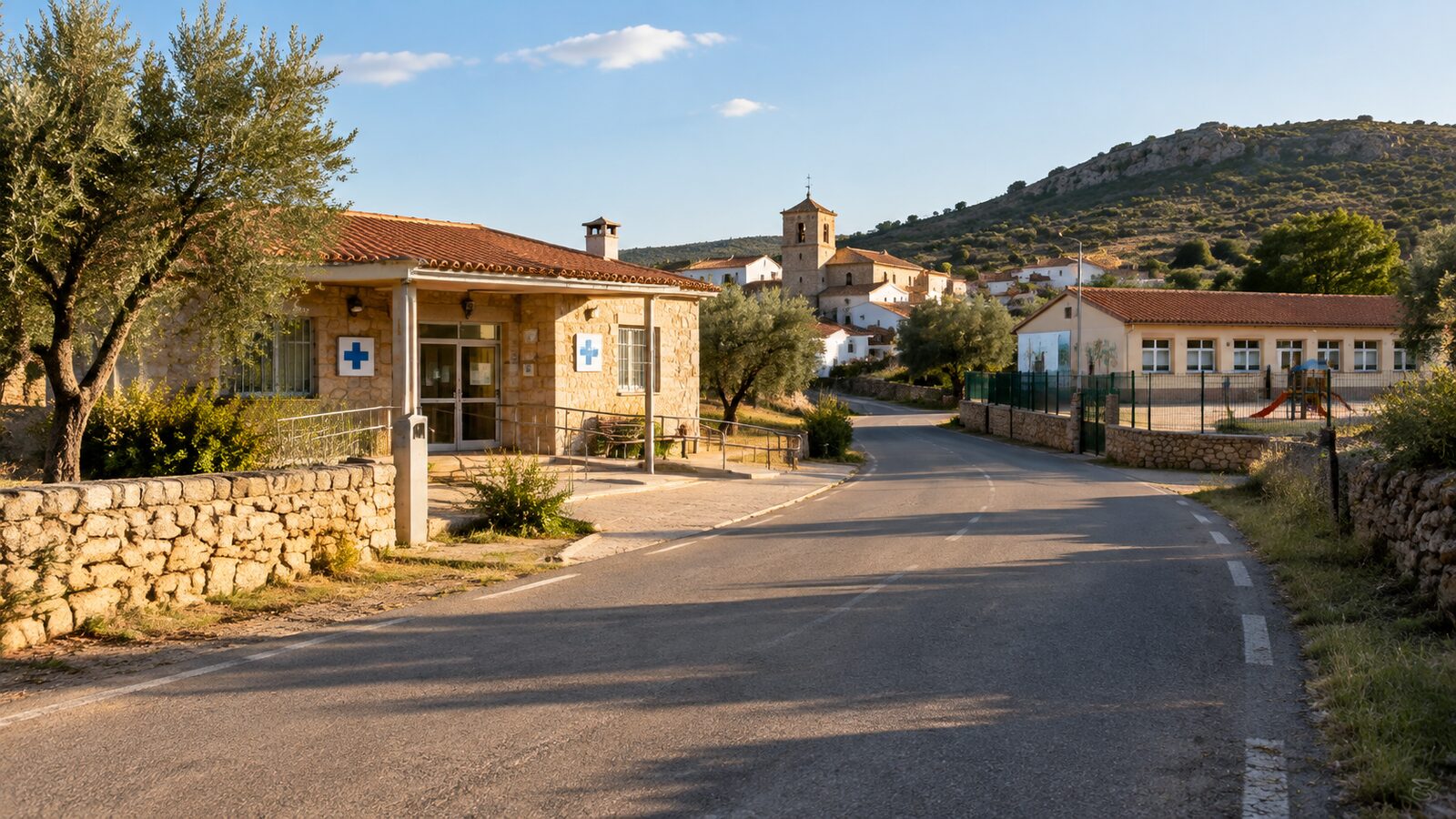
Distance in time, not kilometres
When you live in the countryside, actual journey time matters, not the kilometres on a map. A dirt track or winding local road can double an app's estimated time. Before buying, drive from the estate to every service you will need, at different times, and note how long it takes.
Healthcare
Primary care is organised into health areas, with local surgeries in many villages and health centres in district towns. Hospitals in the main cities provide emergency and specialist care. If you have a chronic illness, young children or older people in your care, ask your assigned health centre how care is organised and what happens in overnight emergencies.
- Locate the health centre and out-of-hours care point nearest the estate.
- Identify the assigned hospital and actual travel time.
- Keep the emergency number and a clear address with coordinates at hand so services can find you.
- If you come from another country, check access to the healthcare system according to your residence status and consult an adviser.
Emergencies and coordinates
In the countryside, explaining to an ambulance how to reach an estate can be difficult. Write down the entrance coordinates, check that access allows a large vehicle through and clearly signpost the track. If there is no mobile reception in the house, identify a spot on the estate with a signal and consider a backup communication system. The guide to internet and remote working on a country estate helps you sort out connectivity.
Education
Most medium-sized villages have a primary school, while secondary schools are in larger towns. The education authorities organise school transport on many rural routes, but this depends on the area. If you have school-age children, ask the school and regional education department which route covers your estate and what its timetable is. For higher education, universities are in the main cities, and many young people travel there or live there during the academic year.
Everyday shopping and shops
Villages have food shops, bakeries and markets, but the wider choice is in larger towns. Many families do a large weekly shop and use local shops for everyday items. Home deliveries are less available in isolated areas, so plan on using the car and keeping a well-stocked pantry.
Public transport
Rural public transport is limited: infrequent buses and, in some cases, on-demand services. If you depend on it, check actual timetables before buying. For most families, a vehicle is essential, and for some, two. This is an annual cost worth including in the budget.
Older people and people with reduced mobility
An isolated estate can be difficult for older people or those with reduced mobility. Consider step-free floors, suitable access and a relative or neighbour nearby. If you plan to live there for many years, think about life in ten or twenty years, not just today.
Security and neighbours
Country life is usually peaceful, but an isolated estate needs reasonable security measures: secured entrances, carefully planned outdoor lighting, an alarm where appropriate and good relations with neighbours. Knowing local people and telling them when you are away helps a great deal. In any event, report any incident to the authorities.
If you are moving from elsewhere
For international buyers, there are residence, municipal registration and tax procedures as well as services to consider. Read the guide to buying a country estate in Extremadura as a foreign national and speak to a local adviser. Registration on the municipal residents' register makes access to many local services easier.
A checking plan
- Measure travel times to the health centre, hospital, school and supermarket.
- Speak to the local health centre and school.
- Check mobile and internet coverage on the estate.
- Ask neighbours how they manage everyday life.
- Visit the area in winter and summer.
- Take time to decide whether the pace suits your family.
To compare areas, read Cáceres or Badajoz: where to buy a country estate and living on a country estate in Extremadura. And to assess the house, recreational country property with a house: what to look for.
An example of family planning
A family with school-age children can organise its week around the morning school route, a large shopping day and medical appointments, grouped into one trip where possible. Remote workers often choose a fixed day for errands in town. With that routine, distances stop being a problem and become part of the pace of life. What matters is thinking it through before moving, not afterwards.
Helpful local services
Many villages have a pharmacy, surgery, bakery, town hall, library or senior centre, as well as bars and shops at the heart of social life. Getting to know and using them is the best way to settle in. Some villages organise cultural and sporting activities all year, and local festivities are a good opportunity to meet neighbours.
Summary
Living on a country estate in Extremadura with reasonable access to services is perfectly possible with planning: measure journeys, know your assigned facilities and organise the week. A visit lasting several days, during which you go about daily life as though you already lived there, will tell you more than any map.
Questions for the local council
- What municipal services are there in the village and what are their opening hours?
- Is there a school transport route through the estate's area?
- How are rubbish collection and track maintenance managed?
- What is the procedure for registering on the municipal residents' register?